Post actualizado el día octubre 26, 2026 by DeiviSanzPlay
Camels don’t sleep like your dog or your cat. They’re not curled up for eight hours straight. A camel sleeps in short bursts, mostly at night, and if you’re picturing a deep, peaceful slumber, forget it. We’re talking about 3 to 4 hours of light sleep per day, broken into fragments. That’s it. And that’s exactly why they survive where almost nothing else does.
How Camels Sleep: Short, Shallow and Always Alert
The desert at night is cold. That’s the window camels use to rest. They’re basically nocturnal when it comes to sleep, because daytime heat would fry their brains — literally. A camel’s sleep is so light that they can wake up in seconds if something moves nearby. That’s not a bug, it’s a feature. In an environment where predators and sudden sandstorms are real, deep sleep is a death sentence.
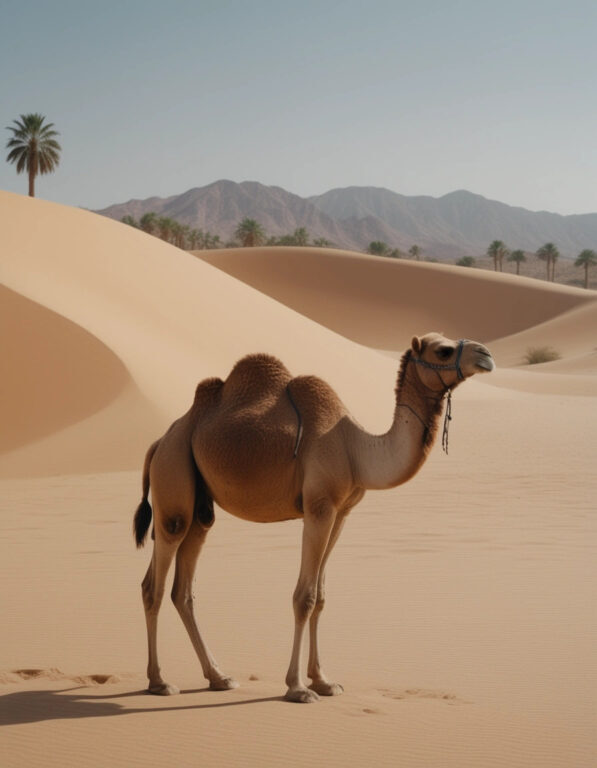
So when someone asks how camels sleep in the desert, the honest answer is: badly by human standards, perfectly by desert standards. They lie down, fold those long legs under their bodies, and doze in cycles. Some camels even sleep standing up, though that’s less common when they feel safe. The key takeaway? Their sleep cycle is designed for survival, not comfort.
Here’s a detail most articles skip: camels can go into a kind of torpor-like state during extreme heat. Their body temperature fluctuates between 34°C and 41°C throughout the day. That’s a 7-degree swing. Humans would be dead. Camels just… adjust. This means they don’t need to sweat as much, which saves water. And water is everything out there.
What Camels Eat: Thorny, Dry and Surprisingly Nutritious
What do camels eat in the desert? Whatever they can find. Dry grasses, thorny shrubs, saltbush, acacia leaves — stuff that would shred a cow’s mouth. Their lips are split and leathery, and their mouth is lined with tough papillae that let them chew thorny plants without bleeding. It’s brutal and efficient.
They can go weeks without food. Not because they’re magic, but because that hump isn’t just for show. The fat stored there gets broken down when food is scarce. A well-fed camel can survive months on its reserves. But here’s the catch: once that fat is gone, the hump goes floppy and falls to one side. That’s how you know a camel is in trouble.
Their digestive system is a powerhouse. They extract nutrients from plants so dry they’d crumble in your hand. And they can drink seawater if they have to — their kidneys are that efficient at filtering salt. No other large mammal pulls that off.
How Camels Drink Water: 150 Liters in Minutes
How do camels drink water? Fast. When they find a water source, they can down up to 150 liters (about 40 gallons) in a single session. That’s roughly 30% of their body weight. Imagine a 70 kg human drinking 20 liters in ten minutes. You’d die. A camel just walks away and doesn’t need another drink for days or even weeks.
But they don’t drink constantly. That’s the part people get wrong. Camels are not water tanks on legs. They’re more like water recyclers. Their nostrils capture moisture from exhaled air. Their kidneys produce highly concentrated urine. Their feces are so dry they can be used as fuel. Every drop counts.
And no, they don’t store water in their humps. That’s the biggest myth in desert biology. The hump is fat — pure energy storage. When that fat is metabolized, it produces some water as a byproduct, but it’s not a canteen. The real water storage happens in their bloodstream and tissues, which can expand to handle massive intake without bursting red blood cells. Their oval-shaped red blood cells are unique among mammals, and they’re a big reason camels can hydrate so aggressively without dying.
Desert Adaptations That Go Way Beyond the Hump
Camels have three eyelids. The third one is translucent and acts like a windshield wiper for sand. Their nostrils close completely. Their ears are lined with hair to block dust. Their feet are wide and padded, so they don’t sink into soft sand. And their coat reflects sunlight while insulating them from the heat — yes, a thick coat in the desert actually helps.
They can also close their nostrils and mouth tight during sandstorms and just wait it out. No panic. No running. Just patience. That behavioral calmness is as much an adaptation as any physical trait.
During the day, camels mostly rest and chew cud. At night, they move, feed, and find water. This nocturnal behavior in camels isn’t random — it’s timed to the desert’s rhythm. Lower temperatures mean less water loss through breathing and sweating.
Why This Matters More Than Ever in 2026
As droughts hit harder across Africa, the Middle East, and even parts of the US, camels are being reconsidered as livestock. They produce milk that’s lower in fat and easier to digest than cow’s milk. They need less water. They eat plants that cattle won’t touch. In places like Kenya and Somalia, camel herds are growing while cattle die off.
So when you ask how camels sleep, eat, and drink, you’re not just asking about a weird animal. You’re looking at a blueprint for survival in a world that’s getting hotter and drier. The camel figured it out thousands of years ago. We’re just catching up.
And if you ever see one in a zoo, watch how it sleeps. Short naps. One eye half-open. Ready to move. That’s not laziness. That’s 40 million years of evolution telling you exactly how to survive when everything around you wants you dead.