

Post actualizado el día octubre 26, 2026 by DeiviSanzPlay
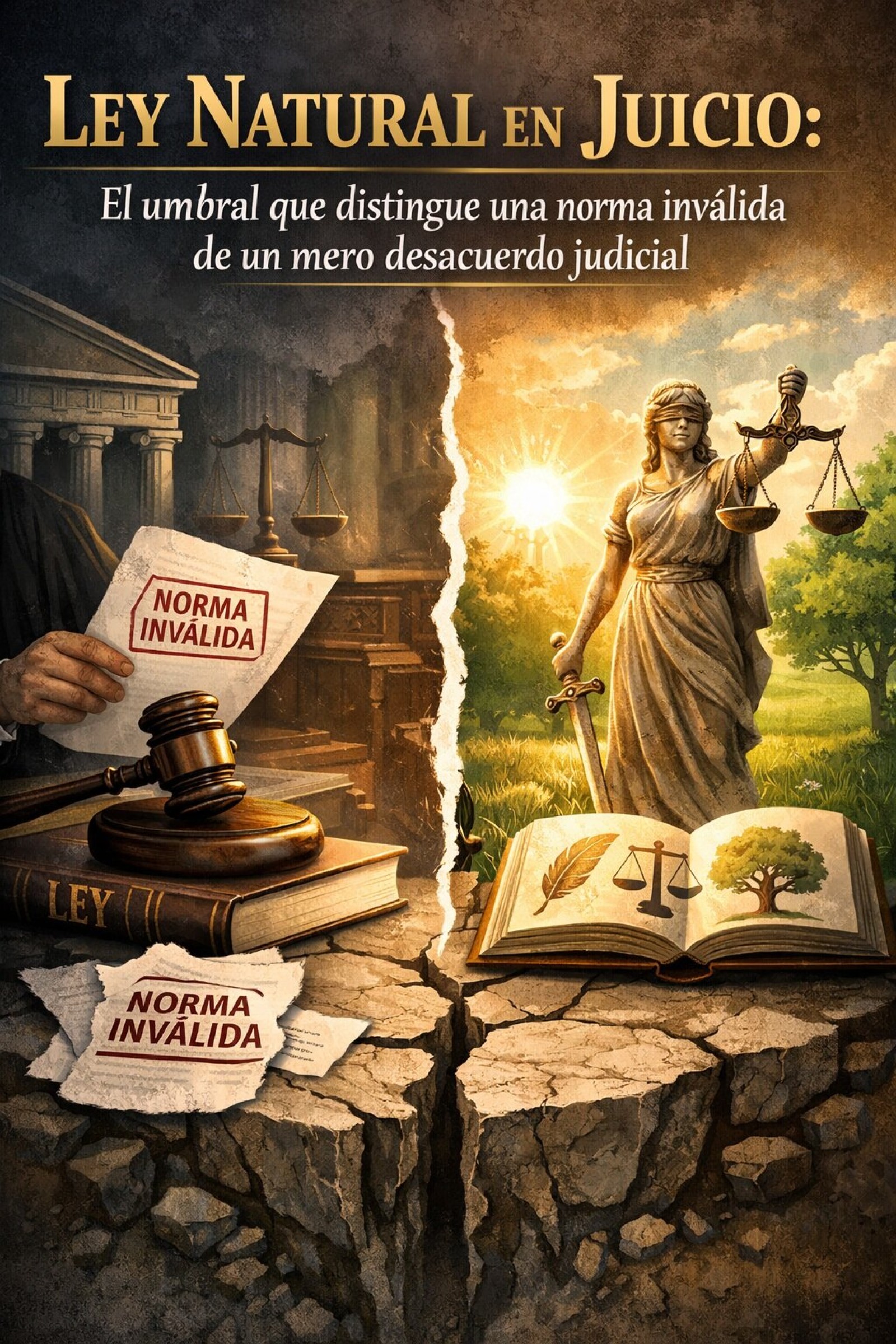
There is a phrase that gets thrown around in law school hallways like it’s settled: an unjust law is no law at all. Lex iniusta non est lex. Sounds noble. But the moment you sit in a real courtroom and try to use it, you realize the doctrine is a battlefield, not a textbook footnote.
The natural law theory debate isn’t academic entertainment. It decides whether a statute gets enforced or wiped out. And the line between a court applying a higher moral principle and a judge imposing personal taste is razor thin. I’ve seen both sides up close.
What Natural Law Theory Actually Claims (And What It Doesn’t)
The core claim of natural law jurisprudence is that human-made law draws its authority from a higher moral order. Thomas Aquinas put it bluntly: a human law that contradicts natural law is a corruption of law, not law itself. That doesn’t mean it disappears from the books. It means it loses its moral grip on the conscience.
Where people get sloppy is assuming this means every bad law is automatically void. It doesn’t. A law can be stupid, wasteful, or badly drafted and still be perfectly binding. The threshold is higher than most critics admit.
Legal positivism, the rival camp, says law is law regardless of its moral quality. H.L.A. Hart and John Austin argued that validity comes from the system’s rules of recognition, not from moral merit. Honestly, for 95% of everyday cases, the positivists are right. You don’t need moral philosophy to figure out whether a parking fine applies.
The Threshold That Separates a Void Norm from a Bad Ruling
Here’s where it gets interesting. In constitutional systems like the United States, natural law thinking didn’t vanish. It got absorbed into due process review. The Fifth and Fourteenth Amendments let courts strike down laws that offend fundamental justice, and that’s where the unjust law vs valid law distinction does real work.
But the test isn’t «does this law feel wrong to me.» Courts have settled on two guardrails: contemporary consensus and morality rooted in tradition. If a principle has been repeatedly codified by legislatures, recognized across jurisdictions, or embedded in longstanding practice, a court can treat it as a baseline the challenged law violates.
That’s the threshold. Not vibes. Not personal ideology. Evidence of a shared public principle.
The first time I worked through this in an economic regulation case, I nearly blew it. I walked in thinking I could argue the regulation was simply «unfair.» That gets you nowhere. What moved the needle was showing that the same principle the regulator violated had already been enacted in three prior statutes and upheld by two appellate courts. Suddenly it wasn’t my opinion against theirs. It was their rule against their own rule.
Why «Natural Law» Is Not a License for Judicial Activism
This is the trap. Anyone can dress up a policy preference in natural law language. That’s judicial activism wearing a costume. The discipline is verifying that the principle you’re invoking has an independent, verifiable source outside your own head.
Practical checklist I use:
- Has the legislature codified this principle in any statute, ever?
- Do multiple jurisdictions recognize it, or just one ideological bloc?
- Is it rooted in a tradition that predates the current political fight?
- Can I state the principle without naming a single political faction?
If you can’t check at least three of those boxes, you’re not applying natural law theory. You’re doing politics with a robe on.
Reasonableness Review: The Working Test in Real Courts
American courts rarely say the words «natural law.» They say substantive due process or reasonableness. Same functional move, less philosophical baggage.
The reasonableness test under due process asks whether a law pursues a legitimate objective through means that don’t trample fundamental rights. When it strikes down a statute, the court is effectively saying the legislature crossed a moral line the Constitution implicitly draws.
Critics call this undemocratic. Fair point. But defenders argue that without it, the majority could legalize anything. Both sides are right. The question isn’t whether to have the power — every constitutional system has some version — it’s how tightly you leash it.
The real skill in natural law reasoning isn’t knowing the doctrine. It’s proving the principle exists independently of the judge who invokes it.
Common Law, Civil Law, and the Same Problem
Common law systems handle this through precedent. Civil law systems do it through constitutional courts and general principles of law. Germany’s Radbruch formula is a famous example: a law that reaches «intolerable» injustice loses validity. That standard is deliberately vague, and courts lean on it carefully because they know the abuse potential.
The pattern is universal. Every legal order has to decide when a formally valid norm stops being enforceable because its content is intolerable. The natural law vs positive law split is less a divide than a spectrum, and most systems live somewhere in the middle.
The Mistake That Kills Cases
Confusing natural law with personal morality. I’ve watched lawyers argue that a regulation is unjust because it hurts their client. That’s not a legal argument, it’s a complaint. Courts want structure.
What works is showing that the challenged norm violates a principle the system already recognizes. That’s how you win. Not by appealing to abstract justice, but by proving the system is contradicting itself.
The threshold distinguishing an invalid norm from a mere judicial disagreement is evidence. Documented, external, verifiable evidence of a public principle. Without it, you’re just another voice in the room. With it, you’re applying natural law the way it was meant to be applied — as a limit on power, not a weapon for the powerful.
