Post actualizado el día octubre 26, 2026 by DeiviSanzPlay
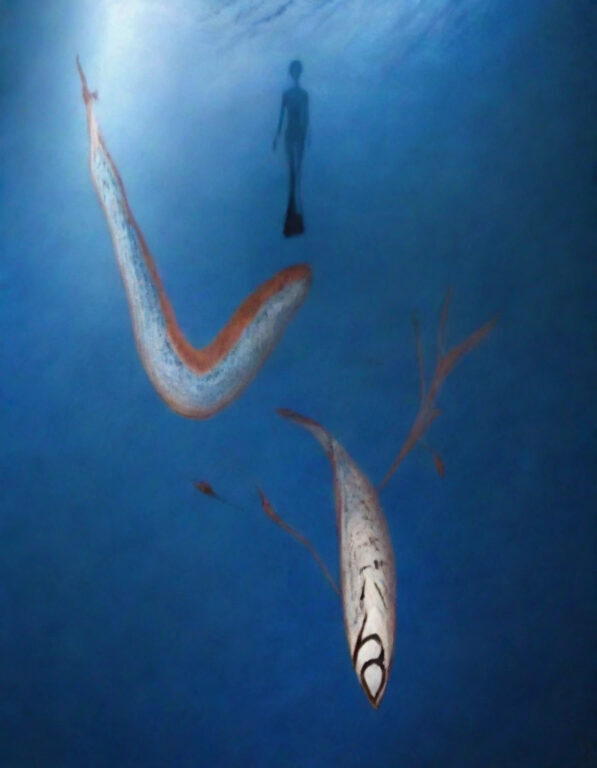
The oarfish is the longest bony fish alive, and almost nobody has seen one swimming. When one washes up on a beach, it makes global news. When one shows up on a live camera in the deep sea, researchers lose their minds. That gap between myth and reality is exactly why this fish matters.
Quick reality check: the oarfish is not a serpent, not a monster, and definitely not a threat. It’s a fragile, gelatinous giant that lives in a world we still barely understand. And the «oarfish size» question is where most people get it wrong, so let’s start there.
Oarfish Size: How Big Does This Thing Actually Get?
The giant oarfish (Regalecus glesne) can reach up to 11 meters (36 feet) in length, which makes it the longest bony fish recorded in the ocean. Some unconfirmed reports push it closer to 17 meters, but those measurements come from decomposed specimens stretched out on land, so take them with a grain of salt.
Here’s the catch nobody mentions: most of that length is ribbon-thin body and a tapering tail. A full-grown oarfish weighs relatively little for its size, and its body is covered in silvery skin with no real scales. It feels like wet gelatin if you ever touch one, which is exactly why they don’t survive long when they surface.
Don’t confuse it with the king of herrings, a smaller cousin in the same family. Same weird shape, less dramatic length. The giant oarfish is the one that fuels sea serpent legends, and its size is the main reason why.
Where Does the Oarfish Live? Deep Water, Not Your Local Beach
The oarfish habitat is the mesopelagic and bathypelagic zone, roughly between 200 and 1,000 meters deep. That’s the twilight and midnight zone, where sunlight barely reaches or doesn’t reach at all.
It’s found in temperate and tropical oceans worldwide: the Atlantic, Pacific, Indian Ocean, and even the Mediterranean on rare occasions. But finding one alive is another story. They live in cold, deep, low-oxygen water, and they’re built for that pressure. Bring them up too fast and their body basically collapses.
This is why almost every oarfish you see in photos is either dead on a beach or dying at the surface. They don’t come up because they want to. Something is usually wrong when they do.
How the Oarfish Eats Without Being a Predator
Forget the sea monster image. The oarfish feeding strategy is passive and almost delicate. It’s a filter feeder and a small-prey hunter combined.
Its diet is mostly krill, small crustaceans, tiny squid, and small fish. It doesn’t chase anything. Instead, it hangs vertically in the water column, head up, and uses its small, toothless mouth to suction in whatever drifts past. Some researchers believe it uses its long dorsal fin as a sensory tool, feeling for movement in the dark.
That vertical posture is also why deep-sea cameras keep catching them doing something that looks like standing. They’re not standing. They’re ambushing plankton in near-zero visibility, which is a brutal way to make a living.
Does the Oarfish Sleep? Nobody Knows for Sure
Here’s where honesty beats speculation. We don’t have solid data on how the oarfish sleeps. What we do know is that most fish don’t sleep the way mammals do. They enter periods of reduced activity and responsiveness, often while staying slightly alert for predators.
For the oarfish, the working theory is that it rests while drifting, possibly hovering in a near-vertical position with minimal movement. No deep REM cycles, no curled-up ball. Just a slow, suspended pause in the dark.
Anyone who tells you they know exactly how an oarfish sleeps is guessing. The honest answer is that studying sleep in a fish that lives 1,000 meters down is close to impossible with current technology.
The Sea Serpent Myth and Why It Refuses to Die
The oarfish is almost certainly the origin of many sea serpent stories. Its ribbon-like body, silvery sheen, and red dorsal fin crest look like something from a fantasy novel when it’s floating near the surface.
In Japanese folklore, the oarfish is called ryugu no tsukai, the «messenger from the Sea God’s Palace.» Old legends claim they appear before earthquakes. Modern science has found no causal link, but the timing of some strandings has kept the myth alive in popular culture.
What’s more interesting is why they strand at all. Current evidence points to illness, injury, or disorientation rather than any prophetic power. They come up because they’re dying, not because they’re warning anyone.
Why We Still Know So Little About the Oarfish
Deep-sea observation is expensive and rare. Most oarfish data comes from dead specimens, accidental bycatch, and a handful of ROV encounters. That’s a thin evidence base for a fish this famous.
What we do know is fascinating enough. They can regenerate parts of their body. They have no swim bladder, which is unusual for a bony fish and probably helps them survive at depth. They swim with a gentle undulating motion using a long dorsal fin, not their tail.
If you want to see one alive, your best bet is a deep-sea research stream or a viral video from an ROV. Beach strandings happen, but they’re grim, not magical. The real oarfish is stranger than the legend, and it’s still out there, doing its slow, silent thing in water we’ll probably never visit.