Post actualizado el día octubre 17, 2026 by DeiviSanzPlay
You don’t need four years parked in a lecture hall to walk away with a real degree. There are universities, right now, that will take the skills you built on the job and convert them into academic credits. It’s called recognition of prior learning, and it’s the fastest legitimate route to a diploma for people who already know their craft.
Before you get excited, know this: it’s not a loophole, it’s not a shortcut for slackers, and it’s not for everyone. It’s a structured academic process where what you’ve done at work is measured against what a graduate is supposed to know. If it matches, you skip the classroom and go straight to assessment.
What exactly is a degree based on work experience?
A degree obtained through professional practice is a formal academic qualification granted after a university evaluates your real-world competence instead of your attendance record. You don’t sit through lectures on theory you’ve already applied for a decade. You prove you’ve applied it.
The key term here is validation of professional experience for degree completion. It’s a specific mechanism, not a vague promise. Universities that offer it have entire departments dedicated to mapping your CV against their curriculum.
Does it carry the same weight as a traditional degree? Yes, provided the institution is accredited. A degree from a recognized university is a degree, full stop. Employers rarely ask how you earned it, they check whether the institution is real.
Which universities actually do this
Plenty, and not just obscure online outfits. In Spain, the National University of Distance Education (UNED) has a formal recognition of experience pathway. The Open University of Catalonia does something similar. In the US, the University of Phoenix and others have built entire programs around prior learning assessment.
In the UK, the Open University pioneered this decades ago. Even traditional heavyweights like Harvard run executive programs where work experience is the entry ticket rather than a GPA.
But here’s the catch nobody mentions in the brochures: not every faculty accepts it. Business, technology, engineering, and applied arts are the usual suspects. Law and medicine? Forget it. You can’t validate your way into being a surgeon by having cut open a few chickens.
The real requirements, without the sugarcoating
Every university sets its own bar, but the pattern is consistent. You need a minimum number of years in a role directly tied to the field you want the degree in. Usually three to five years, sometimes more for technical programs.
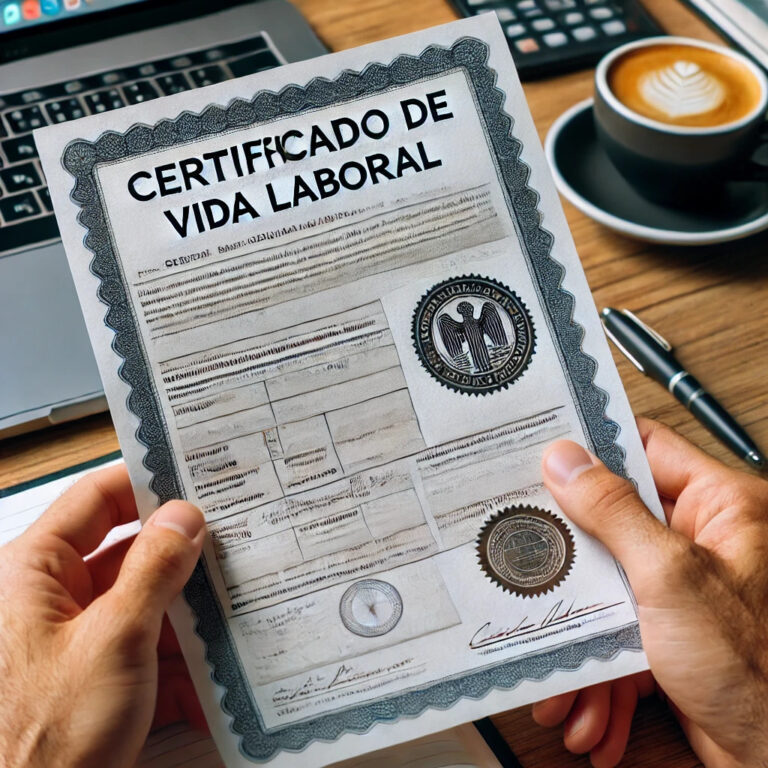
Then you need documentation. Lots of it. Recommendation letters, employment certificates, project descriptions, a work portfolio, sometimes a formal skills audit. If your boss can’t write a coherent letter about what you actually do, you’re already behind.
And yes, many programs require exams or practical assessments. You don’t just hand over your CV and collect a diploma. You demonstrate competence, often in front of a panel or through written work.
The documentary evidence of work experience for academic credit is where most applicants fail. Not because they lack the skills, but because they can’t articulate them in academic language. That’s the real barrier.
Why this isn’t for everyone (and that’s fine)
If you’ve spent fifteen years managing logistics and can prove it with data, case studies, and results, you have a shot. If you’ve been a junior admin for two years doing repetitive tasks, you probably don’t. Harsh, but that’s how assessment committees think.
Age doesn’t matter. A 25-year-old who built a profitable e-commerce operation from scratch has more validatable experience than a 45-year-old who’s been coasting. What matters is depth, responsibility, and documentation.
Part-time work counts too, as long as it’s relevant and substantial. A part-time developer who shipped production code for three years has more to show than a full-time employee who attended meetings.
The cost question nobody answers straight
Is it cheaper? Usually yes, but not dramatically. You save on years of tuition, but assessment fees, portfolio preparation, and administrative costs add up. Some programs charge per credit validated, which can still run into thousands.
What you really save is time. Two years instead of four, sometimes twelve months instead of three years. That’s the actual return on investment, and it’s significant if you’re already earning.
How to start without wasting a year
First, identify three or four universities that explicitly mention recognition of prior learning or validation of professional experience in their admissions pages. Not the ones that vaguely say «we value experience.» The ones with a named process and a contact person.
Second, request a pre-assessment. Most institutions offer an informal evaluation before you commit. Use it. It tells you whether you’re wasting your time or sitting on a goldmine.
Third, start building your portfolio now. Every project, every measurable outcome, every promotion. If you can’t prove it in writing, it didn’t happen as far as the committee is concerned.
Fourth, don’t lie. Academic fraud in credential validation is taken seriously. If they catch you inflating your role, you’re not just rejected, you’re blacklisted from that institution permanently.
Common questions, straight answers
Can I get a degree with zero formal education? Yes, if your experience is deep enough and the university accepts it. But you’ll need to prove it harder than someone with a previous degree.
Do I need to attend any classes? Some programs require a short residential or online component. Others are purely assessment-based. Check before you apply.
Is the degree identical to a traditional one? The diploma looks the same. The transcript might note the assessment route, but employers rarely scrutinize that level of detail.
What if I already have a degree? You can use experience validation to get a second degree or specialization faster. Some universities waive entire modules based on prior learning.
How long does it take? Realistically, six months to two years. Anyone promising a degree in six weeks is selling you something worthless.
The bottom line: higher education through work experience is real, it’s legitimate, and it’s underused. Most people never look into it because they assume it’s a scam or they don’t qualify. Some of them are wrong, and they’ll never know unless they ask.