

Post actualizado el día octubre 26, 2026 by DeiviSanzPlay
The Panama Canal: A Shortcut That Rewrote Global Trade
Let’s cut the fluff. The Panama Canal isn’t just a ditch between two oceans. It’s the single most disruptive piece of infrastructure in maritime history, and in 2026 it’s still moving roughly 5% of global maritime trade every single year. If you’ve ever bought a TV from Asia or a coffee from Colombia, there’s a decent chance it passed through those locks.
What makes the Panama Canal so important isn’t romance. It’s math. Before it opened, a ship going from New York to San Francisco had to sail around Cape Horn — a brutal 13,000-mile detour. After 1914, that same trip dropped to under 5,000 miles. That’s not an improvement. That’s a different planet.
France Tried First and Lost Everything
The story people skip is the French disaster. Ferdinand de Lesseps — the guy who built the Suez Canal — was convinced he could cut Panama at sea level. He was wrong, and it cost around 22,000 workers their lives, mostly to yellow fever and malaria, plus a financial collapse that shook France in the late 1880s.
The French engineers underestimated the Culebra Cut, the mountain of rock they had to blast through. Landslides kept refilling the trench. It was a graveyard project. When the U.S. took over in 1904, they didn’t just throw money at it — they changed the entire approach.
The breakthrough wasn’t engineering. It was medicine. Dr. William Gorgas, applying the mosquito theory of Dr. Carlos Finlay and Walter Reed, wiped out yellow fever in the Canal Zone by draining swamps and fumigating buildings. Without that, no canal. Period.
How the Locks Actually Work (And Why They’re Genius)
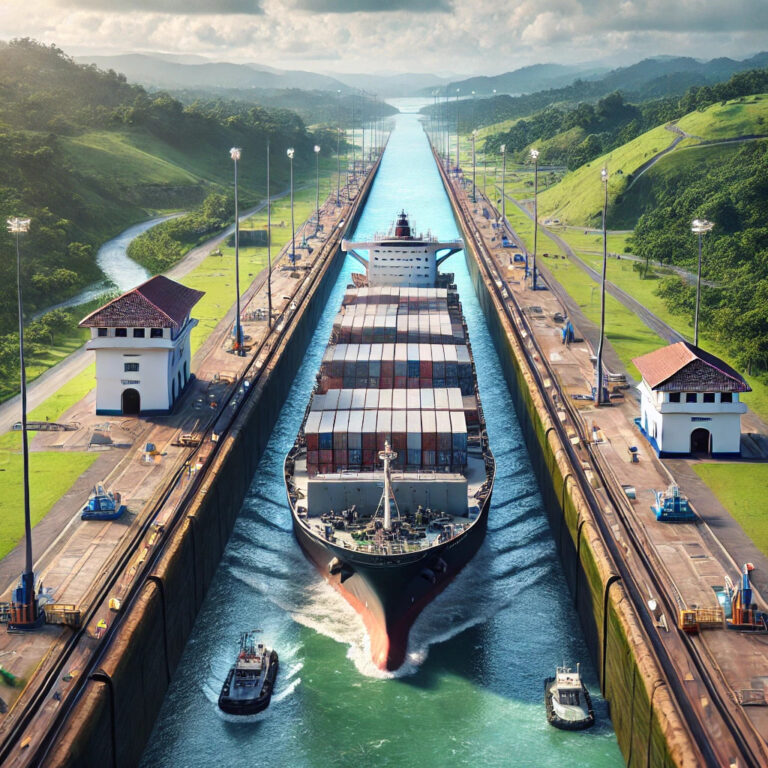
The Panama Canal doesn’t cut through the continent at sea level. It lifts ships 85 feet up to Gatun Lake using a system of locks, then lowers them back down on the other side. It’s basically a water elevator.
Each lock chamber is 110 feet wide and 1,050 feet long in the original configuration. Water flows in by gravity from Gatun Lake — no pumps needed for the main lift. That’s the elegant part. The whole system runs on rainwater, which is why droughts matter so much.
In 2023 and 2024, a severe El Niño-driven drought forced the Panama Canal Authority to slash daily transits from around 36 to as low as 22. Shipping rates spiked, and some vessels rerouted around Suez or even Cape Horn. That’s how fragile the «shortcut» really is.
The 2016 Expansion and the Rise of the Neopanamax
For almost a century, the canal was capped by the size of its locks. Ships bigger than «Panamax» — roughly 965 feet long and 106 feet wide — simply couldn’t fit. Global trade outgrew the canal, so the canal had to grow.
The Third Set of Locks Project opened in June 2016 after nine years of work and around $5.4 billion. It added a new lane with chambers 1,400 feet long and 180 feet wide, handling ships up to 366 meters — the Neopanamax class.
This is where the Panama Canal expansion really matters: LNG carriers, huge container ships, and bulkers that used to avoid the route now use it. In 2024, the Neopanamax locks handled a record share of total tonnage. The canal didn’t just stay relevant — it doubled down.
Who Controls the Canal in 2026
Since December 31, 1999, the Panama Canal has been run by the Panama Canal Authority (ACP), an autonomous agency of the Panamanian government. This was the deal sealed by the Torrijos-Carter Treaties in 1977.
Let’s be blunt: the handover worked. The ACP has run the canal more efficiently than the U.S. did in its final decades, reinvesting billions into dredging, new tugboats, and the 2016 expansion. Panama doesn’t just own the canal — it operates it as a serious business.
That said, geopolitics never left. In late 2024 and 2025, U.S. political figures floated ideas about «taking back» the canal. Panama’s response was immediate and firm: the canal is non-negotiable sovereign territory. The ACP keeps it neutral under the 1977 Treaty of Neutrality, open to all nations’ shipping.
Real Numbers That Show the Scale
- Around 13,000 to 14,000 vessels transit the Panama Canal every year in normal conditions.
- It saves roughly 8,000 nautical miles on a typical Asia-to-U.S. East Coast route compared to going around South America.
- Transit takes about 8 to 10 hours through the locks, plus queuing time.
- Revenue hit roughly $4.9 billion in fiscal year 2024, despite the drought.
- Over 1 million ships have transited since 1914.
Why the Canal Still Matters More Than Ever
Global supply chains are rebalancing. Nearshoring is real, but Asia still ships to the U.S. East Coast, and the Panama Canal remains the cheapest, fastest route. Alternatives like Mexico’s Interoceanic Corridor or a dry canal through Nicaragua have been floated for decades — none come close.
The real threat isn’t competition. It’s water. Gatun Lake depends on rainfall, and climate change is making El Niño cycles more erratic. The ACP is studying a new reservoir at Río Indio to secure the canal’s water supply for the next 50 years. That’s the next mega project, and it’s already controversial because it would displace communities.
Visiting the Panama Canal: What You’ll Actually See
If you go to Panama, skip the postcard version. Head to the Miraflores Locks visitor center near Panama City at dawn. You’ll watch a 300-meter container ship rise 16 meters in two steps, pulled by locomotives called «mules» on rails. It’s slow, mechanical, and strangely hypnotic.
The Agua Clara locks on the Atlantic side are less crowded and show the Neopanamax ships up close. The Biomuseo nearby, designed by Frank Gehry, gives context on how the isthmus itself reshaped global biodiversity millions of years before humans showed up.
FAQ: Panama Canal Questions People Actually Ask
What is the Panama Canal and why does it matter?
The Panama Canal is an 82-kilometer artificial waterway connecting the Atlantic and Pacific oceans through the Isthmus of Panama. It matters because it slashes shipping distances, cuts costs, and keeps global trade flowing — around 5% of world maritime commerce passes through it.
Who built the Panama Canal?
France started construction in 1881 under Ferdinand de Lesseps but failed. The United States took over in 1904 and finished it in 1914, led by engineers John Frank Stevens and George W. Goethals, with Dr. William Gorgas handling disease control.
What were the biggest challenges?
Tropical diseases killed tens of thousands. Landslides in the Culebra Cut repeatedly undid months of digging. Designing locks that could lift ships 26 meters without pumps was another beast entirely.
How has the Panama Canal changed global trade?
It cut weeks off voyages between the Atlantic and Pacific, made U.S. East Coast ports competitive with the West Coast, and turned Panama into a logistics hub. Without it, container shipping as we know it wouldn’t exist.
What is the Panama Canal expansion?
Completed in 2016, the Third Set of Locks added a Neopanamax lane for ships up to 366 meters long, roughly tripling capacity and allowing LNG and mega-container vessels through.
Who controls the Panama Canal today?
The Panama Canal Authority (ACP), a Panamanian government agency, has controlled it since 1999 under the Torrijos-Carter Treaties.
Can you visit the Panama Canal?
Yes. Miraflores Locks, Agua Clara Locks, and the Canal Museum in Casco Viejo are the main stops. Go early, bring water, and expect to stand there longer than you planned.
