Post actualizado el día octubre 26, 2026 by DeiviSanzPlay
You think you know the panda. Black and white, eats bamboo, looks like a plush toy. But scratch the surface and you’ll find one of the strangest mammals on Earth. The panda bear is a carnivore that decided to become a vegetarian, a bear that avoids other bears, and a conservation icon that almost vanished while the world wasn’t looking. Here’s what actually makes it tick in 2026.
What Does the Panda Bear Eat? (Spoiler: It’s Not Just Bamboo)
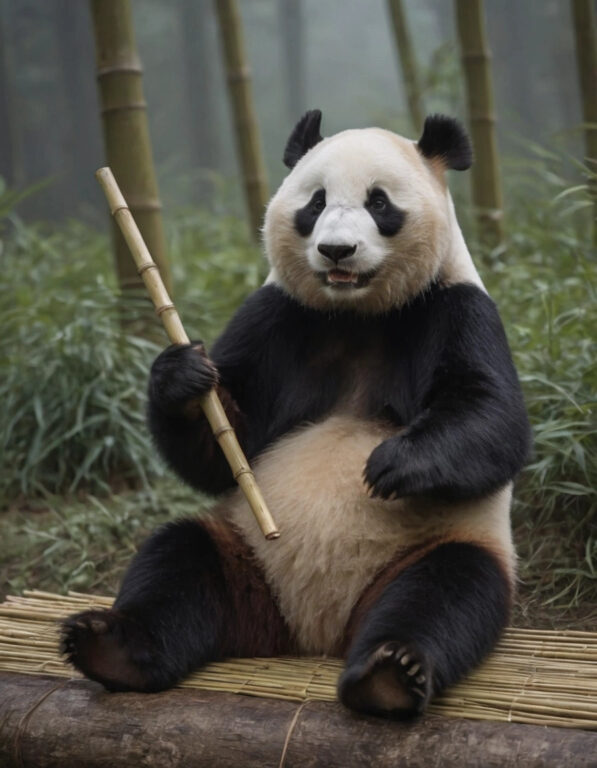
The panda bear diet is 99% bamboo. That’s the headline. But here’s the part most articles skip: the giant panda has the digestive system of a carnivore. Its gut is short, its stomach is simple, and it can’t break down cellulose efficiently. So it has to eat 12 to 38 kilos of bamboo every single day just to stay alive.
And yes, pandas do eat other things. Fruits, eggs, small rodents, even carrion if they stumble on it. There are documented cases of pandas scavenging meat. They’re not picky eaters by choice, they’re picky eaters by necessity. Bamboo is abundant and low-effort, which matters when you’re a 100-kilo bear that moves slower than a sloth on a Sunday.
Where Do Pandas Live? The Shrinking Bamboo Forests of China
The natural habitat of the panda bear is the mountain forests of Sichuan, Shaanxi, and Gansu provinces in China. Cool, humid, dense with bamboo. That’s it. They don’t live anywhere else in the wild.
Climate change is the quiet killer here. Bamboo blooms and dies in cycles, and when it dies, pandas have to migrate. But their habitat is fragmented by roads, farms, and human settlements. A panda that can’t move between bamboo patches is a panda that starves. Conservationists have been building corridors to reconnect these patches, and it’s working, but slowly.
Is the Panda Bear Still Endangered in 2026?
Short answer: no, it’s listed as vulnerable, not endangered. The IUCN downgraded it in 2016 after wild populations crept above 1,800 individuals. That was a genuine win.
But here’s my take, and it’s not the popular one: the downgrade was premature. The population rebound is real, but it’s concentrated in a handful of reserves. Outside those reserves, pandas are still losing ground. The Chinese government has poured billions into panda conservation, and it shows. But calling the species «safe» in 2026 is a stretch. It’s a fragile success, not a finished story.
Why the Panda Bear Is So Special (And Weird)
The black and white fur isn’t just for looks. The white patches help the giant panda blend into snow at high altitudes. The black patches on the ears, eyes, and legs help it hide in bamboo shadows. It’s camouflage, not fashion.
And then there’s the thumb. Pandas have an enlarged wrist bone that works like a sixth finger. It’s not a real thumb, but it lets them grip bamboo stalks like a pro. Evolution basically built a tool from scratch.
Their bite force is another surprise. A panda can bite harder than a lion. That’s a carnivore jaw attached to a bamboo-eating lifestyle. If a panda wanted to hurt you, it could. It just usually doesn’t.
Panda Bear Behavior: Solitary, Lazy, and Smarter Than You Think
Panda bear behavior is built around energy conservation. They sleep 10 to 16 hours a day. They move slowly. They avoid each other. That’s not laziness, it’s survival math. Bamboo gives them almost no calories, so every step costs more than it’s worth.
But they’re not dumb. Pandas can solve simple puzzles, remember keepers, and learn routines. In captivity, they’ve been observed using tools. In the wild, they mark territory with scent glands and vocalize in ways researchers are still decoding.
How Pandas Help Other Species (The Umbrella Effect)
Protecting pandas means protecting everything around them. Conservationists call it the umbrella species effect. Save the panda’s habitat and you also save golden monkeys, red pandas, takins, and hundreds of bird species that share the same forests.
This is why panda conservation gets funding that other species don’t. It’s not fair, but it’s effective. The panda is a marketing machine, and that marketing protects entire ecosystems.
5 Panda Bear Curiosities Most People Get Wrong
- They’re not calm by nature. Pandas can be aggressive when cornered or when protecting cubs. They’re bears, after all.
- Cubs are born pink and blind. They weigh about 100 grams, roughly the size of a stick of butter.
- They don’t hibernate. Bamboo doesn’t store enough fat, so pandas stay active year-round.
- They poop constantly. Up to 40 times a day, because their digestion is terrible.
- They’re not all black and white. A rare brown panda exists in the Qinling Mountains. Only a handful have ever been seen.
The Real Threat in 2026: Habitat, Not Poaching
Poaching is no longer the main danger. China cracked down hard, and the penalties are brutal. The real threat is habitat loss, and it’s happening in ways that don’t make headlines.
Dams, highways, tourism infrastructure, and climate-driven bamboo die-offs are squeezing pandas into smaller and smaller islands of forest. A population of 1,800 sounds healthy until you realize it’s split across 30+ isolated groups. Genetic diversity is a long-term problem nobody has fully solved.
The panda’s survival isn’t a victory lap. It’s a maintenance contract that has to be renewed every single year.
What You Can Actually Do (Beyond Sharing Cute Videos)
If you care about the panda bear, stop treating it like a mascot and start treating it like a species. Donate to organizations that work on habitat corridors, not just breeding centers. Support reforestation projects in Sichuan. And push back on the idea that the panda is «saved.» It’s not. It’s holding on.
The panda is a mirror. It shows what happens when humans decide a species is worth saving, and what happens when we get bored and move on. In 2026, we haven’t moved on yet. Let’s keep it that way.