Post actualizado el día octubre 25, 2026 by DeiviSanzPlay
If your dishwasher smells like sewage every time you open it, you’re not alone. It’s one of the most common problems in Spanish kitchens, and it won’t fix itself with an air freshener. Here I’ll tell you why it happens and how to tackle it at the root, without miracles or strange products.
Why your dishwasher smells bad (and it’s not just the food)
Bad smells in the dishwasher almost never come from visible dirt. They come from a film of food residue, grease and soap that builds up in areas you can’t see: the filter, the spray arms, the door seal and the sump. That mixture decomposes and releases that unmistakable stench.
Another factor many people ignore: stagnant water at the bottom. If the drain doesn’t evacuate properly, a puddle remains that ferments. And watch out, because if you use strongly scented tablets, you may be masking the problem instead of solving it. The chemical «clean» smell doesn’t cover up the rotten smell for long.
The key is to prevent and treat dishwasher odors with a realistic routine, not with TikTok tricks that last two days. I’ll explain it step by step.
Regular filter cleaning: 80% of the problem is solved here
The filter is the point where food residue accumulates. If you don’t clean it every week or every two weeks, grease sticks and starts to decompose. You don’t need to take half the dishwasher apart: remove the filter, rinse it with hot water and scrub with a soft brush and a few drops of hand dishwashing liquid.
Do it even if the filter looks clean. The invisible film of grease is what generates the smell. And if you have children or cook a lot, also check the sump area, where pieces of bone, shells or plastic labels sometimes slip in.
A clean filter is the foundation for preventing bad dishwasher odors. Without this, any other trick is a waste of time.
White vinegar: the natural deodorizer that actually works
White vinegar is acetic acid, and that acid dissolves the layer of limescale and grease where bacteria cling. It’s not magic, it’s basic chemistry. Place a cup of vinegar on the top rack, in a dishwasher-safe bowl, and run a hot cycle without dishes.
That said, don’t mix it with bleach or chlorinated tablets. The gas generated is irritating and adds nothing. If your dishwasher has very dirty plastic baskets, you can spray vinegar directly and let it act for 10 minutes before the cycle.
This trick helps neutralize dishwasher odors and also keeps the pump and pipes cleaner. Repeat it once a month, or every two weeks if your area’s water is very hard.
Baking soda: absorbs odors between cycles
Baking soda doesn’t disinfect, but it absorbs odor molecules. Sprinkle a couple of tablespoons on the bottom of the dishwasher when it’s empty and leave it there until the next use. Then, before loading, remove it or let it go with the cycle.
Another option: make a paste with baking soda and water, and apply it with a brush to the door seal and the interior corners. That’s where the black mold that smells of damp accumulates. Rinse well afterwards.
Baking soda is a great ally for treating dishwasher odors, but it doesn’t replace cleaning the filter. Use it as a complement, not as the only solution.
Leave the door ajar: the gesture that prevents mold
After each cycle, the inside of the dishwasher is left damp and hot. If you shut the door immediately, that moisture stays inside and is the perfect breeding ground for mold and bacteria. The smell of stale damp that you notice the next day comes from there.
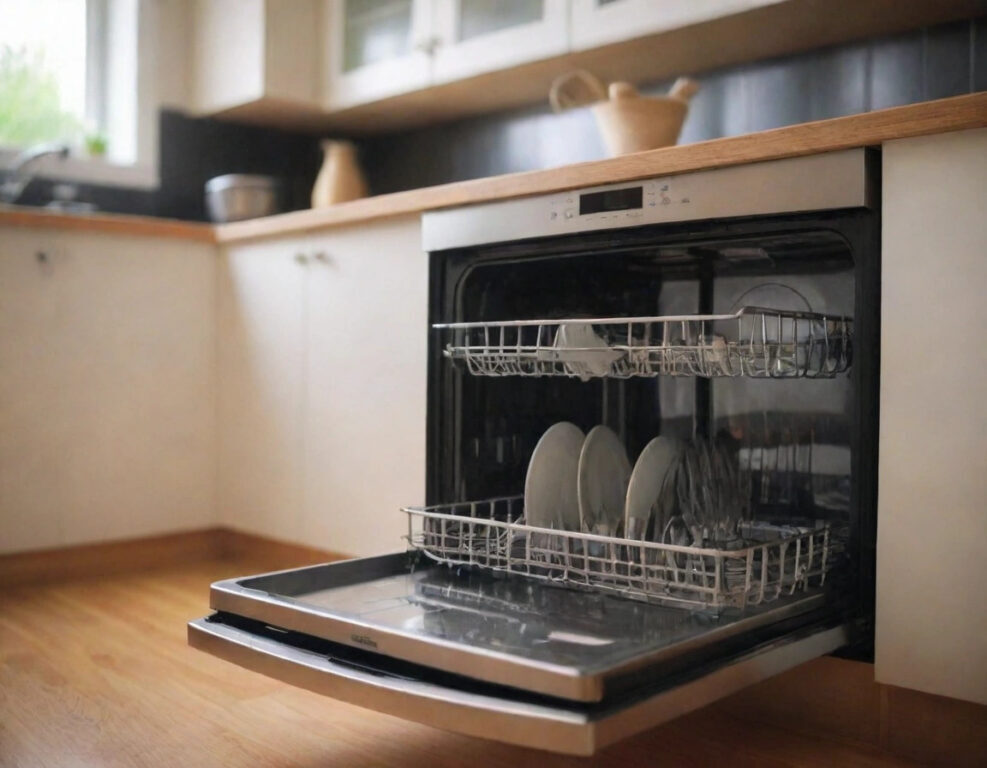
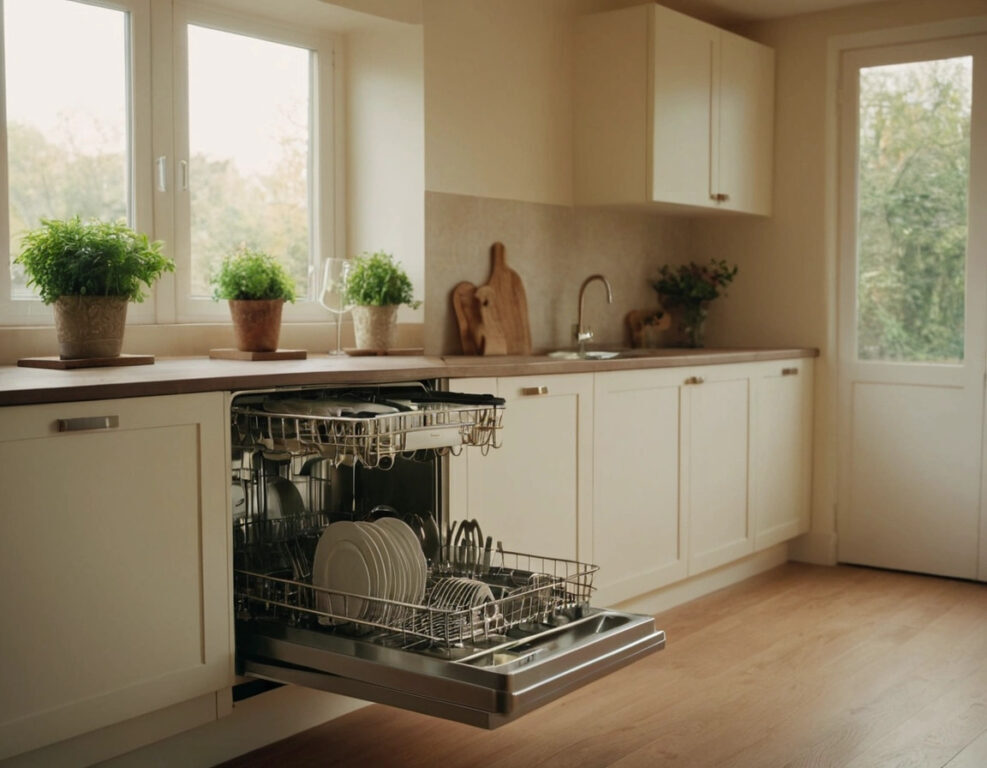
Leave the door ajar for about 10-15 minutes, or even longer if you can. In summer, with a hot kitchen, it’s almost mandatory. If you have small children or cats, use a door lock or simply open it fully and close it again once it has dried.
This habit is the simplest way to prevent dishwasher odors in the long term. It costs nothing and makes a huge difference.
Check the drain and the hose: the hidden source
If the smell persists after cleaning the filter, vinegar and baking soda, the problem may be in the drain. The sink trap or the dishwasher drain hose may have accumulated residue that travels back up into the appliance. It’s less common, but it happens.
Check that the hose doesn’t have a low loop where water stagnates. And if the sink drain smells bad, that smell can travel through the pipe to the dishwasher. Clean the trap and, if necessary, call a plumber.
In extreme cases, a cycle with citric acid (or a specific dishwasher cleaner) can descale the pump and internal pipes. But don’t overdo it: excess citric acid can damage the rubber seals.
What NOT to do if you want to prevent odors
Don’t put dishes in without rinsing off large residue. Don’t use the dishwasher as storage for dirty dishes for days. Don’t mix bleach with vinegar. Don’t trust perfumed balls that only mask the smell. And don’t always wash at low temperature: the eco cycle is fine, but every now and then it needs a hot one to degrease.
By following these steps, your dishwasher should smell genuinely clean. If the smell comes back after two weeks, check the filter again: you’re probably not cleaning it often enough.