

Post actualizado el día octubre 26, 2026 by DeiviSanzPlay
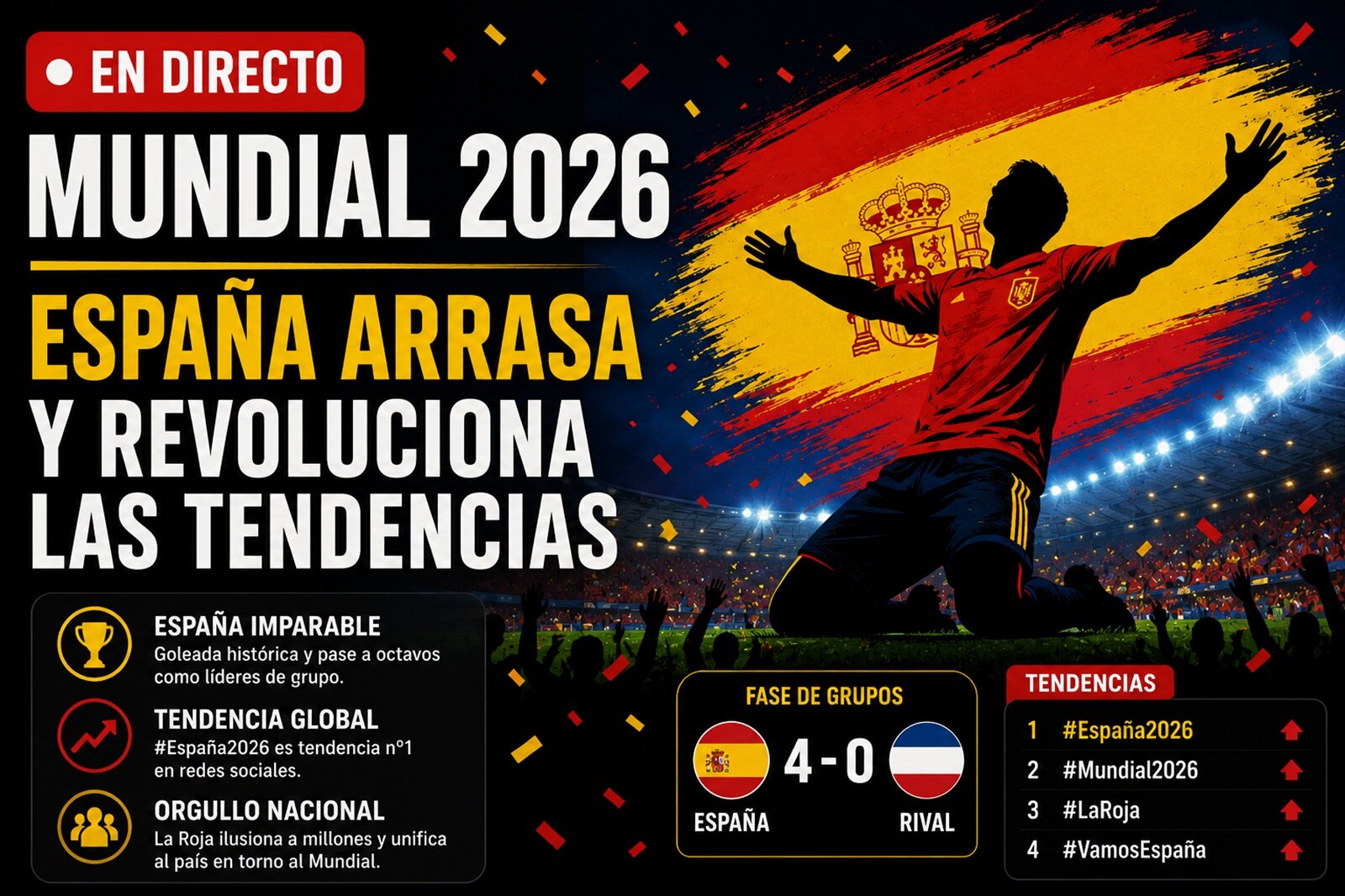
The 2026 World Cup is no longer a promise; it’s a reality unfolding across the United States, Mexico, and Canada. And Spain, the Spanish national football team, has planted itself right in the middle of the conversation. Not as a side act. As a genuine contender. Luis de la Fuente has built something that feels less like a reboot and more like a quiet takeover.
Let’s cut through the noise. The tournament expanded to 48 teams, 104 matches, and a format that rewards depth over luck. That suits Spain. A squad that can rotate without dropping quality is worth more here than a one-man army. And La Roja has that in spades.
Why Spain’s 2026 World Cup odds are no accident
Opta’s predictive models have Spain sitting at roughly 23.45% to win the whole thing. Second favorites, behind France (34.05%) and ahead of England (21.94%) and Argentina (20.55%). That’s not sentimentality. That’s numbers.
The Spanish national football team has done the ugly work too. Grinding past Portugal in tight knockout football isn’t glamorous, but it’s exactly the kind of resilience that wins World Cups. Defensive solidity plus midfield control equals tournament football that travels well.
Spain hasn’t just been good. They’ve been stubborn in the best possible way.
Argentina, the reigning champions, have looked wobblier than expected in the knockouts. That’s why their odds dipped. Meanwhile, Spain climbed. Not because of a highlight reel, but because of consistency when it matters.
World Cup vs Euro: the audience and money gap
Here’s where it gets interesting. Euro 2024 pulled 328 million viewers for the final alone, and 5.4 billion cumulative live views across 51 matches. The 2022 World Cup? Around 5 billion. So the Euro isn’t as far behind as people assume.
But the 2026 World Cup changes the math. More teams, more matches, more time zones. The winner takes home $50 million from a $655 million prize pool. The Euro champion got roughly €28.25 million from €331 million. The World Cup pays nearly double for the same job.
That financial gap matters for federations, but for fans it’s about prestige. The Spanish national football team chasing a second star carries more weight than any European crown. Ask anyone in Madrid or Barcelona.
Host cities and stadiums: a logistical monster
Sixteen cities. Three countries. 104 matches. The 2026 World Cup is the first hosted by three nations, and the logistics alone are staggering. The final lands at MetLife Stadium in New York/New Jersey on July 19, 2026, with a capacity of 80,663.
Mexico City’s Estadio Azteca, 80,824 seats, adds a historic layer. It’s the only stadium to host matches in three World Cups. Dallas (70,649), Los Angeles (70,492), and Kansas City (69,045) round out the heavyweight venues.
The forecast? Over 5 million total spectators. No World Cup has ever come close. For the Spanish national football team, that means hostile crowds, long travel, and zero home comfort. Adaptability isn’t optional.
The 12-group format and what it means for La Roja
Twelve groups of four. Top two advance, plus the best third-placed teams. It’s a safety net for big nations, but also a trap for complacency. Spain’s group stage should be manageable, but the real test comes in the round of 32.
More matches mean more minutes for squad players. De la Fuente has shown he trusts his bench. That’s a weapon. France might have the better starting XI on paper, but Spain’s depth across midfield and defense gives them an edge in a marathon, not a sprint.
England and Argentina will push hard. But the Spanish national football team has something those sides lack right now: a clear identity and a manager who isn’t afraid to make unpopular calls.
My honest take: Spain are real, but not inevitable
France deserve their favorite tag. They’ve been ruthless. But Spain’s path is cleaner than most people think. Avoid France until the final, and La Roja have a genuine shot at lifting the trophy on July 19.
The 2026 World Cup is wide open. The Spanish national football team isn’t just participating. They’re shaping the story. Whether that story ends with a second star or another near-miss depends on one thing: converting control into goals when the margins shrink.
That’s the only question left. And Spain, for once, look equipped to answer it.
