Post actualizado el día octubre 26, 2026 by DeiviSanzPlay
Most people freeze when they spot a praying mantis on their tomato plant. Big mistake. That insect is one of the best free pest-control workers you’ll ever get, and digging into what it actually does all day changes how you look at it forever.
What Does a Praying Mantis Look Like (And Why That Shape Matters)
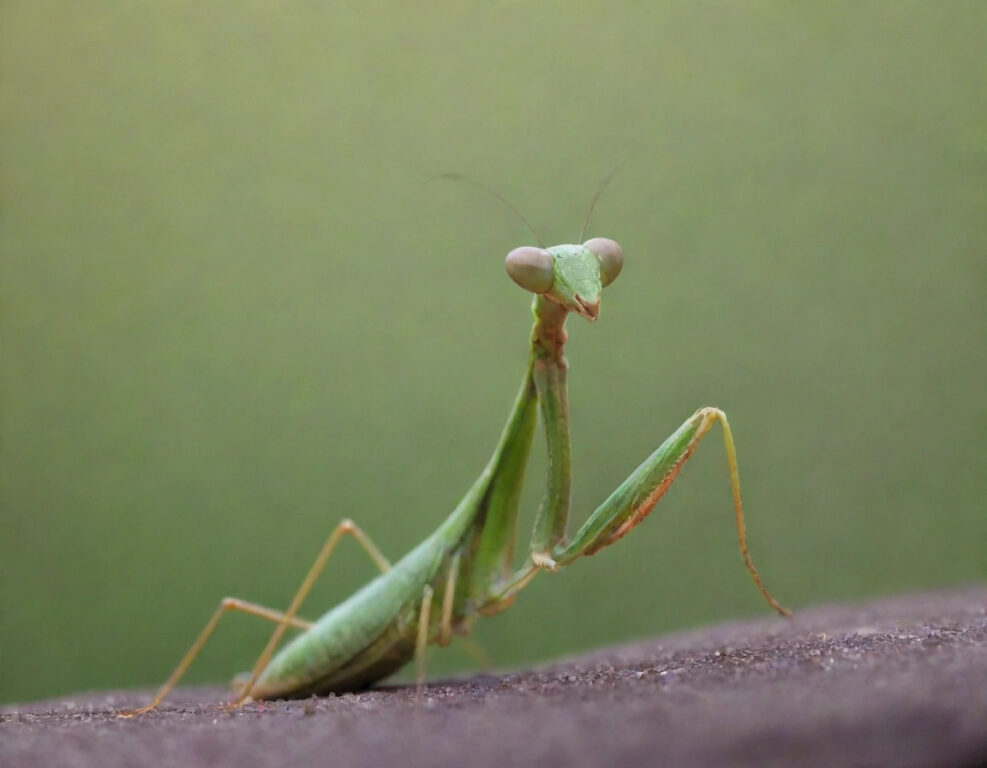
The praying mantis is built like a weapon disguised as a leaf. Its body is long and slender, its head is triangular and swivels almost 180 degrees, and those folded front legs — the ones that look like they’re praying — are actually spiked raptorial arms designed to clamp down on anything that moves.
Color varies a lot. You’ll find praying mantis specimens in bright green, dull brown, gray, and even pinkish tones depending on the species and the environment they grew up in. That camouflage isn’t decoration; it’s ambush technology.
There are over 2,400 species of praying mantis worldwide, according to entomology records, and they range from half an inch to more than six inches long. The Chinese mantis, for example, can hit four inches and is common across North America after being introduced over a century ago.
Where Do Praying Mantises Live and What Do They Eat
Praying mantis habitat is wider than most people assume. They thrive in warm, sunny places: gardens, meadows, forest edges, shrubland, and even urban balconies with the right plants. Tropical and temperate regions across Asia, Africa, the Americas, and southern Europe are packed with them.
The praying mantis diet is pure carnage. Flies, crickets, grasshoppers, moths, butterflies, bees, spiders, and even small lizards or hummingbirds in rare cases. It doesn’t discriminate. If it fits in those front legs, it’s food.
The hunting method is what makes the praying mantis such a fascinating insect. It sits completely still, sometimes for hours, then strikes in as little as 50 milliseconds. That’s faster than you can blink. No venom, no web, just raw speed and grip.
The Cannibalism Thing Isn’t a Myth — But It’s Overblown
Yes, sexual cannibalism in the praying mantis is real. The female sometimes eats the male’s head and body during or after mating. But here’s what pop culture gets wrong: it doesn’t happen every time, and in many species it’s rare in the wild.
Lab studies show that hungry females are far more likely to snack on their partner. Well-fed females often let the male walk away. The biological payoff is real though — extra protein boosts egg production, which is why the behavior survived evolution.
Mating season usually runs in late summer and fall, depending on the region. After mating, the female lays 100 to 400 eggs inside a foamy case called an ootheca, which hardens into a protective shell that survives winter.
Praying Mantis Life Cycle: From Tiny Nymph to Apex Garden Predator
Baby mantises, called nymphs, hatch in spring looking like miniature adults. No larval stage, no metamorphosis like butterflies. They just eat, grow, and molt.
Each molt means shedding the old exoskeleton to make room for a bigger one. A praying mantis goes through six to nine molts before reaching adulthood, usually by mid-summer. Then it lives a few more months, mates, and dies with the first hard frost.
Total lifespan? Roughly six months to a year in the wild. Not long, but packed with action.
Why You Actually Want Praying Mantises in Your Garden
Here’s the part most articles gloss over: a single praying mantis is a natural pest-control machine. It eats aphids, beetles, caterpillars, and other bugs that wreck crops. Farmers in some regions have used them as biological control agents for decades.
They’re not perfect. They’ll also eat pollinators like bees and butterflies, and they don’t distinguish between pests and beneficial insects. But on balance, having a few around a vegetable garden tips the scale in your favor.
The praying mantis role in the ecosystem goes beyond pest control too. It’s both predator and prey — birds, bats, lizards, and spiders all hunt it. Remove it from the food web and things get unbalanced fast.
Praying Mantis Meaning in Culture and Myth
The praying mantis in culture carries serious weight. In ancient China, it symbolized patience, courage, and strategic thinking — martial arts styles were literally built around its movements. In some African and Middle Eastern traditions, spotting one is considered good luck or a sign that a visitor is coming.
In Western pop culture, it’s the poster child for creepy-cool insects. Movies, tattoos, jewelry — the praying mantis meaning often swings between mystical guardian and cold-blooded killer, depending on who you ask.
Either way, it’s earned that symbolic status. Few insects inspire that kind of reaction.
Are Praying Mantises Dangerous or Endangered?
Short answer: no and no. Praying mantises aren’t venomous, they don’t attack humans, and they’re not in danger of extinction as a group. The one thing they can do is pinch if you grab them wrong, and it barely registers.
That said, habitat loss from urbanization and pesticide use hits local populations hard. You won’t see a mantis in a sprayed monoculture field. Encouraging native plants, skipping broad-spectrum insecticides, and leaving some wild corners in your yard goes a long way.
If you find an ootheca in winter, leave it alone. That egg case is next spring’s generation.
Quick Praying Mantis Facts Worth Remembering
- Over 2,400 species worldwide, on every continent except Antarctica.
- Can rotate its head nearly 180 degrees — unique among insects.
- Strikes prey in around 50 milliseconds.
- Females lay up to 400 eggs in a single ootheca.
- Lives roughly 6 to 12 months.
- Eats pests but also pollinators — not a perfect ally.
- Not venomous, not endangered, not dangerous to people.
Next time one lands on your fence, don’t shoo it away. Watch it for a minute. You’re looking at one of the most efficient, patient, and honestly weird predators in the insect world — and it’s doing you a favor for free.