

Post actualizado el día octubre 17, 2026 by DeiviSanzPlay
There’s a hard date that changes everything for anyone who buys for a company with a VAT number: September 1, 2026. From that day on, Amazon stops allowing B2B purchases with a tax ID from your old personal account. Either you move to Amazon Business or you’re left without a deductible invoice. No middle ground, no grace period worth mentioning.
And here’s the part that catches people off guard. Amazon Business isn’t just «Amazon with a suit on.» It’s a separate ecosystem with its own invoicing rules, its own payment policies, and a wall between what you buy as a person and what your business buys. If you mix them, the account admins can see your entire purchase history. All of it. Including that 2019 order you’d rather forget.
What Amazon Business really is and why your accountant will push you into it
The numbers settle the debate: more than 11 million organizations worldwide already buy through Amazon Business, and the platform moves over $60 billion a year. Among its clients are 97 of the Fortune 100. This isn’t a beta test. It’s corporate infrastructure dressed up as a marketplace.
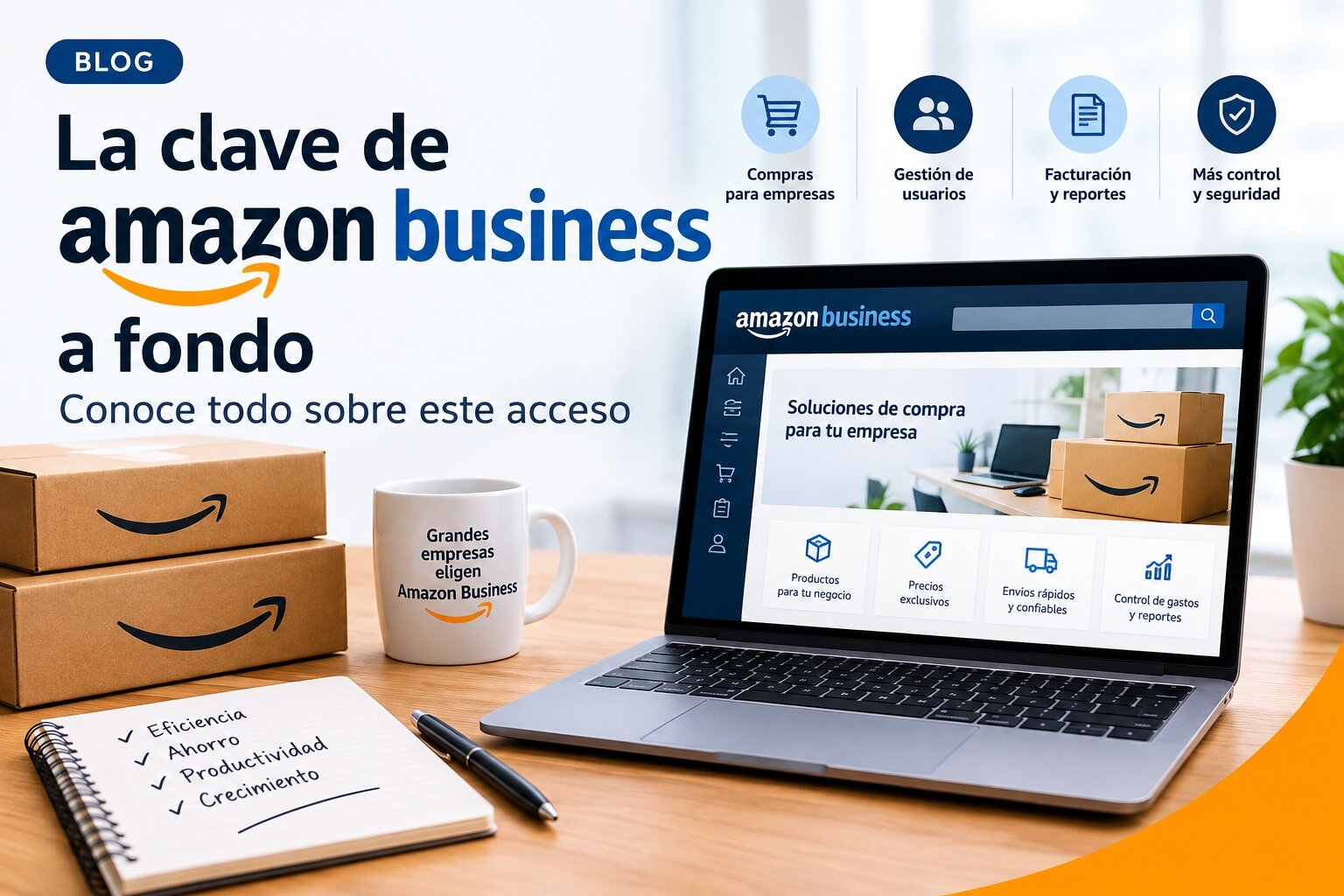
The real difference from regular Amazon is access to exclusive business prices, volume discounts, and shared payment methods so employees can buy without you approving every single order. You can also build groups by department, assign budgets, and see exactly who’s spending what.
Signing up is free. No commitment, no minimum spend. But the real cost isn’t money: it’s the hours you’ll burn setting the account up properly so it doesn’t turn into a mess of duplicate invoices and unjustified orders.
How direct access works and why most people set it up wrong from minute one
When someone invites you to your organization’s Amazon Business account, everything hinges on one detail: what you’ve already done with that corporate email on Amazon. If you never used it, you’re «new» and registration is clean. If you used it for business purchases, you have to migrate the account to keep your order history.
But if that email was used for personal purchases, Amazon’s own advice is to separate the accounts. And here’s the trap nobody warns you about: if you migrate an account with personal purchases mixed in, your organization’s admins will see everything you bought. Privacy stops being negotiable at that point. Separate. Always.
Business verification can be instant or take up to 24 hours. While you wait, you get limited browsing: you can see prices and search products, but you can’t buy. Use that window to explore the business catalog, which hides categories that never show up on regular Amazon, like industrial supplies, lab materials, or professional gear.
Prime Business is not Prime: the plan trap almost nobody understands
This is one of the most expensive confusions I run into. Regular Prime and Prime Business are completely different programs, with different prices and conditions. If you already have personal Prime, you can link to the Prime Business Duo plan for free, but only if you use a different email for the business account.
Duo is built for freelancers and sole owners. It gives you fast free shipping, predictable delivery dates, and the option to pick an «Amazon Day» to consolidate orders and cut down the number of boxes landing at your business. Sounds good. The real leap comes with the Essentials plan, around 49 euros a year (VAT excluded), which lets you add up to five users and unlocks tools like Guided Buying and Spend Visibility.
Guided Buying is one of those features you don’t know you need until you switch it on. It limits purchases to previously approved products or suppliers. If you have employees buying supplies, this stops someone from ordering a 600-euro gaming chair charged to the office supplies budget. It’s not surveillance. It’s company policy applied automatically.
VAT and invoices: where Amazon Business gets dead serious
Registering your VAT number on Amazon Business is not optional if you want deductible invoices. It’s mandatory. And the process has a trap: if you operate as a reseller of phones, consoles, laptops, or tablets in Spain, Amazon will demand specific tax certificates issued by the Tax Agency. While those certificates are under review, you can’t complete orders. The checkout literally gets blocked.
For intra-community transactions with zero VAT, your European VAT number has to be validated in the European Commission’s VIES system. If it’s not there, Amazon won’t exempt you even if you have the number. And watch out: a local VAT number that isn’t in VIES may work for some things, but not for exempting you from purchases of products shipped from another EU country.
VAT verification takes between 3 and 4 business days. During that window, if you try to buy, you’ll pay VAT without exemption. The advice nobody gives but I’d defend without blinking: wait for Amazon to confirm the validation before placing your first big order. It’s not worth risking a badly issued invoice you’ll have to rectify later.
Shared payment methods and why they’re the most political tool on the platform
Amazon Business lets you set up individual or shared payment methods. Shared ones are used by an entire team. Admins add a card or bank account and every buyer in the group can use it. Convenient? Yes. It’s also the fastest way to lose control of spending if it isn’t paired with purchasing policies and well-defined groups.
The setup I’d defend for any company with more than three people buying regularly: groups by department with shared payment methods and shared shipping addresses, but with Guided Buying enabled and budgets assigned. That way each team knows what it can buy, which card pays for it, and where it arrives. The admin sees everything from a single dashboard.
And one more thing: deferred payment by transfer at 30 days does exist, but it requires prior approval. It’s not automatic. If your company has cash flow problems, request it from the start. But don’t count on it for your first order.
What Amazon doesn’t tell you about the September 2026 migration
The key date is September 1, 2026. From then on, personal Amazon accounts will no longer support B2B purchases with VAT. If you have a VAT number registered on your personal account, Amazon is already notifying you to move it to Amazon Business. If you don’t, your purchases get treated as individual purchases. No deductible invoice. No itemized VAT. Nothing.
This comes from two European pushes: the new electronic invoicing laws in France, Germany, and Spain, and the ViDA regulation arriving in 2028, which requires that B2B purchases with a tax identifier happen in a store specifically for businesses. Amazon Business is that store. There’s no alternative inside Amazon.
The migration itself isn’t complicated, but it demands attention. If you convert your personal account, you lose the separation between personal and business purchases. If you create a new account, you start from scratch but gain control. The decision depends on how much order history you need to keep and how much you care about your boss seeing what you bought in 2019.
The detail that separates those who use Amazon Business well from those who just pay the subscription
The real difference isn’t in the discounts or the free shipping. It’s in the data. Amazon Business gives you spending analytics, purchasing reports, and dashboards that tell you exactly how much each department is spending and on what. With Prime Business, that visibility expands with pre-built dashboards and the ability to build your own.
But those reports are only useful if you set up order numbers, cost centers, and internal references on every purchase. If you don’t, your invoices become a pile of lines without context that your accountant has to decipher one by one. The key isn’t the tool. It’s the discipline of tagging every order from day one.
What «migrating» versus «separating» accounts really means when your boss sends the invitation
There’s a decision you’ll make in the first two minutes of registration that almost nobody explains properly. When you get the invitation from business@amazon.com, Amazon asks how you’ve used your corporate email in the past. And the correct answer isn’t always the obvious one.
If you used the company email only for business purchases, migrate. You keep the history and the invoices, and admins will only see B2B activity. If you ever used it for personal stuff, even once, separate with a new email. That single click decides whether your boss can browse your personal orders forever.
My position on this is firm: when in doubt, separate. Losing a bit of order history hurts less than giving your company permanent visibility into your private shopping. And on top of that, separating keeps your personal Prime benefits untouched.
Final call: get the Amazon Business key sorted before the deadline does it for you
If you buy for a business with a VAT number, the Amazon Business key is no longer a nice-to-have. It’s the only way to keep getting deductible invoices after September 2026, and the only way to keep spending under control with real data instead of guessing.
Do it now, while you can still choose how to do it. Set up groups, enable Guided Buying, tag every order, and wait for VAT validation before that first big purchase. When the deadline hits, you’ll either be running a clean purchasing system or chasing invoices you can’t deduct. Your call.