

Post actualizado el día octubre 26, 2026 by DeiviSanzPlay
Most people picture the anteater hanging out in some steamy Amazon jungle, but that’s only half the story. The anteater habitat stretches across way more ground than you’d think, from humid rainforests to dry scrublands and even open savannas. And if you want to understand why this animal looks so bizarre, you have to start with where it lives.
There are actually four species, and each one sticks to its own turf. The giant anteater is the big one, and it’s the species most people mean when they say «anteater.» It roams from southern Mexico down through Central America and into South America, showing up in countries like Brazil, Venezuela, Bolivia, Paraguay, and Argentina.
Where Do Anteaters Live? Not Just the Jungle
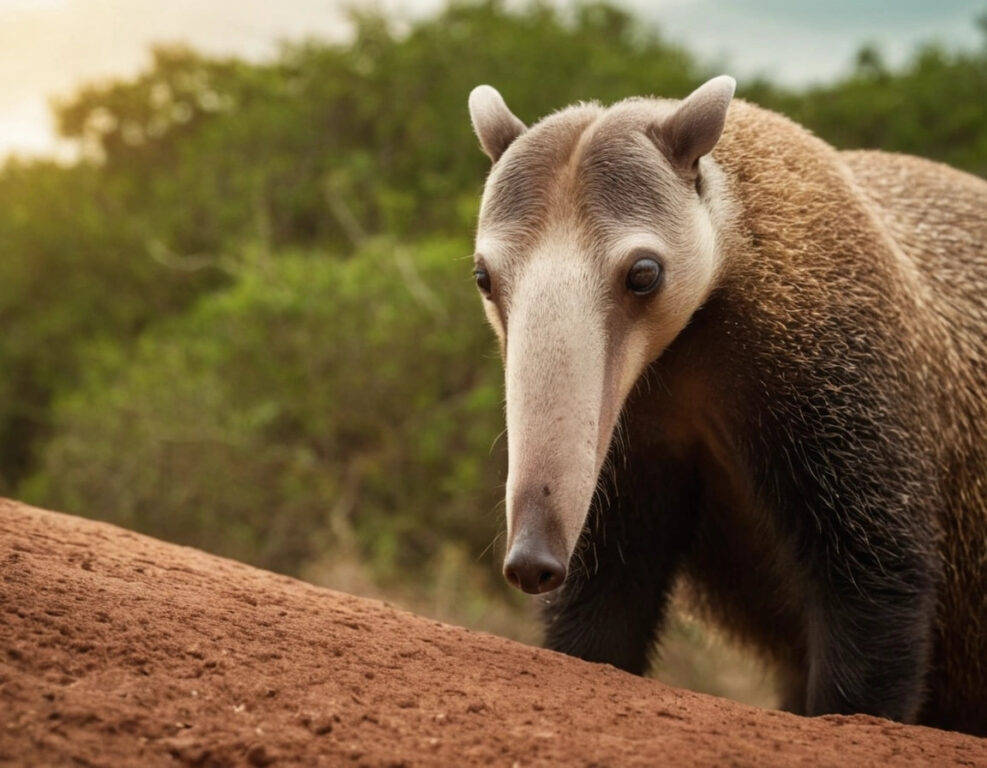
Here’s the thing that trips people up: the giant anteater isn’t a rainforest specialist. It thrives in open landscapes. Think grasslands, savannas, and dry forests. The Cerrado in Brazil and the Llanos in Venezuela are classic anteater country.
Why open areas? Because giant anteaters are basically walking vacuum cleaners. They need ground they can cover on foot, sniffing out ant and termite mounds as they go. Dense jungle actually makes that harder.
The smaller species split off in different directions. The silky anteater is the opposite, a nocturnal tree-dweller that hangs out in mangroves and lowland rainforests. The northern and southern tamanduas are semi-arboreal, meaning they climb but also spend time on the ground, and they adapt to everything from plantations to dry thorn scrub.
The Anteater’s Adaptations Are Basically Superpowers
Once you know the habitat, the body makes sense. A giant anteater has a two-foot-long snout, a tongue that can extend up to 60 centimeters, and a sense of smell roughly 40 times sharper than a human’s. That nose is how it finds colonies it can’t even see.
Then there are the claws. Front claws so long the animal has to walk on its knuckles. Those claws rip open termite mounds that would wreck a normal paw. The anteater doesn’t destroy the whole nest, though. It takes a few hundred insects and moves on, letting the colony recover.
Its fur is thick and coarse, which matters more than you’d think. Ant bites and termite bites are constant when your face is buried in a nest. That coat is basically body armor.
An anteater can eat up to 35,000 ants and termites in a single day, but it never wipes out one nest. That restraint is what keeps the relationship sustainable.
Why the Anteater Ecosystem Role Matters So Much
This isn’t just a cool animal doing cool animal things. The anteater ecosystem role is real and measurable. By constantly feeding on social insects, it keeps ant and termite populations in check.
That sounds minor until you realize what unchecked termites do. They destroy vegetation, alter soil structure, and can shift what plants survive in an area. When anteaters do their job, the whole plant community stays healthier.
Anteaters also dig. A lot. When they tear into mounds and root around for food, they aerate soil and create microhabitats other small creatures use. They’re accidental ecosystem engineers.
What Anteaters Actually Eat (It’s Not Just Ants)
Despite the name, what do anteaters eat goes beyond ants. Giant anteaters will eat termites, beetle larvae, and occasionally fruit. Tamanduas eat more fruit and honey than people expect.
They don’t chew. No teeth at all in the giant anteater. Food gets swallowed with a bit of grit and gravel that helps grind it up inside the stomach.
And they’re picky in a weird way. They avoid certain ant species that produce nasty chemical defenses, like army ants and some leafcutter species. That selectivity is another reason they don’t wipe out colonies.
Are Anteaters Endangered? The Honest Answer
Yes, the giant anteater is listed as Vulnerable by the IUCN. The biggest threats are habitat loss, road kills, and fires. In Brazil, wildfires in the Cerrado and Pantanal have killed thousands of them in recent years.
Roads are a quieter killer. Giant anteaters are slow, have poor eyesight, and wander onto highways at night. In some regions, vehicle collisions are the number one mortality source.
Tamanduas and silky anteaters face similar pressures, though they’re less studied. Silky anteaters are especially vulnerable because mangrove and lowland forest destruction hits them directly.
How Anteaters Adapt to Such Different Places
Adaptability is the anteater’s real trick. The same body plan works in a flooded Pantanal wetland and a dry Bolivian chaco. They’re flexible about temperature, they can go without food for stretches, and they’re mostly solitary, which means they don’t need large social groups to survive.
They sleep a lot, up to 15 hours a day for giant anteaters, often curled up with that big tail covering them like a blanket. Lower activity means lower food demand, which matters in habitats where insects aren’t always abundant.
Females carry one baby at a time, and the young ride on the mother’s back for months. That slow reproduction rate is exactly why anteaters struggle to bounce back when populations drop.
What This Means for Conservation in 2026
Saving the anteater isn’t about putting it in a zoo. It’s about protecting connected landscapes. A giant anteater needs huge home ranges, sometimes over 10 square miles, and fragmentation cuts those ranges into pieces too small to sustain a population.
Protected areas like Emas National Park in Brazil and various reserves in the Pantanal give anteaters room to move. Wildlife corridors between them matter just as much as the parks themselves.
The anteater is a good test case for how we think about conservation. It’s not charismatic in the panda sense, it doesn’t have a huge fan club, and it lives in habitats that get dismissed as «just grassland.» But losing it would ripple through the ecosystem in ways that are hard to predict and harder to reverse.
That’s the real reason the anteater and its habitat deserve attention. Not because it’s cute, but because it’s doing a job nothing else does quite the same way.

