
Post actualizado el día octubre 17, 2026 by DeiviSanzPlay
Getting an Om symbol tattoo ॐ is not a fashion move. It is a declaration. And most people walking around with one on their forearm or ribcage have no clue what they just signed up for. Let me break down what this symbol actually means, where it comes from, and why it still hits so hard in 2026.
What Does the Om Symbol ॐ Actually Mean?
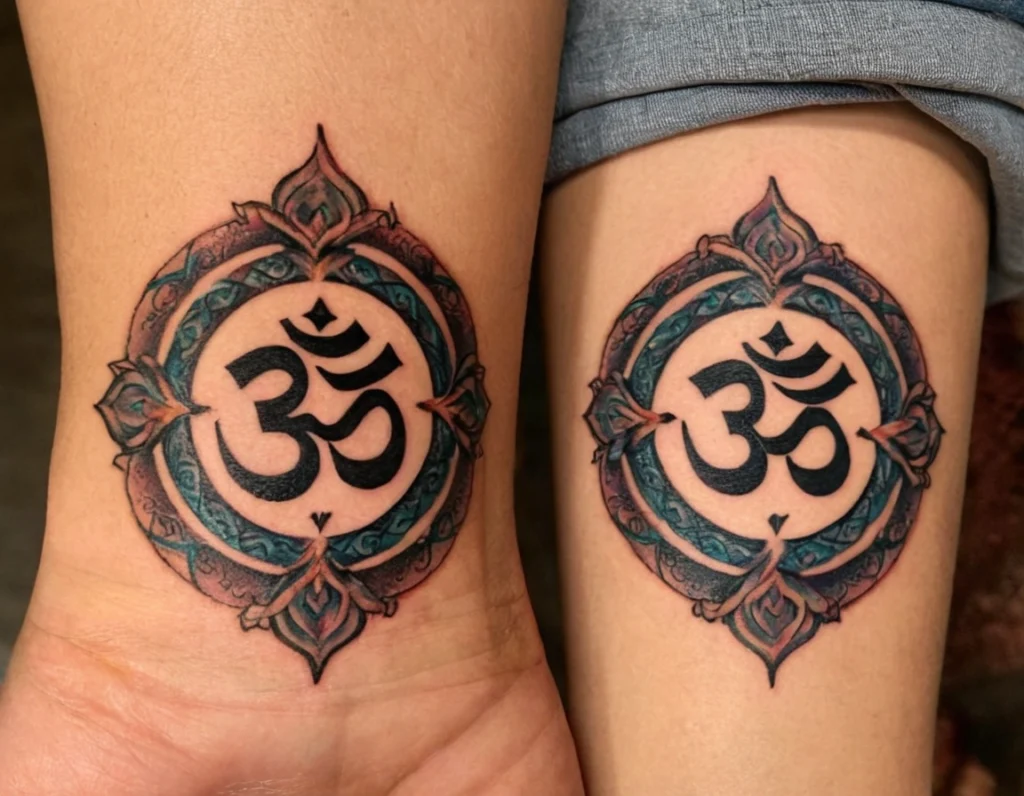
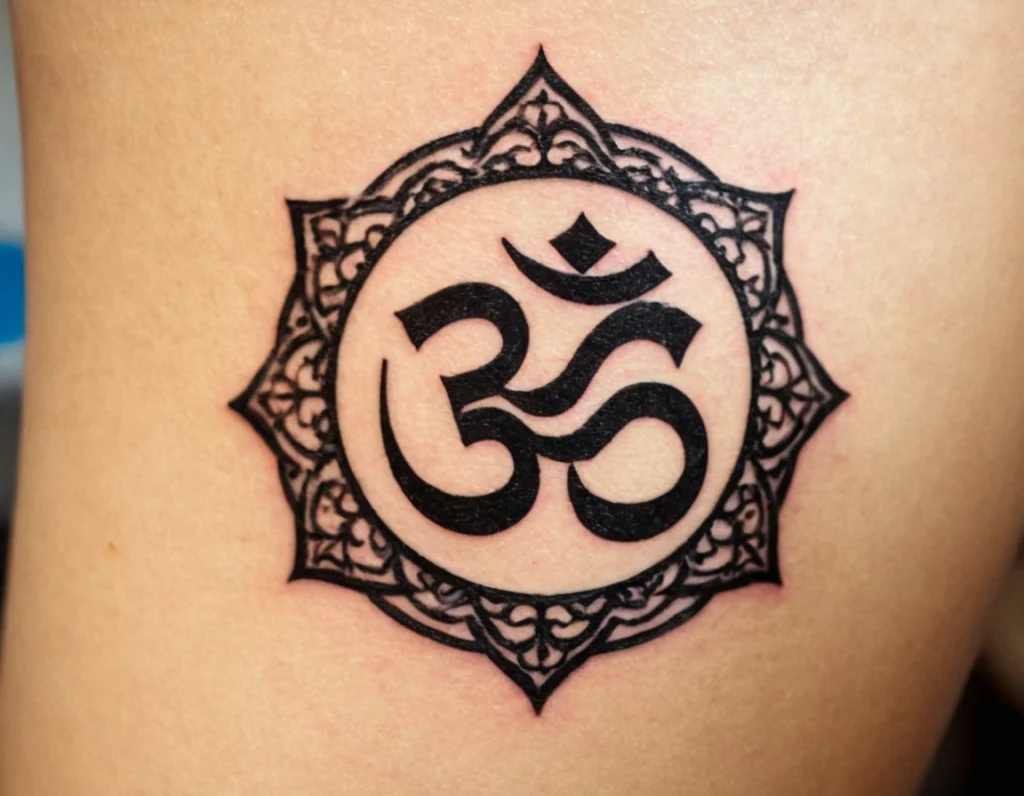
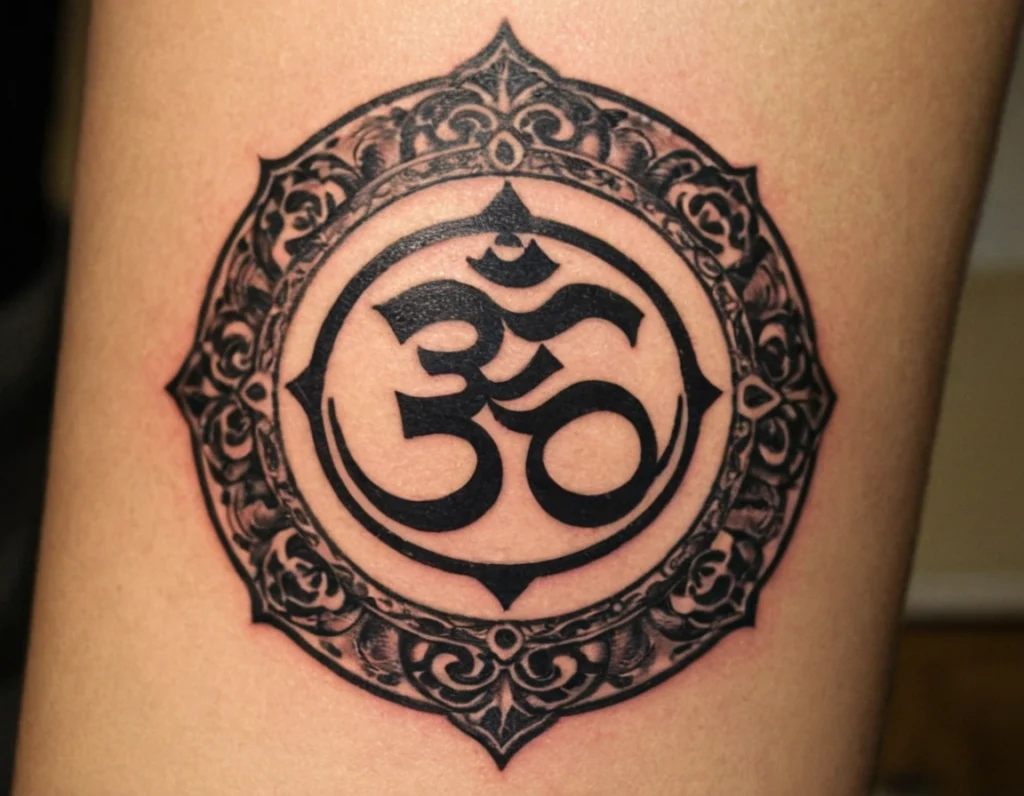
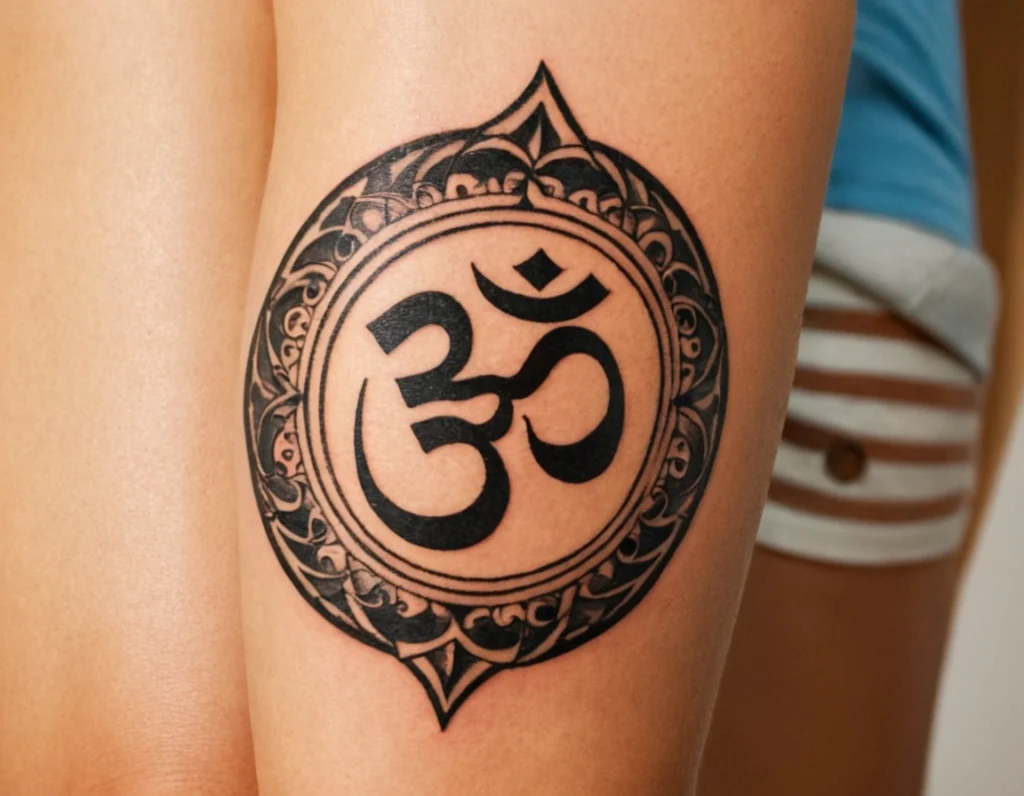
The Om symbol tattoo, also written as Aum, is the primordial sound of the universe in Hindu cosmology. Not a logo. Not a decorative squiggle. It is a sound vibration that, according to the Vedas, kicked off creation itself. The three curves of the symbol represent the three states of consciousness: waking, dreaming, and deep sleep. The dot on top is the fourth state, turiya, pure awareness. The semicircle underneath? The illusion of separation, maya, that keeps us thinking we are separate from everything else.
That is why the Om symbol tattoo meaning goes way beyond aesthetics. When someone gets this inked, they are basically stamping the entire Hindu metaphysical framework onto their skin.
Where the Om Symbol Comes From (And Why It Matters)
The Om symbol originates in the Upanishads, ancient Sanskrit texts dating back roughly 800 to 500 BCE. The Mandukya Upanishad dedicates its entire twelve verses to unpacking the syllable A-U-M. Each sound carries weight: A is creation, U is preservation, M is destruction. Together they form the full cycle of existence. Chant it out loud and you are literally running your vocal cords through the lifespan of the cosmos.
Hinduism, Buddhism, Jainism, and Sikhism all use the Om symbol. That is unusual. Very few religious symbols cross that many theological borders. It survived because it does not belong to one god or one prophet. It points to something older and broader, which is exactly why Om symbol tattoos keep showing up on people who would never call themselves religious.
Om Symbol Tattoo Meaning in Yoga and Meditation
Walk into any serious yoga studio and you will hear Om chanted at the start and close of class. That is not decoration either. The vibration is used as a tool to synchronize breath, pull attention inward, and drop the nervous system into a calmer state. Research on mantra chanting, including studies on transcendental meditation, has shown measurable reductions in cortisol and improvements in heart rate variability. So the Om tattoo in yoga circles is not just symbolic. It is a marker of a daily practice.
If you practice yoga regularly, an Om symbol tattoo can function as a permanent cue. Every time you catch it in the mirror, it reminds you to breathe, to slow down, to come back to the present. That is a very practical reason to get one.
Why People Actually Choose an Om Tattoo
Most people I have talked to who have this tattoo did not get it because they studied Sanskrit. They got it because they went through something heavy: a divorce, a loss, a burnout, a health scare. The Om symbol tattoo became a physical anchor for a new chapter. That is a real, defensible reason.
A few common motivations behind the Om tattoo:
- Wanting a constant reminder of inner peace and balance
- Marking a spiritual path or yoga teacher training milestone
- Connecting with Indian heritage or a family tradition
- Honoring a personal transformation after hard times
- Loving the design and wanting something clean and meaningful
Nothing wrong with the last one either. A good tattoo does not need a TED Talk behind it.
Om Tattoo Placement, Design, and What Actually Works
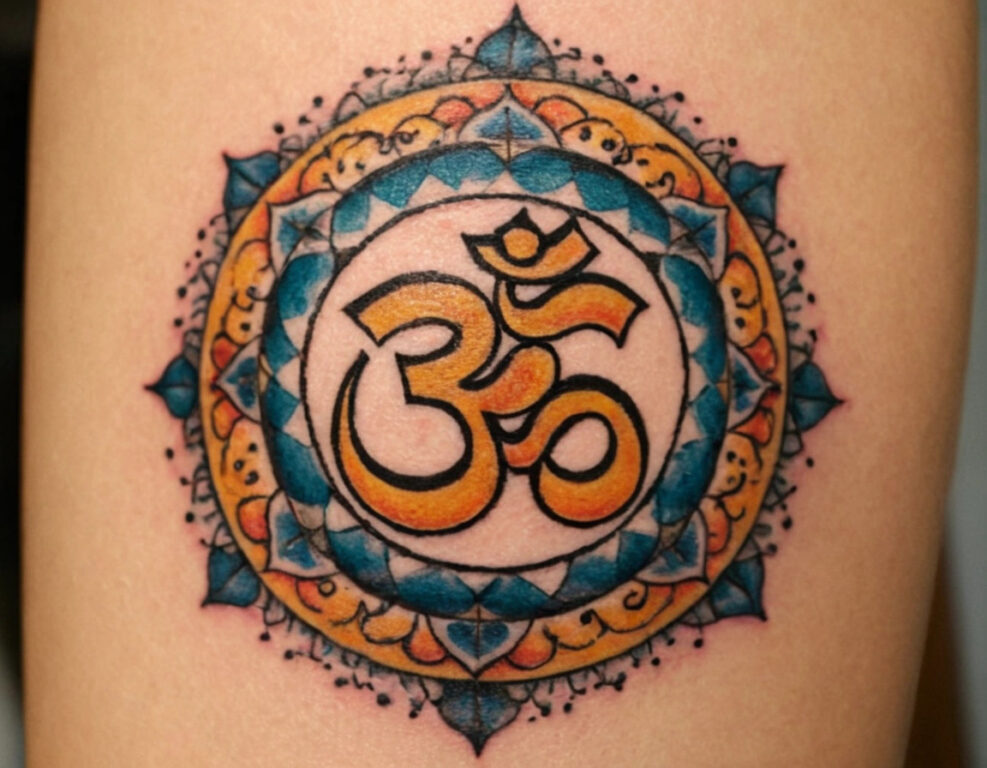
Placement matters more than people admit. The Om symbol is compact and reads clearly at small sizes, which is why it works beautifully on the wrist, behind the ear, on the ankle, or along the spine. Larger versions on the back or chest can carry extra detail like lotus flowers, mandalas, or Sanskrit script wrapped around it.
A few things to keep in mind before you book the appointment:
- Decide whether you want the Devanagari script ॐ or a stylized version. They mean the same thing, but they look very different on skin.
- If you add Sanskrit text, get the spelling verified by someone who actually reads the language. Bad Sanskrit tattoos are everywhere and they are embarrassing.
- Fine-line work fades. If you want the curves to stay crisp for a decade, go slightly bolder than the minimalist trend suggests.
- Think about whether you want it visible at work. The Om tattoo is respected in most places, but not everywhere.
Is the Om Symbol Tattoo Cultural Appropriation?
This question comes up constantly and it deserves a straight answer. The Om symbol is a religious symbol with millions of practitioners. Wearing it as pure decoration without any interest in what it means can rub people the wrong way, especially Hindus in India where it appears on temples, doorways, and wedding invitations.
My take: the respectful move is to understand the symbol before you wear it. You do not need to convert to Hinduism. You do not need to be Indian. But you should know what A-U-M stands for, where it comes from, and why it is sacred. That basic literacy is the line between honoring a tradition and treating it like a Pinterest mood board.
The Om symbol is not a vibe. It is a 2,500-year-old sound that entire civilizations built their metaphysics around.
Om Symbol Tattoo Meaning in 2026: Still Relevant?
Absolutely. If anything, the Om symbol tattoo meaning has gotten sharper as the world has gotten louder. Constant notifications, doomscrolling, algorithmic rage bait. A symbol that literally translates to the sound of stillness is more countercultural now than it was twenty years ago.
People are searching for the Om symbol tattoo meaning because they want something that outlasts trends. They want a mark that says: I am not just reacting to everything around me. I am choosing balance. That is a solid reason to sit in a tattoo chair.
Just do the homework first. Know the history. Pick an artist who can execute clean curves. And if you are going to wear a sacred syllable on your body for the rest of your life, at least be able to explain what it means when someone asks.