

Post actualizado el día octubre 17, 2026 by DeiviSanzPlay
You walk out of the supermarket, look at your car, and there it is. A fresh scratch that wasn’t there two hours ago. Your stomach drops. First thought: how much is the body shop going to charge me this time? Second thought: do I even have time to deal with this? Here’s the thing — most of those scratches you can fix yourself in your driveway with stuff that costs less than a tank of gas. I dug through forums, tutorials, and a guy who documented his entire process online (mistakes included) to give you the real breakdown. No fluff, no ‘take it to a professional’ cop-out.
First, Diagnose the Scratch Before You Touch Anything
The single biggest mistake people make is grabbing polish and rubbing before they know what they’re dealing with. Not all scratches are the same. A superficial scratch that only hit the clear coat is a five-minute fix. A scratch down to the metal is a whole different animal. Get this wrong and you’ll make it worse.
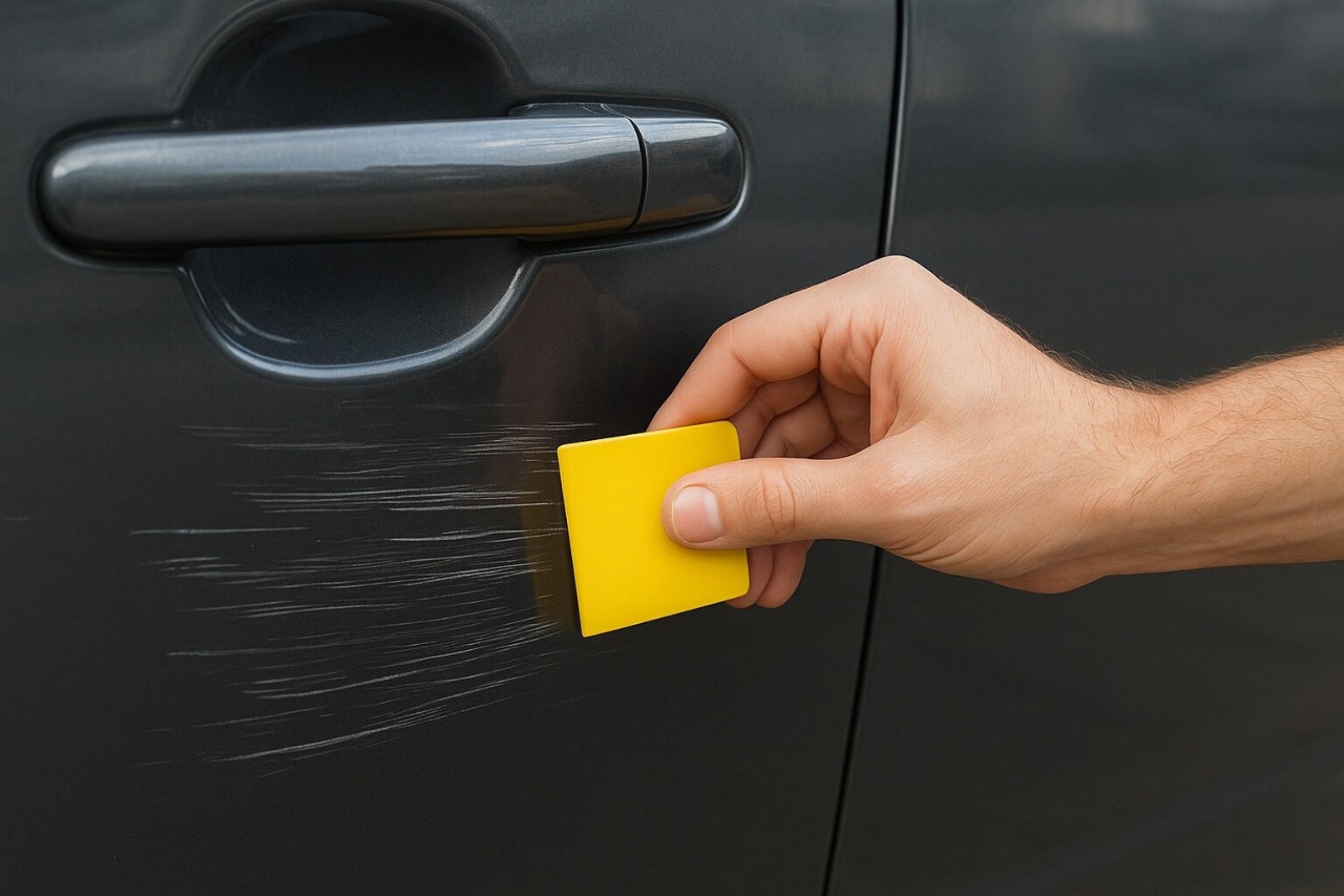
Use the fingernail test. Run your nail gently across the scratch. If your nail glides over it without catching, you’re golden — it’s clear coat only. If your nail snags, it went through the paint. If you can see gray, white, or metal underneath, you’re into primer or bare metal territory.
The Three Tiers of Car Scratches
- Clear coat scratches: Nail doesn’t catch. Fix with polish or compound.
- Paint scratches: Nail catches, no metal visible. Needs touch-up paint plus clear coat.
- Deep scratches to metal: Metal or primer visible. DIY gets risky — rust becomes your enemy.
How to Repair Scratches on a Black Car
Black cars are brutal. Every white or gray mark looks like someone drew on your hood with chalk. But here’s the good news: how to repair scratches on a black car is actually simpler than you think, as long as the damage hasn’t broken through the paint layer.
Start with a thorough clean. Not a quick wipe — a real clean. Use a body-specific cleaning spray and a fresh microfiber cloth. Any dirt particle left behind will grind into the paint when you start polishing and turn a small scratch into a big one.
For superficial scratches, a quality polishing compound applied by hand with circular motions and light pressure does the job. You’re essentially dissolving a microscopic layer of clear coat to level out the shine. Patience is non-negotiable here. Rush it and you’ll burn through the clear coat.
After polishing, seal the area with a high-quality wax. The guy who documented his black car repair showed before-and-after photos and the difference was night and day. But he gave one clear warning: if you can feel the groove with your finger, the scratch is too deep for this method and you’ll waste your time.
«If your fingernail catches on the scratch, don’t bother with polish. You need paint, not wax.»
How to Repair Scratches on a Car: The Universal Method
When people search for how to repair scratches on a car, they want a single answer. There isn’t one — but there is a decision tree that works for 90% of cases.
Clear coat scratches respond to a polishing kit or mild abrasive paste. Kits that include compound plus a sealant layer work great on wash-induced swirls and light branch scrapes.
If the scratch reached the paint but not the metal, you need a touch-up kit with clear coat matched to your exact vehicle color code. The key is preparation: clean the area with isopropyl alcohol, then apply paint in very thin layers with the applicator brush, letting each layer dry before the next. Thin layers, not one thick blob.
For scratches where metal is showing? Don’t DIY it. Fillers exist, but the risk of trapping moisture and triggering rust isn’t worth saving a few hundred bucks. Accept the shop cost on this one.
How to Repair Scratches on Car Plastic
Bumpers and trim take the most abuse. The upside: plastic doesn’t rust, so you’ve got more room to experiment with how to repair scratches on car plastic.
On textured, unpainted plastic, a plastic cleaner and restorer can hide superficial scratches by bringing back the original black. Apply with a soft toothbrush, rubbing in the direction of the texture. It’s not a structural fix, but visually the scratch vanishes.
Painted plastic with a deep scratch needs light wet sanding with 2000-grit paper, then plastic primer, then matched spray paint. Delicate work, requires masking, but the results can look factory-fresh.
There’s also the heat gun trick — low temperature, safe distance, gently ‘melting’ the surface to close the scratch. I’d skip it unless you’ve practiced on a junkyard part first. One wrong angle and you’ve got a warped bumper.
How to Repair Scratches on a Car Dashboard
The dashboard is always in your face, so every scratch feels personal. For light scratches, an interior plastic restorer in gel or spray form brings the color back uniformly. Apply with a microfiber cloth and most light marks blur right out.
Deeper grooves need a plastic-specific sealant. Apply a small amount into the scratch, spread with a plastic spatula, and let it dry. If you match the color correctly, the result is nearly invisible.
For really bad dashboard damage, there are mobile specialists who use resins and dyes to reconstruct the original texture on-site. Cheaper than replacing the whole dash, more expensive than DIY — but worth knowing it exists.
How to Repair Scratches on Car Body Panels
Body panels are where scratches turn into corrosion, so how to repair scratches on car body panels is the highest-stakes version of this job.
After cleaning, assess depth. Clear coat only? Use an orbital polisher with light-cut compound. Do not use a rotary polisher unless you’ve got real experience — burn through the paint and you’re looking at a full respray.
If the scratch hit the primer (grayish tint), the protocol changes. Wet sand with 2000-grit to level the surface, apply matched paint with a fine brush in thin layers, let it cure for a full day, then wet sand again to level and polish with a finishing compound. It won’t be 100% perfect up close, but from a meter away nobody will know.
How to Repair Scratches on Car Glass
Windshield scratches are the one category where I’d be cautious. They can compromise visibility at night, and in severe cases, the structural integrity of the glass. For small superficial scratches, a cerium oxide compound with a felt pad on a drill at low speed works — keep the glass wet to prevent overheating. Deep scratches on glass? Replace the windshield. Some things aren’t worth the risk.
What You Actually Need in Your Garage
- Microfiber cloths (buy a pack, you’ll go through them)
- Polishing compound (medium cut and finishing)
- Isopropyl alcohol for prep
- Touch-up paint matched to your color code
- 2000-grit wet sandpaper
- Quality wax or ceramic sealant
- Orbital polisher (optional but a game-changer)
The bottom line: most scratches people panic about are clear coat damage that polish and patience can erase. The ones that aren’t, you should know when to stop and hand off. Knowing the difference is what separates a clean fix from a costly mistake.


