Post actualizado el día octubre 25, 2026 by DeiviSanzPlay
Turtles are reptiles that have been on Earth for more than 200 million years. Yes, you read that right: they have seen dinosaurs, ice ages, and now they see us with our phones in hand. There are more than 350 species of turtles worldwide, and each one has its own thing. In this article I’ll tell you about the types of land and aquatic turtles there are, without the fluff and with facts you can verify.
How many types of turtles are there really?
The exact figure varies depending on the source, but what is clear is that we are talking about hundreds. The International Herpetological Society recognizes around 360 species of turtles, divided into two major groups: the cryptodires (those that hide their neck inward, like land turtles) and the pleurodires (those that bend their neck to the side, typical of South America and Australia).
Within those two groups, the practical classification that everyone understands is: land turtles, freshwater turtles, and sea turtles. And watch out, because there are nuances. A freshwater turtle is not the same as a sea turtle, even though both swim. Sea turtles have legs converted into flippers and cannot retract their heads; freshwater turtles have claws and do hide their necks. That difference is key to not confusing them.
Land turtles: the ones doing their own thing on the ground
Land turtles are the typical ones you see in documentaries walking through the desert or on a volcanic island. Their shell is domed, heavy, and their legs are like sturdy columns. They don’t swim, and if they fall into water, they can drown. This is important: not all turtles know how to swim.
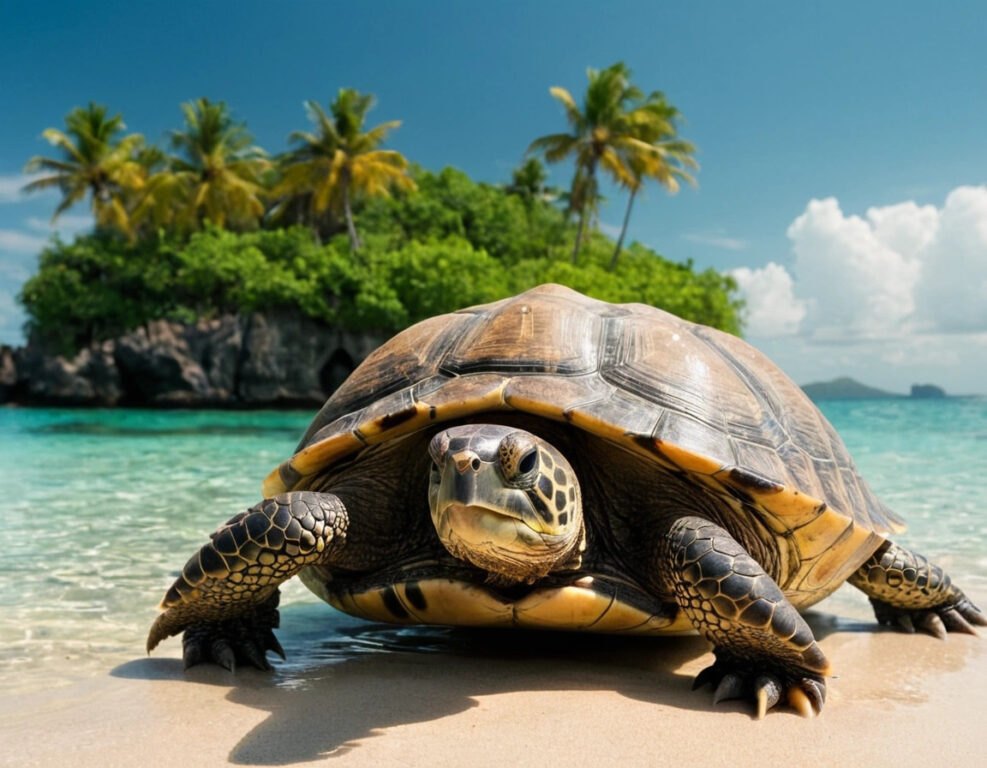
The Galápagos giant tortoise (Chelonoidis niger) is the most famous example. It can weigh more than 400 kilos and live more than 100 years. But not all land turtles are giants. The red-footed tortoise (Chelonoidis carbonarius), which is actually a land turtle that inhabits humid jungles, measures about 30-40 cm and feeds on fallen fruit. And then there’s the Mediterranean tortoise (Testudo hermanni), the one many people keep at home, which doesn’t exceed 20 cm and is very common in Spain.
A fact few people know: land turtles don’t have external ears. They hear vibrations from the ground. That’s why when you walk near one, it retreats into its shell before you even see it.
Freshwater aquatic turtles: the queens of rivers and lakes
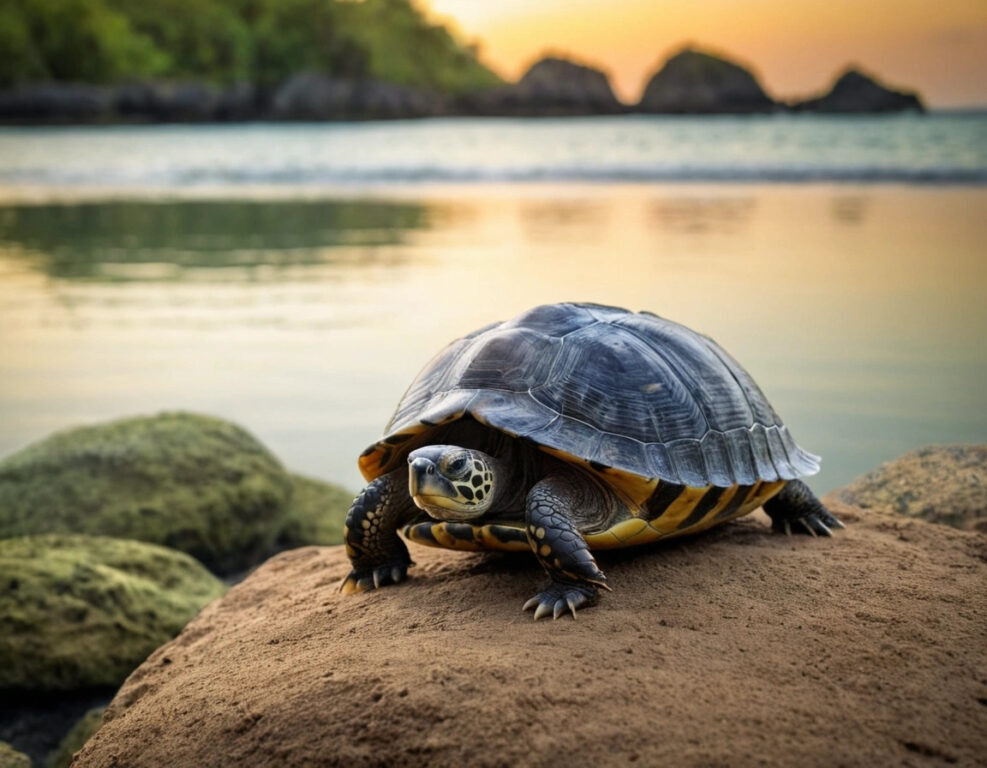
Here’s where the most diverse group comes in. Freshwater turtles live in rivers, lakes, ponds, and marshes. They have flatter shells, webbed feet, and claws for swimming and climbing. These are the ones usually sold as pets, although many end up abandoned in rivers, which is a serious ecological problem.
The red-eared slider (Trachemys scripta elegans) is the best known. That red patch on the sides of its head isn’t ears, it’s skin markings. Native to the southeastern United States, it has become an invasive species in half the world, including Spain. If you have one, don’t release it into the wild. It’s a plague.
Another very interesting one is the softshell turtle (Apalone spinifera), which has a shell covered in skin instead of hard scales. And the snapping turtle (Chelydra serpentina), which can take off a finger if you bother it. No joke.
Sea turtles: the tireless travelers
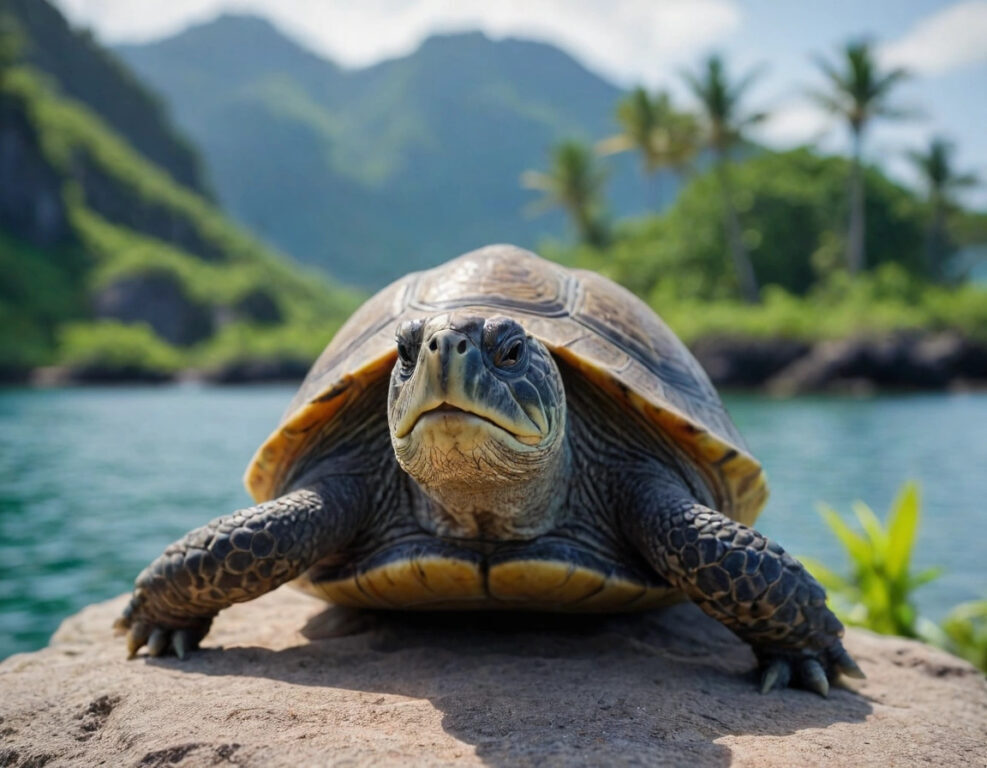
Sea turtles are another level. There are only 7 species worldwide, and all are threatened or endangered. The largest is the leatherback turtle (Dermochelys coriacea), which can measure 2 meters and weigh 700 kilos. It is the heaviest reptile on the planet.
What makes them unique is their migration capacity. The leatherback turtle crosses the Atlantic from nesting beaches in the Caribbean to the coasts of Europe. And they always return to the same beach where they were born. This is called philopatry and is one of the most studied behaviors in marine biology.
The green turtle (Chelonia mydas) is the only strict herbivore when adult. It feeds on seagrass meadows. The hawksbill turtle (Eretmochelys imbricata) has a shell with overlapping scales that look like jewels, and that’s why we almost drove it extinct to make combs and glasses. A disgrace.
Key differences between land and aquatic turtles
It’s not just habitat. There are anatomical and behavioral differences worth being clear about:
- Legs: land turtles with cylindrical legs and blunt claws; aquatic with webbed feet and sharp claws; sea turtles with flippers.
- Shell: land turtles more domed and heavy; aquatic more flat and hydrodynamic.
- Neck: land turtles and many freshwater ones hide their neck in an S shape; sea turtles cannot.
- Diet: land turtles herbivorous or frugivorous; aquatic omnivorous; sea turtles vary by species.
- Longevity: land turtles can live 100 years or more; freshwater ones, 20-40 years; sea turtles, 50-80 years.
Which is the most common turtle as a pet?
The red-eared slider takes the prize. It’s cheap, hardy, and easy to find. But it requires a large aquarium (minimum 100 liters for an adult), UVB light, and a dry area for basking. Many people keep it in a small fishbowl and that is animal abuse.
The Mediterranean tortoise is the other common option in Spain. It needs a garden or terrace, hibernates in winter, and can live 50 years. It’s a lifelong commitment.
My advice: before buying a turtle, inform yourself well. They are not toys. And if you already have one, don’t abandon it. It’s a living being that feels and suffers.
Conservation: the future doesn’t look good
Of the 7 species of sea turtles, 6 are critically endangered or vulnerable according to the IUCN. The main threats are accidental fishing, plastic pollution, climate change (which skews the sex ratio in nests), and illegal trade.
On land, the giant tortoises of the Galápagos and Seychelles have lost habitat due to invasive species such as rats and goats. There are captive breeding programs that are working, but the pace is slow.
If these animals interest you, don’t stop at the article. Visit a sea turtle rescue center if there’s one near you. Or sponsor one. Every gesture counts, even if it sounds cliché. The difference is that here it’s true.