

Post actualizado el día octubre 17, 2026 by DeiviSanzPlay
Let’s cut the fluff: chopsticks aren’t some mystical Asian secret you need years to unlock. They’re two sticks, your hand, and a simple lever movement. If you can hold a pen, you can use chopsticks. The problem is that most people grip them like a crab trying to crush a shell. That’s why it feels impossible.
What Are Chopsticks, Really?
Chopsticks are elongated utensils, traditionally made of wood, bamboo, plastic, or metal, used across China, Japan, Korea, Vietnam, and other parts of Asia for thousands of years. They come in different lengths and shapes depending on the country: Chinese chopsticks tend to be longer and thicker with a blunt end, Japanese ones are shorter and pointier, and Korean chopsticks are often flat metal sticks. Knowing which chopsticks you’re holding matters because the technique changes slightly.
The core principle of how to use chopsticks correctly is the same everywhere: the bottom stick stays still, the top stick pivots against it like a lever. That’s it. You’re not moving both sticks. You’re moving one.
How to Hold Chopsticks Without Looking Like a Tourist
Hold the first chopstick (the bottom one) in the crook of your thumb, resting against your ring finger for stability. It should not move. Now place the second chopstick on top, pinched between your thumb, index finger, and middle finger, like you’d hold a pencil. The thumb acts as the anchor, the index finger controls the top stick.
The lever movement comes from your index and middle fingers. Open and close them. That’s the entire motion. If your whole hand is clenching, you’re doing it wrong. Relax your grip. The pressure should be just enough to hold a piece of food, not to snap the chopsticks in half.
One common mistake: holding chopsticks too far up. Your hand should be around the middle or slightly above, not at the very top. Holding them too high gives you zero control, and you’ll drop everything.
What Can You Actually Eat With Chopsticks (and What You Shouldn’t)
You can eat almost anything with chopsticks if you know the right technique. Noodles? Twirl them like you would with a fork, but with a slight lift to avoid splashing. Sushi rolls? Perfect because they’re compact. Dumplings, spring rolls, stir-fried vegetables, pieces of meat, fruit slices — all fair game.
What you should never do is stab food with a chopstick like it’s a fork. That’s considered rude in most Asian cultures and also just bad form. Don’t use them to cut either. Chopsticks grab and lift. That’s their job.
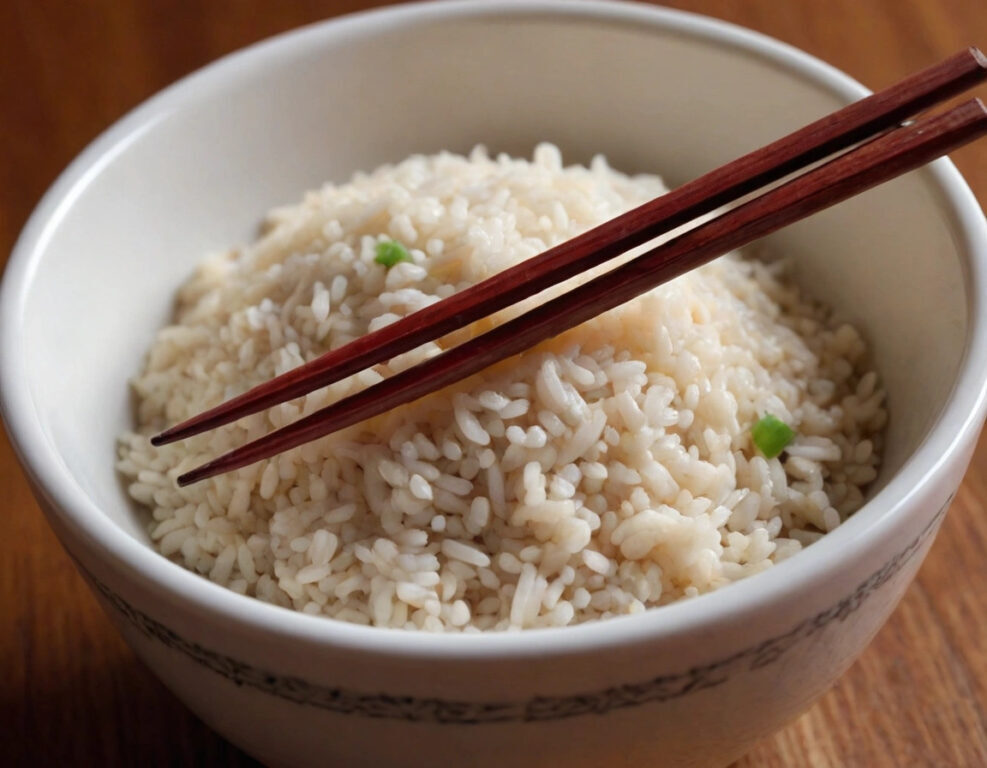
Rice is the classic challenge. Chinese rice is sticky enough that you can scoop it into your mouth by bringing the bowl close to your face. In many Asian households, lifting the bowl is normal. If you’re at a Western restaurant, use a spoon for rice and chopsticks for the rest. Nobody will judge you.
Chopstick Etiquette: The Rules That Actually Matter
Here’s where people mess up. Learning how to use chopsticks is only half the battle. The other half is not offending anyone.
- Never stick chopsticks vertically into a bowl of rice. This mimics incense sticks at a funeral and is a huge taboo, especially in Japan and China.
- Don’t pass food chopstick-to-chopstick. This is also a funeral ritual. If you’re sharing food, use a serving plate or a clean pair of chopsticks.
- Don’t point at people with chopsticks. It’s aggressive and rude.
- Don’t lick your chopsticks or chew on them. Treat them with a bit of respect.
- Don’t leave them crossed on the table. Place them parallel to the edge of the table or on the chopstick rest.
If you’re in a restaurant and you’re not sure, watch what the locals do. That’s your best cheat sheet.
Tips That Actually Work (From Someone Who Struggled)
Start with training chopsticks. Yes, they look childish, but they teach your fingers the correct position quickly. Once you’ve got the muscle memory, switch to real ones.
Practice with big, solid pieces: a chunk of tofu, a piece of fruit, a bread cube. Don’t start with slippery noodles or single grains of rice. That’s like learning to drive on a Formula 1 track.
If wooden or bamboo chopsticks feel too slippery, try plastic ones with textured tips or even metal ones with a non-slip pattern. The material matters more than you think.
And the biggest tip: eat with chopsticks every day for a week. Not once a month. Every day. Your brain will wire the movement automatically faster than you expect. I’ve seen people go from zero to competent in five meals.
Why It’s Worth Learning in 2026
Beyond the cultural respect aspect, using chopsticks slows you down. You take smaller bites. You chew more. You actually taste your food instead of inhaling it. There’s a reason why chopsticks are standard in Asian cuisine — they make eating a more mindful experience.
Plus, if you ever travel to China, Japan, Korea, or Vietnam, you won’t be the awkward foreigner asking for a fork. You’ll just eat. That’s a small win, but a real one.
So grab a pair of chopsticks, hold them like a pencil, move only the top one, and stop overthinking it. You’ll get it. And if you drop a dumpling on your shirt the first time, who cares? Nobody’s watching. Just pick it up with your chopsticks and keep going.
