Post actualizado el día octubre 24, 2026 by DeiviSanzPlay
Microfiber cloths have been on supermarket shelves for years, but most people use them wrong. It’s not an expensive rag or a hardware store fad: it’s a tool that completely changes the way you clean. I’ll tell you straight, with what I’ve tested and what the textile industry itself says.
What microfiber cloths really are (and why they’re not a normal rag)
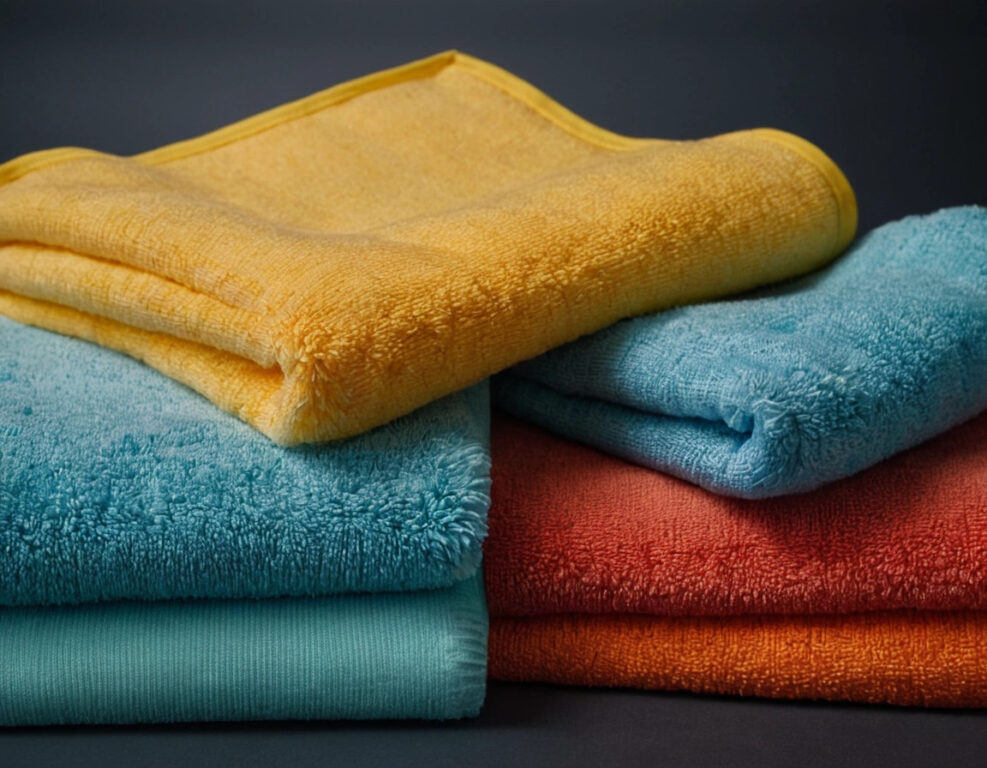
A microfiber cloth is made from blended polyester and polyamide filaments. Those filaments are split until they measure less than 1 denier, or in other words, up to 100 times finer than a human hair. That’s the trick.
Being so fine, they create millions of microscopic spaces that trap dirt in two ways: mechanically (they drag the particles) and electrostatically (the electrical charges in the fiber attract dust and grease). That’s why a microfiber cloth cleans well even with just water.
You don’t need any harsh chemical product. With warm water they already take care of everything from fingerprints on glass to oil residue on the countertop. And watch out, this isn’t marketing: microfiber’s absorption capacity is around 99% of its weight in water, far above cotton.
Real benefits of using microfiber cloths at home
The first benefit is savings. A quality microfiber cloth lasts between 300 and 500 washes if you take good care of it. That’s years of use. If you do the math, you stop buying glass cleaner, polishes and degreasing sprays every month.
The second is health. By cleaning with only water, you reduce exposure to volatile compounds that many conventional cleaners contain. In homes with small children or people with allergies, this is no minor detail.
And the third, versatility. The same cloth that cleans the kitchen marble works for the laptop screen, the car windows or your glasses. That said, with one condition: don’t mix areas. One cloth for the kitchen, another for the bathroom, another for the car. If you don’t, you’re spreading bacteria all over the house.
There’s a fact many people don’t know: good-quality microfiber cloths can retain up to 99% of the bacteria present on a surface if used damp and then washed at high temperature. They don’t replace a disinfectant in an operating room, but in a domestic kitchen they make a difference.
How to use them to get the most out of them
Mistake number one is using the cloth dry on a surface with thick dust. That way you just make a mess. The right way is to dampen it, wring it out well and first do a gentle pass to drag away the dirt, then a second pass with a drier cloth to polish.
For glass and mirrors, the key is not to leave water residue. A microfiber cloth specifically for glass, slightly damp, and then another dry one for the finish. No newspaper, no vinegar, no miracles.
On the car, microfiber cloths are the standard in detailing. They’re used to dry the bodywork without scratching, to apply waxes and to clean the interior. That said, never use the same one you’ve run over the wheels on the paintwork: the embedded metal particles act like sandpaper.
Care and maintenance: what almost nobody tells you
If you wash a microfiber cloth with fabric softener, you’ve killed it. Fabric softener leaves a silicone film that clogs the spaces between the fibers and the cloth stops absorbing. The same happens with bleach and ammonia: they degrade the polyester and make it useless within a few washes.
The ideal wash is at 40-60 degrees, with normal liquid detergent and no fabric softener. If you want to disinfect, a splash of white vinegar in the drum works well, but don’t use it as a substitute for detergent.
For drying, air drying is better. If you use a dryer, set it to low temperature. High heat partially melts the fibers and the cloth loses its dragging capacity. I’ve seen cloths ruined in two dryer cycles at maximum temperature.
Storage matters too. Keep them completely dry and in a ventilated place. If you put them away damp in a cupboard, in two days they smell musty and nobody wants to use them.
How long they last and when to change them
A medium-quality microfiber cloth lasts between 300 and 500 washes. In normal domestic use, that’s between two and four years. If you start to notice it leaves lint, doesn’t absorb or smells bad even after washing, throw it away. There’s no trick to revive it.
The cheap cloths from bargain stores usually last much less because they mix polyester with low-quality fibers. A 1-euro microfiber cloth is not the same as a 4-euro one with a high grammage (300 g/m² or more). Grammage is the figure you should look at before buying.
If you clean daily, keep at least six or seven cloths in rotation: two for the kitchen, two for the bathroom, one for dust, one for glass and one for the car. That way you always have a clean one while the others are being washed.
Are microfiber cloths worth it in 2026?
Absolutely yes, but with nuances. If you expect to clean a barbecue full of burnt-on grease with just water, no. For that you need a degreaser. Microfiber doesn’t work magic on extreme dirt.
But for 90% of daily household cleaning, a well-used microfiber cloth replaces half a shelf of chemical products. You save money, reduce plastics and clean faster. That, at the end of the month, adds up.
And if you’re concerned about the environment, there’s a fact that confirms it: a reusable microfiber cloth prevents the use of hundreds of rolls of kitchen paper a year. The impact is real, not just green posturing.