Post actualizado el día octubre 24, 2026 by DeiviSanzPlay
Home alarms are not a whim of paranoid people. They are, today in 2026, one of the few household systems that still pay for themselves: they reduce burglary, alert in time and, incidentally, lower your insurance. I’ll tell you straight, with what really matters when the moment comes.
Deterrence: the burglar doesn’t even knock on your door
The star benefit of home alarms is not detection, it’s deterrence. A study by the University of North Carolina made it clear years ago that burglars rule out homes with a visible alarm. In 2026 this remains the same: most are opportunists looking for the easiest house in the neighborhood.
That’s why, if you install a home security alarm, the first thing you should do is place the deterrent sign clearly visible on the facade and on the back door. Don’t hide it in the garage. The signal has to be seen from the street. A visible sign reduces the chances of an attempted burglary more than any hidden sensor.
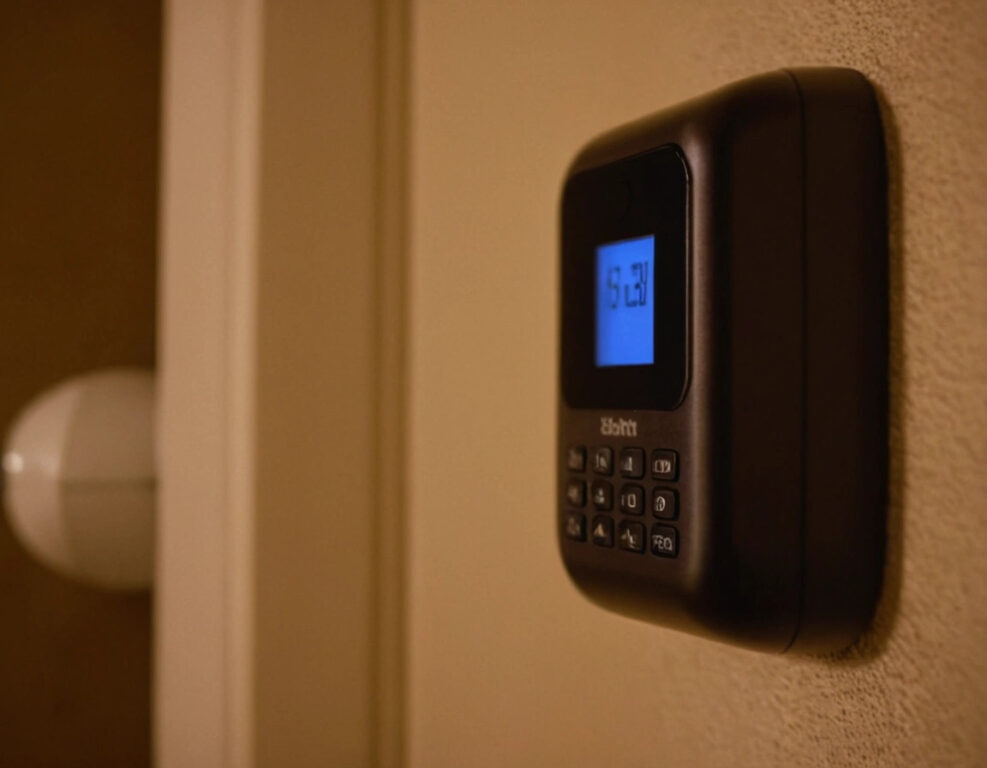
Here’s a nuance almost nobody mentions: deterrence only works if the system looks real. A panel held with electrical tape or a fake 20-euro camera fools no one. Professional thieves do notice the details.
Fast response: the difference between a scare and a wreck
Another key advantage of home security alarms is that, when deterrence fails, they trigger a response. In 2026 almost all connected systems send a push notification to your phone in under 5 seconds and an automatic call to the monitoring center. That shortens police reaction time from minutes to seconds.
According to data from the Alarm Center of the Spanish Association of Security Companies, an average home burglary lasts between 8 and 12 minutes. If the alarm goes off at 30 seconds, the burglar runs away without completing the job. The effectiveness of security alarms is not in stopping the intruder, it’s in cutting their time short.
Here I’m blunt: an alarm without a connection to a center or without phone notification is of little use if you’re away. The siren alone only scares off those who don’t want to be seen, but someone who means business ignores it.
Remote control: your home watched over even when you’re traveling
Connected home alarms give you something that didn’t exist before: full control from your phone. You can check the status of the sensors, arm and disarm, and receive instant notifications about any suspicious activity. If you’re on vacation in the countryside, you know within a second if someone has opened the patio door.
This isn’t just convenience. In 2026, more than 60% of home burglaries occur when no one is inside, according to data from the Ministry of the Interior. Being able to check that everything is in order from your phone prevents heart attacks and, above all, prevents a neighbor from having to go and take a look.
That said, beware of false alarms caused by pets. If you have a large dog that jumps, invest in motion sensors with pet immunity or in magnetic contacts on doors and windows. Cheap motion detectors are a joke if there’s a cat in the house.
Fire and gas leak protection: the benefit that saves lives
Here’s the benefit almost nobody mentions and which, in my opinion, is the most underrated. Modern alarms don’t just detect intruders. Many systems include smoke and carbon monoxide sensors, and some also gas leak sensors. That turns the alarm into a comprehensive home security system.
Think of the scene: it’s 3 in the morning, there’s a gas leak in the kitchen and the alarm wakes you with a siren different from the intrusion one. That’s not a luxury, it’s a real difference between getting out into the street or not. If you have small children, elderly people or pets, this point should weigh more than the price.
A fact that convinced me: domestic fires cause more deaths than violent burglaries in Spain. And most occur at night, when your sense of smell doesn’t detect the smoke because you’re asleep. A detector connected to the alarm alerts you and the center.
Integration with cameras and smart locks
Home security alarms in 2026 are no longer isolated boxes. They integrate with surveillance cameras, video intercoms, automatic lights and smart locks. That creates a home security network where each device covers the other’s blind spot.
For example: if the alarm detects movement in the garden at 2 in the morning, it automatically turns on the porch lights and records 30 seconds of video. The intruder, seeing themselves lit up and recorded, leaves. It’s not science fiction, it’s what any decent mid-range system does today.
That said, don’t go crazy buying separate devices. If they’re not from the same ecosystem, you’ll end up with five apps and no communication between them. Choose a brand that has compatible alarm, camera and lock. You’ll save money and headaches.
The financial benefit: your home insurance drops in price
This point is pure money. Many insurers apply discounts on the home policy if you have a certified alarm connected to a center. Typical discounts range from 5% to 15% per year on the contents premium. On an average policy of 300 euros, we’re talking about 15 to 45 euros a year just for having the alarm.
It’s not that you’re going to get rich, but it adds up. And there’s something more important: if you have an alarm and a burglary occurs, the insurer won’t give you trouble for lack of security measures. Without an alarm, some policies limit the compensation or directly reduce it.
My advice: before signing up for the alarm, call your insurer and ask what certification they require. Many require the center to be attached to an agreement or the system to comply with the UNE-EN 50131 standard. If it doesn’t comply, they won’t give you the discount.
Is it worth it in 2026? My straight answer
Yes, but not just any alarm. A cheap alarm without a connection to a center is a toy. A connected alarm, with fire sensors and control from your phone, is a real security tool. The average investment is around 300 to 800 euros for installation, plus a monthly fee of 20 to 40 euros if you want 24-hour monitoring.
Is that a lot? It depends on how much you value your peace of mind. A single burglary costs you an average of 3,000 euros in replacing items, plus the emotional damage. The alarm doesn’t prevent all burglaries, but it drastically reduces the risk and gives you something money can’t buy: sleeping without checking the door every time there’s a noise.
And watch out for one thing: the alarm doesn’t replace common sense. Don’t leave the key under the doormat, don’t post on social media that you’re traveling and don’t rely on technology alone. The best home alarm is the one that combines visible deterrence, fast response and a family that knows how to use it.