Post actualizado el día octubre 25, 2026 by DeiviSanzPlay
The Moon darkens, turns red, and it looks like someone turned off the switch. It’s not a glitch in the universe: it’s a lunar eclipse, the astronomical phenomenon that’s easiest to see with the naked eye and the one that has blown humanity’s mind for centuries.
You won’t find textbook filler here. I’ll tell you what really happens, when the next lunar eclipses are in 2026, and how to make the most of them without needing expensive gear.
What a lunar eclipse is and why the Moon turns red
A lunar eclipse occurs when the Earth moves between the Sun and the Moon. Our planet casts its shadow onto the satellite and, for a few hours, the Moon stops receiving direct sunlight.
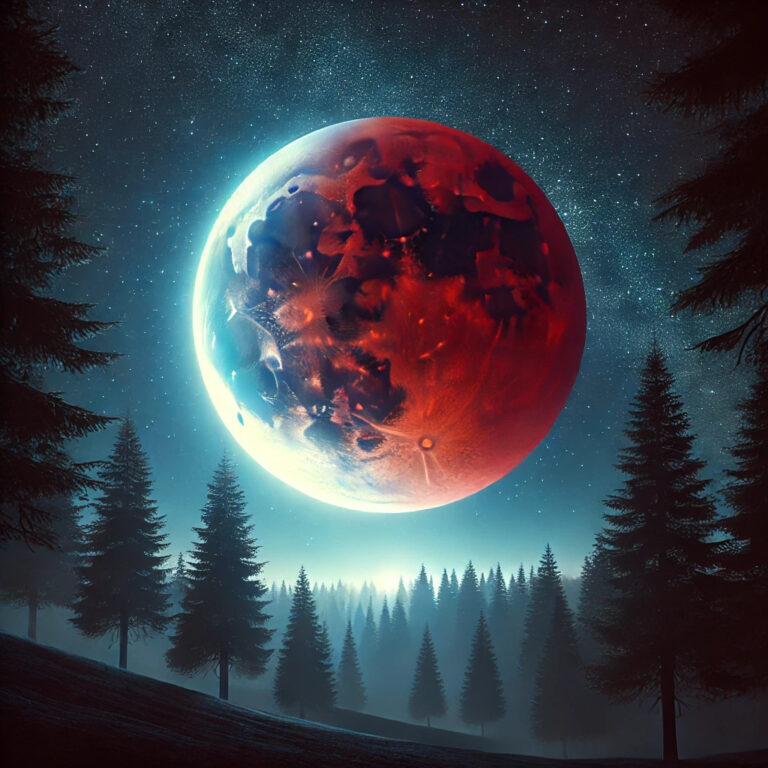
The key lies in the Earth’s atmosphere. Sunlight passes through our layer of air, scatters, and only lets red wavelengths through. It’s the same reason sunsets are orange. That’s why, during a total eclipse, the Moon takes on that coppery tone that many call a blood moon.
There’s no magic or omens. It’s pure atmospheric physics, and it can be predicted years in advance.
Types of lunar eclipse: total, partial, and penumbral
Not all lunar eclipses are the same. The difference lies in how much of Earth’s shadow touches the Moon.
- Total eclipse: the Moon enters completely into the umbra (the darkest shadow). It’s the red spectacle.
- Partial eclipse: only part of the Moon sinks into the umbra. It looks like a dark bite.
- Penumbral eclipse: the Moon only passes through the penumbra, a diffuse shadow. It’s barely noticeable, and many people can’t even tell it apart.
If someone tells you there’s a penumbral eclipse and you’re expecting to see red, you’re in for a disappointment. The total one is the one worth it.
Dates of the next lunar eclipses in 2026
According to NASA data, there are two notable lunar eclipses in 2026:
- March 3, 2026: total lunar eclipse. Visible in Asia, Australia, the Pacific, and the Americas. In Spain and Western Europe it will be difficult, because it occurs during the day or with the Moon already set.
- August 28, 2026: partial lunar eclipse. Visible in the Americas, Europe, Africa, and Asia. This one can be seen well from Spain and Latin America, although only part of the Moon will be covered.
Watch out for the times: a lunar eclipse can last several hours, but the most striking total or partial phase usually concentrates in a 60 to 90-minute interval. It’s worth checking the exact local time on websites like Time and Date before heading out.
How to watch a lunar eclipse without risking your eyesight
Here’s the best news: unlike a solar eclipse, a lunar eclipse doesn’t need special glasses or filters. You can look at it directly, with binoculars or with a telescope without any risk.
What does matter is the location. Look for a spot with little light pollution, away from streetlights and tall buildings. The darker the surroundings, the more contrast and the more red you’ll see.
If you have binoculars, you’ll notice the craters and the edges of Earth’s shadow. With a small telescope you’ll be blown away: details of the lunar surface that are lost to the naked eye become distinguishable.
Difference between a solar eclipse and a lunar eclipse
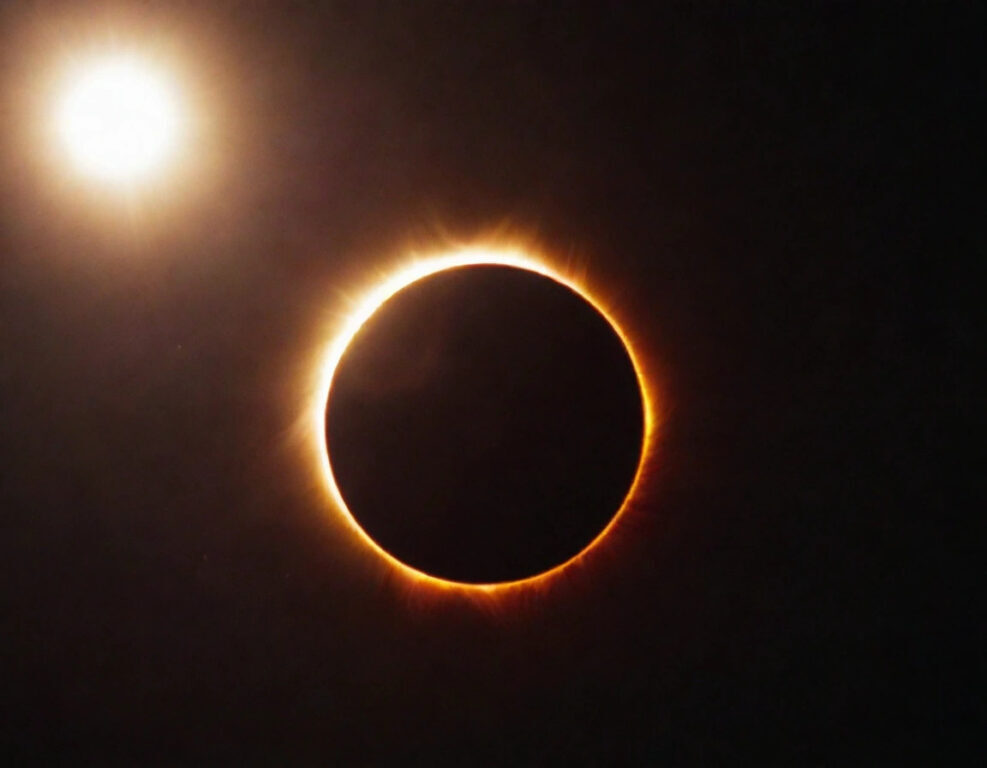
Many people confuse them, but they have nothing to do with each other. In a solar eclipse, the Moon covers the Sun and you should never look at it without certified protection. In a lunar eclipse, it’s the Earth that blocks the Sun’s light and the Moon that darkens.
Another key difference: solar eclipses last minutes; lunar ones last hours. And solar eclipses are only seen from a narrow strip of the planet, while a total lunar eclipse is visible from anywhere the Moon is above the horizon.
Real effects of a lunar eclipse on Earth
Does a lunar eclipse affect the Earth? Yes, but subtly. The Moon still exerts its gravity on the tides, and during the eclipse there’s no abrupt change. Some studies have observed minimal variations in the behavior of nocturnal birds and marine animals, but nothing comparable to a cataclysm.
What does change is the Moon’s surface temperature: when it’s left without direct sunlight, it cools by several degrees in a few hours. That was measured by the Apollo missions and is still being studied with current probes.
Myths and legends of the blood moon
The blood moon has fueled all kinds of stories. In ancient Mesopotamia it was interpreted as a bad omen for kings. In some Mayan cultures, it was associated with the death of deities. And in medieval Europe, it was linked to natural disasters.
Today we know there’s no connection. But the cultural impact is real: lunar eclipses have marked calendars, rituals, and even political decisions for millennia.
Lunar events you can’t miss
Beyond eclipses, the Moon stars in other phenomena that are worth it:
- Supermoons: when the full Moon coincides with its closest point to Earth (perigee). It looks bigger and brighter.
- Planetary conjunctions: the Moon aligns with Venus, Jupiter, or Mars, creating spectacular scenes at dawn or dusk.
- Meteor showers: although they don’t come from the Moon, many coincide with favorable lunar phases for observing them.
A lunar eclipse is, by far, the most accessible event for anyone. You don’t need to travel, buy equipment, or be an expert. Just look at the sky at the right moment.
If you miss the one in March 2026, mark August 28. And if you can’t go out, many observatories and astronomy channels broadcast live. But I’ll tell you straight: watching it on a screen isn’t the same. Go outside, find a dark sky, and enjoy the only cosmic spectacle that asks nothing of you in return.