

Post actualizado el día octubre 26, 2026 by DeiviSanzPlay
If you’ve noticed winters that feel like spring and summers that feel like an oven, you’re not imagining things. Climate change is the large-scale shift in the planet’s weather patterns, and it’s happening right now, not in some distant future. Global warming is its most talked-about symptom, but it’s only one piece of a much messier puzzle.
Let’s be blunt: this isn’t just «the weather acting weird.» It’s a systemic alteration of the climate system caused mainly by human activity since the industrial revolution. And no, that’s not an opinion — it’s what the IPCC has been confirming for decades.
What Exactly Is Climate Change (Beyond the Buzzword)
Climate change refers to long-term shifts in temperatures and weather patterns. Some of it is natural, sure, but since the 1800s, human activities have been the main driver. The culprit? Burning fossil fuels like coal, oil, and gas, which releases greenhouse gases into the atmosphere.
Think of these gases as a blanket wrapped around the Earth. They trap heat that would otherwise escape into space. The result is a planet that keeps getting warmer, and that’s the core of global warming. But climate change goes further: it messes with rainfall, wind patterns, ocean currents, and basically every natural cycle we depend on.
Here’s a detail many people miss: CO₂ isn’t the only villain. Methane from livestock and landfills, nitrous oxide from fertilizers, and even water vapor all play a role. Methane, for instance, traps about 80 times more heat than CO₂ over 20 years. That’s not a minor footnote.
The Effects We’re Already Living Through
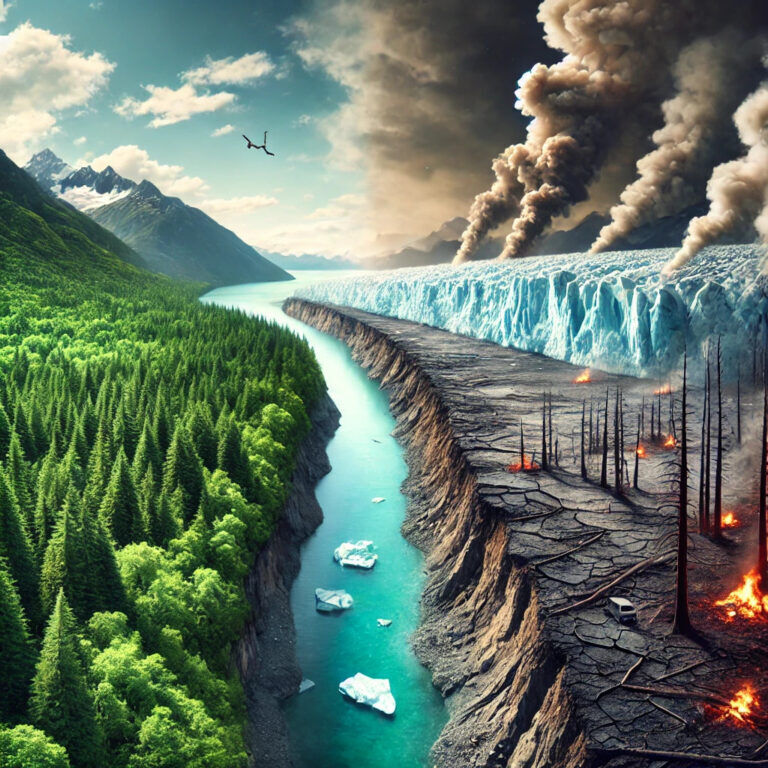
You don’t need a lab coat to see the effects of climate change. Just look around. Glaciers are melting at record speeds, especially in Greenland and Antarctica. When that ice disappears, sea levels rise, and coastal cities from Miami to Jakarta are already dealing with more frequent flooding.
Extreme weather events are another telltale sign. Hurricanes are getting stronger, heat waves are lasting longer, and wildfires are burning bigger areas. In 2024, for example, Canada’s wildfire season burned over 5.3 million hectares — that’s roughly the size of Costa Rica. This isn’t random; warmer air holds more moisture, which fuels storms, and drier conditions make fires more likely.
And let’s not forget biodiversity. Many species can’t adapt fast enough to the changing climate. Coral reefs are bleaching, pollinators are shifting their ranges, and some animals are migrating to cooler areas. It’s a domino effect that threatens food chains and, ultimately, our own food security.
Climate change isn’t a single event — it’s a chain reaction we’ve triggered, and the links keep breaking.
Deforestation: The Accelerator Nobody Wants to Talk About
Trees are natural carbon sinks. They absorb CO₂ from the atmosphere and store it. When we cut them down — especially in the Amazon, Congo Basin, and Southeast Asia — we’re not just losing trees; we’re releasing all that stored carbon back into the air. Deforestation contributes roughly 10% of global greenhouse gas emissions, according to the FAO.
But it’s worse than that. Forests also regulate rainfall and local temperatures. Destroy them, and you get drier, hotter conditions that make it even harder for the remaining forest to survive. It’s a vicious circle, and we’re the ones spinning it.
Renewable Energy: The Way Out (If We Actually Commit)
Here’s the part where I stop being gloomy. Renewable energy is no longer a hippie dream — it’s a competitive, scalable solution. Solar and wind power are now the cheapest sources of electricity in most of the world. In 2025, renewables accounted for over 30% of global electricity generation, and that number keeps climbing.
But renewables alone won’t cut it. We also need to electrify transport, improve energy efficiency, and rethink how we produce food. Lab-grown meat, vertical farming, and plant-based diets are part of the mix, whether you like it or not. The point is: technology exists. What’s missing is political will and corporate accountability.
Global Agreements: Paris and Beyond
The Paris Agreement, signed in 2015, aims to keep global warming well below 2°C, ideally 1.5°C, compared to pre-industrial levels. Countries submit nationally determined contributions (NDCs) every five years. But here’s the catch: even if every country met its current pledges, we’d still be on track for around 2.5°C of warming by 2100. That’s not safe.
Critics argue the agreement lacks teeth — there are no penalties for missing targets. And that’s fair. But it’s also the only framework we’ve got that keeps every nation at the table. Walking away from it, like some politicians have suggested, would be a catastrophe.
What You Can Actually Do (No, Really)
You don’t need to become a climate scientist or live off-grid. Small, consistent actions add up. Reduce your meat consumption, fly less, use public transport, insulate your home, and vote for leaders who take climate change seriously. Support companies that prioritize sustainability, and call out those that greenwash.
But let’s be honest: individual action alone won’t fix this. Systemic change — policy, regulation, corporate responsibility — is what moves the needle. Your job is to push for that change, not just recycle your plastic bottles and call it a day.
Climate change is here. It’s affecting your grocery prices, your insurance rates, and your weekend plans. The question isn’t whether we can stop it entirely — we can’t, not anymore. The question is how bad we let it get. And that’s a choice we’re making every single day.
