Post actualizado el día octubre 26, 2026 by DeiviSanzPlay
If you’ve ever squeezed a mattress and wondered what the hell is inside, you’ve already touched foam rubber. And if you’ve ever looked at a cheap bookshelf and wondered why it feels like compressed sawdust, that’s an agglomerate. Two materials, two completely different philosophies. Let’s cut the marketing crap and get into what they actually are, where they come from, and which one you should pick depending on what you’re building or buying.
What Is Foam Rubber, Really?
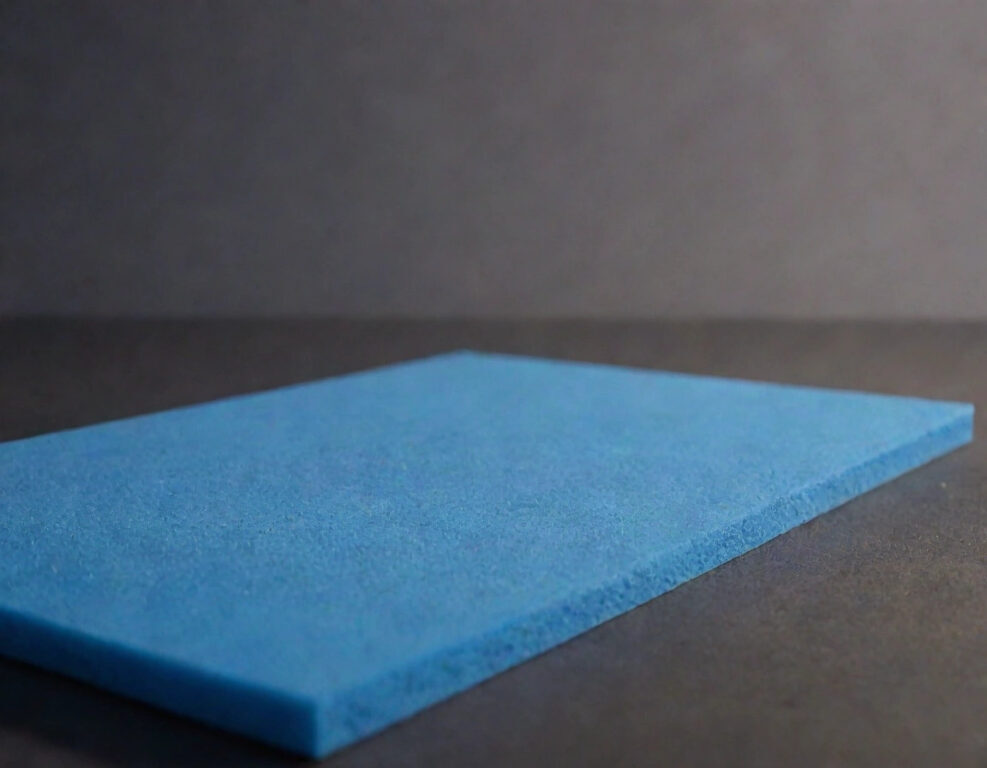
Foam rubber — also called polyurethane foam or just PU foam — is the result of a chemical reaction between a polyol and an isocyanate, with a blowing agent thrown in to create gas bubbles. That gas is what gives it the porous, spongy structure. No, it’s not natural latex rubber, even though people mix them up constantly. Natural latex comes from rubber trees; polyurethane foam comes from a lab.
The key property here is compression. Foam rubber can be squashed to a fraction of its size and bounce back thousands of times without losing shape. That’s why it ends up in mattresses, cushions, car seats, and acoustic panels. It’s lightweight, flexible, and absorbs impact like a champ.
Density matters more than most people realize. Low-density foam (around 1.5 lb/ft³) is fine for packaging but useless for a mattress you’ll sleep on for eight years. High-density foam (2.5 lb/ft³ and up) is what you want for furniture that needs to survive real life.
Agglomerates: The Compressed Leftovers That Actually Work
Agglomerates are materials made by bonding small fragments — wood chips, cardboard fibers, plastic scraps, cork granules — under heat and pressure, usually with a resin binder. Think particle board, oriented strand board (OSB), or cork agglomerate. The idea is simple: take waste, compress it, and get a solid block that’s cheaper than solid wood.
The advantage? You can engineer the properties. Want more moisture resistance? Use a different resin. Want higher density? Crank up the pressure. Agglomerates are the ultimate recycling play — they turn industrial scrap into usable panels for furniture, insulation, and flooring.
But here’s the catch: low-quality agglomerates swell when wet and crumble under repeated stress. That’s why a $30 particle board desk sags after two years, while a high-pressure laminate (HPL) agglomerate countertop lasts decades.
Foam Rubber vs Agglomerates: Head-to-Head
Let’s be blunt. Foam rubber is flexible, light, and comfortable. Agglomerates are rigid, dense, and structural. They don’t compete — they solve different problems.
- Flexibility: Foam rubber wins, no contest. It bends, compresses, and recovers. Agglomerates crack if you try to bend them.
- Load-bearing: Agglomerates win. A 2-inch agglomerate panel can hold more weight than a 6-inch foam block.
- Moisture resistance: Depends on the binder. Polyurethane foam can degrade with UV and moisture over time; sealed agglomerates handle humidity better.
- Cost: Agglomerates are usually cheaper per cubic foot because they use waste materials. Foam rubber costs more due to petrochemical inputs.
- Eco-factor: Agglomerates win on recycled content, but the resins used are often formaldehyde-based. Foam rubber is petroleum-derived but increasingly made with bio-based polyols.
Where Foam Rubber Actually Shines
Mattresses and pillows are the obvious ones. Memory foam — a type of polyurethane foam — changed the bedding industry because it adapts to body heat and pressure points. But foam rubber also shows up in:
- Car seats and headliners (acoustic and impact absorption)
- Packaging for electronics (custom-molded inserts)
- Acoustic insulation in studios and theaters
- Medical cushions for wheelchair users
- Sporting goods like helmet liners
One thing people overlook: foam rubber’s open-cell structure makes it breathable if manufactured correctly. Closed-cell foam (like EVA) is waterproof but less comfortable. So when you’re buying a mattress, check whether it’s open-cell or closed-cell — it changes everything about how it sleeps.
Where Agglomerates Dominate
Agglomerates are the backbone of affordable furniture, construction panels, and insulation. Cork agglomerate is a standout because it’s naturally antimicrobial, fire-resistant, and great for acoustic insulation. Wood agglomerates (particle board, MDF, OSB) are everywhere in flat-pack furniture.
But here’s a warning: not all agglomerates are equal. Cheap particle board uses urea-formaldehyde resin, which off-gasses VOCs for months. Better options use melamine or MDI resins with near-zero emissions. If you’re buying furniture for a nursery or a small room, pay attention to the binder, not just the material.
«Agglomerates are basically industrial recycling with a press. Foam rubber is chemistry with a purpose. Both are brilliant — if you use them for the right job.»
Manufacturing: How Each One Is Made
Foam rubber production starts with mixing polyols, isocyanates, catalysts, and blowing agents. The mixture expands rapidly — sometimes 30 times its original volume — and cures into a block. Manufacturers then cut it with CNC machines or hot wire into sheets and shapes. Density is controlled by the amount of blowing agent and the mixing speed.
Agglomerates take a different route. Raw fragments are dried, mixed with resin, then pressed under heat (200–400°F) and pressure (300–800 psi). The resin cures and locks everything together. The final density depends on the pressure and the particle size — finer particles give a smoother, denser board.
Neither process is rocket science, but both require precision. A 5% error in resin ratio can turn a durable panel into a crumbly mess.
Which One Should You Choose in 2026?
If you need comfort, flexibility, or impact absorption — go foam rubber. If you need structure, rigidity, or a cheap panel — go agglomerate. The mistake is trying to substitute one for the other. A foam rubber shelf will sag. An agglomerate mattress will feel like sleeping on a rock.
For mattresses specifically, look for high-density foam rubber (at least 2.5 lb/ft³) with an open-cell structure. For furniture, choose agglomerates with low-emission binders if indoor air quality matters to you. And if you’re building something that needs both — like a sofa with a rigid frame and soft cushions — you’ll end up using both materials. That’s not a compromise; that’s smart engineering.
At the end of the day, foam rubber and agglomerates are two sides of the same coin: one gives you softness, the other gives you strength. Knowing which is which saves you money and back pain.