

Post actualizado el día octubre 24, 2026 by DeiviSanzPlay
Global warming isn’t a theory dreamed up by boring scientists. It’s the reason your electricity bill goes up in summer, the reason there are more and more nights when you can’t sleep without air conditioning, and the reason June wildfires no longer surprise anyone. And the worst part: it’s only getting worse.
If you’re looking for what global warming is and how it affects us all, here I’ll tell you straight. No academic jargon. Facts, real consequences, and what you can do—you, who are neither a president nor the owner of an oil company.
What global warming is (explained for normal people)
Global warming is the sustained rise in the planet’s average temperature. Period. It’s not that one day it’s hotter in your city; it’s that the global average rises year after year. And it rises because of us.
NASA and NOAA have been measuring it since 1880. Since then, the global temperature has risen by about 1.1 °C. That sounds like little, but in a system as big as the climate, one degree is enormous. The last decade (2015-2024) has been the warmest ever recorded.
The key lies in the greenhouse effect. It’s a natural phenomenon that traps part of the sun’s heat and makes Earth habitable. The problem is that humans have fattened that blanket of gases to unsustainable limits.
The real causes: it’s not the sun, it’s us
The main culprit is CO₂ (carbon dioxide). Methane comes next, which warms about 80 times more per ton, although it lasts less time in the atmosphere. Both soar due to the burning of fossil fuels: coal, oil, and gas.
It’s not just transportation. Cement production, Amazon deforestation, and intensive livestock farming also play their part. The concentration of CO₂ in the atmosphere exceeded 420 parts per million in 2024, a level not seen for more than 3 million years.
And the sun? Yes, its activity varies, but scientists are clear: if we only counted on the sun, Earth would be cooling slightly in recent decades. What’s scorching us is human action.
How global warming affects us in everyday life
We’re not talking about distant polar bears. We’re talking about your fridge, your health, and your wallet.
- Deadly heat waves: In Spain, the summer of 2023 left more than 3,000 deaths attributable to extreme heat, according to the ISCIII. The elderly and the chronically ill are the first to fall.
- More expensive food: Droughts devastate olive oil, wheat, and rice crops. The price of liquid gold has doubled partly due to the lack of rain in Andalusia.
- New diseases: The tiger mosquito, a carrier of dengue and Zika, now roams freely across the Mediterranean. Twenty years ago it wasn’t there.
- Insurance and mortgages: Insurers are raising premiums in flood-prone or fire-risk areas. Some banks no longer grant mortgages in certain coastal areas.
And mind you, this isn’t about saving the planet. The planet will keep spinning. It’s about saving our way of life.
Sea level and the cities that are drowning
The melting of Greenland and Antarctica is accelerating sea-level rise. Between 1901 and 2018 it rose about 20 centimeters. The rate has doubled since 1993. By 2100, according to the IPCC, we could be talking about between 40 centimeters and more than a meter.
In Spain, the Ebro Delta and areas of the Valencian coast already suffer coastal flooding more frequently. Miami, Jakarta, and Venice are extreme cases, but the problem is global.
It’s not just the water rising. It’s that warm water takes up more volume (thermal expansion) and that hurricanes find more energy to turn into monsters like Ian or Helene.
Extreme events: the new normal
Every tenth of a degree counts. A hotter climate doesn’t mean rain disappears, but that it pours buckets in less time. A DANA (isolated depression at high levels) can dump in 4 hours what used to fall in a month. That’s what we saw in Valencia in October 2024.
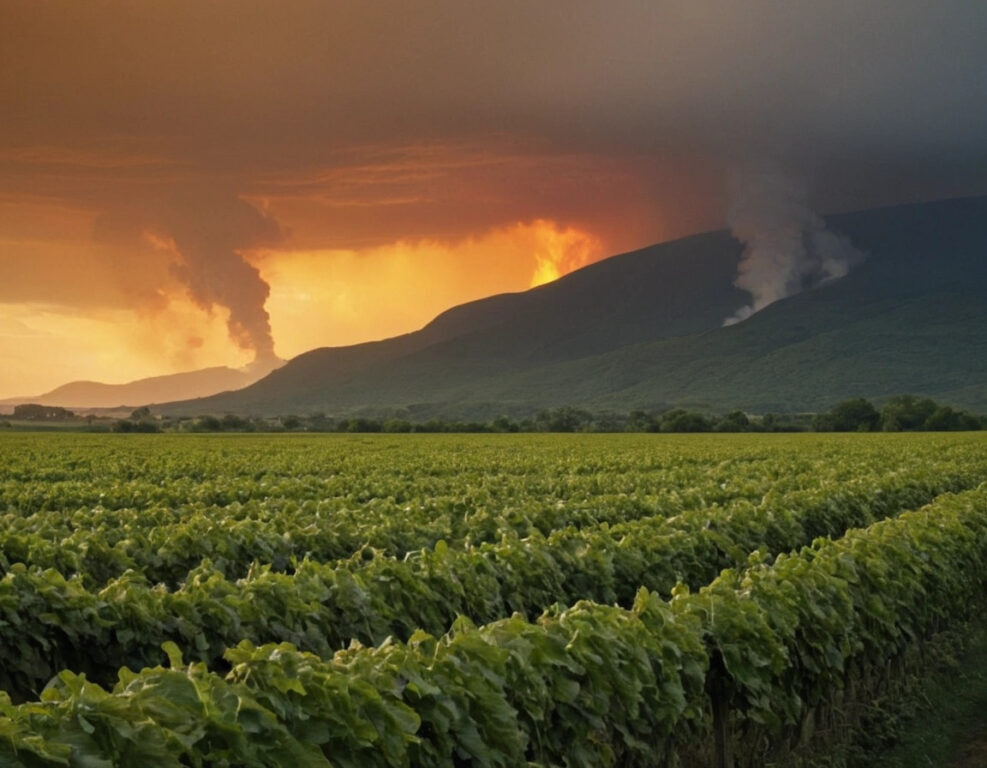
Wildfires are also getting out of hand. In 2023, Canada burned like never before: 18 million hectares. The smoke reached New York and Europe. It’s not a local problem.
The drought in the Horn of Africa has left more than 20 million people on the brink of famine. And it’s not bad luck: it’s the climate.
Can we stop it? Yes, but recycling isn’t enough
The good news: we’re still in time to avoid the worst scenarios. The bad news: not with symbolic gestures. Recycling is fine, but 70% of global emissions come from just 100 companies. That’s the key.
As an individual you can do useful things:
- Switch to green energy: Many suppliers offer 100% renewable rates at no extra cost. It’s the most effective thing you can do at home.
- Reduce flights: A round-trip Madrid-New York flight emits more CO₂ than a whole year of driving.
- Eat less red meat: Cattle farming generates 14.5% of global emissions, according to the FAO.
- Vote with climate criteria: Public transport, renewable energy, and energy efficiency policies make more difference than turning off the light.
And above all, talk about it. Climate denialism is fought with everyday conversations, not just with reports.
What’s coming: the point of no return
Scientists talk about tipping points: thresholds that, once crossed, trigger irreversible changes. The thawing of permafrost in Siberia releases methane, which warms more, which melts more permafrost. It’s a self-reinforcing loop.
The Amazon could turn into savanna if it loses too much forest. Coral reefs could disappear with 1.5 °C of warming. We’re already at 1.1 °C. The margin is narrow.
The window to limit warming to 1.5 °C closes this decade. It’s not alarmism: it’s what the IPCC, the UN panel of scientists, says. Every year that passes without drastic emissions cuts makes adapting more expensive and painful.
This isn’t about saving the planet for morality’s sake. It’s about you being able to turn on the air conditioning in 2050 without the power going out, about there being olive oil in the supermarket, and about your house not flooding every spring. Global warming is the biggest problem we’ve faced as a species. Ignoring it doesn’t make it go away.
