

Post actualizado el día octubre 26, 2026 by DeiviSanzPlay
Antarctica isn’t just a giant ice cube at the bottom of the map. It’s a continent that’s been hiding stuff for millions of years, and every time scientists drill a hole or fly a plane over it, they find something that makes them scratch their heads. So what is in Antarctica, really? More than you think.
Subglacial Lakes: The Hidden World Beneath Antarctica’s Ice
Beneath the ice sheet, there are over 300 subglacial lakes. Some of them, like Lake Vostok, have been sealed off from the rest of the world for millions of years. When Russian scientists finally drilled into Vostok in 2012, they found microbial life that had evolved in complete isolation. That’s not a small deal — it means life can survive in places we thought were dead.
What is in Antarctica that we still don’t know? Plenty. Lake Whillans, another subglacial lake, was sampled in 2013 and pulled up thousands of bacterial cells. These aren’t just random microbes — they’re a window into how life might exist on icy moons like Europa or Enceladus.
Antarctica’s Tropical Past: Forests and Dinosaurs Under the Ice
Here’s where it gets weird. Antarctica wasn’t always frozen. Fossils found in the Transantarctic Mountains show that around 90 million years ago, the continent was covered in temperate rainforests. Dinosaurs roamed there. In 2016, scientists discovered fossilized dinosaur bones on James Ross Island — the first ever found in Antarctica.
So what is in Antarctica that proves this? Pollen, spores, and even tree roots have been extracted from drill cores. The ice is basically a time capsule that preserves a completely different world. If you think Antarctica is just a frozen desert, you’re missing the point: it was once a lush, green place.
Life in the Extreme: Penguins, Seals, and Microbes
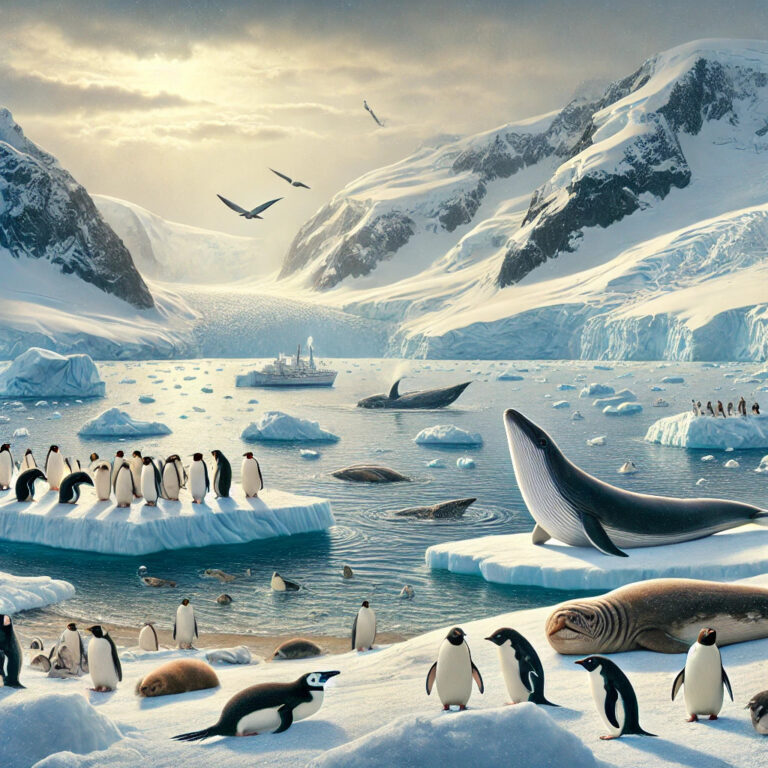
What animals live in Antarctica? Emperor penguins, Weddell seals, leopard seals, and skuas, among others. But the real hardcore survivors are the extremophiles — organisms that thrive in temperatures below -20°C, in saltwater, and with almost no sunlight. They live in the ice itself, in brine channels, and in the subglacial lakes.
What is in Antarctica that’s alive and kicking? More than 200 species of fish, including icefish that have antifreeze proteins in their blood. That’s not science fiction — that’s real biology. And it’s a reminder that life doesn’t need comfortable conditions to exist.
The Antarctic Treaty: Protecting a Continent from Exploitation
The Antarctic Treaty, signed in 1961, sets Antarctica aside for peaceful scientific research. No military bases, no mining, no commercial drilling. It’s one of the few examples of international cooperation that actually works. But it’s not perfect: the treaty can be reviewed in 2048, and some countries are already eyeing the oil and minerals under the ice.
Why is Antarctica protected by an international treaty? Because if we don’t protect it, we’ll destroy it. The ecosystem is fragile, and a single oil spill would be a disaster. The treaty is a firewall against human greed, and we should keep it that way.
Hidden Bases and Conspiracy Theories: What’s Real?
Let’s cut the crap: there are no secret Nazi bases under the ice, no alien spacecraft, no hidden civilization. What there is are abandoned research stations, like the Soviet Vostok Station, and a lot of speculation. The conspiracy theories about Antarctica are fun, but they’re not based on evidence.
What is in Antarctica that fuels these rumors? The sheer scale of the place. It’s bigger than the U.S. and Mexico combined, and 99% of it is covered in ice. That’s a lot of empty space for people to project their fantasies onto. But science doesn’t need conspiracy theories — the real discoveries are already mind-blowing.
Climate Change and Antarctica’s Future
Antarctica is losing ice at an accelerating rate. In 2023, sea ice hit a record low. If the West Antarctic Ice Sheet collapses, sea levels could rise by 3 meters. That’s not a distant problem — it’s a slow-motion catastrophe.
What is in Antarctica that matters to you? The ice. It regulates the planet’s temperature, ocean currents, and weather patterns. If it melts, we’re all screwed. So when you ask what is in Antarctica, the answer is: our future.
Can You Live in Antarctica?
Yes, but not for long. There are research stations like McMurdo and Concordia where scientists spend months in isolation. Winter temperatures drop below -80°C. You can’t just pack a suitcase and move there — you need a reason, a team, and a lot of psychological preparation.
Is it possible to live in Antarctica? Technically, yes. But it’s not a vacation. It’s a survival exercise. The people who work there are tough as nails, and they do it for science, not for comfort.
Final Thoughts: Antarctica Is More Than Ice
So, after all this, what is in Antarctica? Subglacial lakes, ancient fossils, extremophile life, a treaty that keeps the peace, and a climate system that holds our future in its hands. It’s not just a frozen continent — it’s a mystery box that we’ve only just started to open.
If you ever get the chance to see the southern auroras over the ice, take it. But remember: Antarctica doesn’t need us. We need it. And the more we learn about it, the more we realize how little we actually know.
