Post actualizado el día octubre 26, 2026 by DeiviSanzPlay
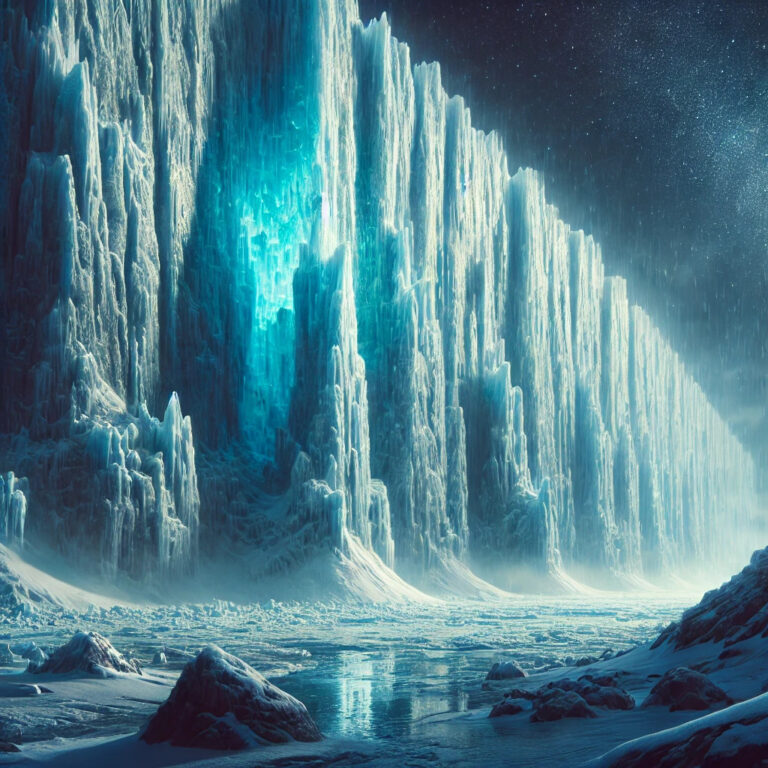
Picture a wall of ice so tall it swallows the horizon. Not a metaphor, not a fantasy film set — an actual geological structure that has stopped explorers dead in their tracks. That’s the Ice Wall, and no, it’s not a conspiracy invention. It’s real, it has an origin you can trace, and most of what circulates online about it is half-true.
Here’s the blunt version: the Ice Wall is the popular name for massive ice cliffs and ice shelves, especially the ones framing Antarctica. The most famous is the Ross Ice Shelf, a floating slab of ice roughly the size of France that ends in a vertical face up to 50 meters above the water. That face is what people call the Ice Wall.
What exactly is the Ice Wall and where does it come from?
The Ice Wall isn’t a single structure. It’s a category. You find these frozen barriers in Antarctica, Greenland, and parts of the Arctic, but the Antarctic ones are the ones that fuel the legend.
The origin is boringly scientific and still astonishing: thousands of years of snow piling up, compressing under its own weight, and slowly flowing outward toward the ocean. When that ice reaches the coast, it floats and forms an ice shelf. The outer edge — where the shelf meets open water — is the vertical wall you see in photos.
So when someone asks about the origin of the Ice Wall, the honest answer is: accumulation, gravity, and time. No ancient civilization, no dome, no hidden gate. Just physics doing its slow, relentless work for millennia.
Why the Ross Ice Shelf is the real star
If you want to see the Ice Wall with your own eyes, you go to the Ross Ice Shelf. It’s the largest ice shelf on Earth, covering around 500,000 square kilometers. Its front — the Ross Ice Front — stretches roughly 600 kilometers and rises between 15 and 50 meters above sea level.
That cliff is what early polar explorers described as an impassable barrier. Shackleton, Scott, Amundsen — they all stared at it. Some managed to climb onto it. Others turned back. The Antarctic Ice Wall wasn’t a myth to them; it was a logistical nightmare.
And here’s a detail most articles skip: the wall moves. The shelf flows outward at roughly 1 to 3 meters per day. It’s not static. It calves icebergs constantly. The wall you see today is not the wall that existed a century ago.
Ice Wall vs. ice sheet vs. glacier: don’t mix them up
People throw these terms around like they’re interchangeable. They’re not.
- Ice sheet: a continent-sized mass of land-based ice. Antarctica and Greenland have them.
- Glacier: a river of ice flowing downhill under its own weight.
- Ice shelf: the floating extension of a glacier or ice sheet over the ocean.
- Ice Wall: the vertical face at the edge of an ice shelf or glacier where it meets water or land.
Understanding the difference matters because climate discussions get distorted when people conflate them. A melting ice shelf doesn’t raise sea levels directly — it’s already floating. But it acts as a buttress. When it collapses, the land ice behind it flows faster into the ocean. That’s the real threat.
Can you actually cross the Ice Wall?
Technically, yes. Practically, it’s brutal.
Climbing the Ross Ice Front means scaling a near-vertical face of ice at temperatures that routinely drop below -40°C, with winds that can hit 150 km/h. The surface is unstable. Sections collapse without warning. Without specialized equipment, trained teams, and helicopter support, it’s suicide.
Expeditions that have accessed the polar plateau usually do it via established routes like the Leverett Glacier or by flying in. Nobody casually scales the Ice Wall in Antarctica and lives to post about it.
«The ice wall is not a challenge you overcome. It’s a condition you survive.» — a sentiment shared by every polar explorer who’s written about it.
What’s trapped inside the Ice Wall?
This is where it gets genuinely interesting. Ice cores drilled from Antarctic shelves and sheets contain trapped air bubbles — literal samples of ancient atmospheres. Scientists have extracted ice up to 800,000 years old, and there are ongoing efforts to reach 1.5 million years.
Inside those layers: volcanic ash, cosmic dust, microorganisms in dormant states, and pollen from continents that were once green. No lost civilizations. No alien artifacts. But a climate archive that’s more valuable than any conspiracy theory.
The Ice Wall’s interior is a time capsule, and we’re only beginning to read it.
Is the Ice Wall melting?
Some parts are thinning fast. The Ross Ice Shelf is relatively stable, but shelves on the Antarctic Peninsula and in West Antarctica have collapsed or retreated dramatically in recent decades.
The Larsen B shelf disintegrated in 2002. Larsen C lost a chunk the size of Delaware in 2017. These aren’t distant projections — they happened, they’re documented, and they changed the coastline of the continent.
Climate change is not a future scenario for the Ice Wall. It’s an active process. Warmer ocean water eats at the underside of shelves from below, which is harder to see and harder to stop than surface melting.
The conspiracy angle: why people believe there’s more
Let’s address it directly. The idea that the Ice Wall hides a hidden continent, a flat-earth edge, or a secret civilization is internet folklore. It grew from a mix of genuine exploration gaps, misread military operations (like Operation Highjump in 1946), and the simple fact that Antarctica is vast, hostile, and mostly unvisited.
That mystery is real. The conspiracy isn’t. There’s no gate. There’s no wall beyond the wall. What’s behind the Ice Wall is more ice, then rock, then the Southern Ocean on the other side.
But I get the appeal. When you see a 50-meter cliff of blue ice stretching for hundreds of kilometers, your brain wants it to mean something more. That’s human. It’s also how legends start.
FAQ: Ice Wall questions people actually ask
Is the Ice Wall a real thing?
Yes. It’s the vertical edge of Antarctic ice shelves, most notably the Ross Ice Shelf. It’s documented, mapped, and studied.
Where is the Ice Wall located?
Primarily Antarctica, with similar formations in Greenland and the Arctic. The Ross Ice Front is the most famous example.
Why doesn’t the Ice Wall melt completely?
Extreme cold and continuous snow accumulation keep it stable in most areas. But warming oceans are thinning it from below in vulnerable regions.
Has anyone climbed the Ice Wall?
Yes, but rarely and with massive support. It’s not a tourist activity. Most access to the polar plateau happens via established routes, not by scaling the wall itself.
What is hidden behind the Ice Wall?
More ice, bedrock, and eventually ocean. No hidden civilizations. The real secrets are climate data trapped in ice layers spanning hundreds of thousands of years.
The Ice Wall is not a mystery to solve. It’s a structure to understand. And the more you learn about it, the less you need the conspiracy to feel amazed.