Post actualizado el día octubre 17, 2026 by DeiviSanzPlay
Most people who google «Egyptian cat» end up confused. Some pages talk about the Mau, others about the Sphynx, and a few go straight into Cleopatra worship. So let’s cut the noise: the Egyptian cat that actually exists as a registered breed is the Egyptian Mau, and it is the only naturally spotted domestic cat in the world. That alone makes it special.
What Exactly Is an Egyptian Cat? Forget the Myths
The Egyptian Mau is not a modern designer breed invented in a lab. It was developed from cats that lived in Egypt and were later standardised in Europe and the United States. The breed was recognised in the 1950s, but its lineage goes back thousands of years to the cats depicted in Egyptian art.
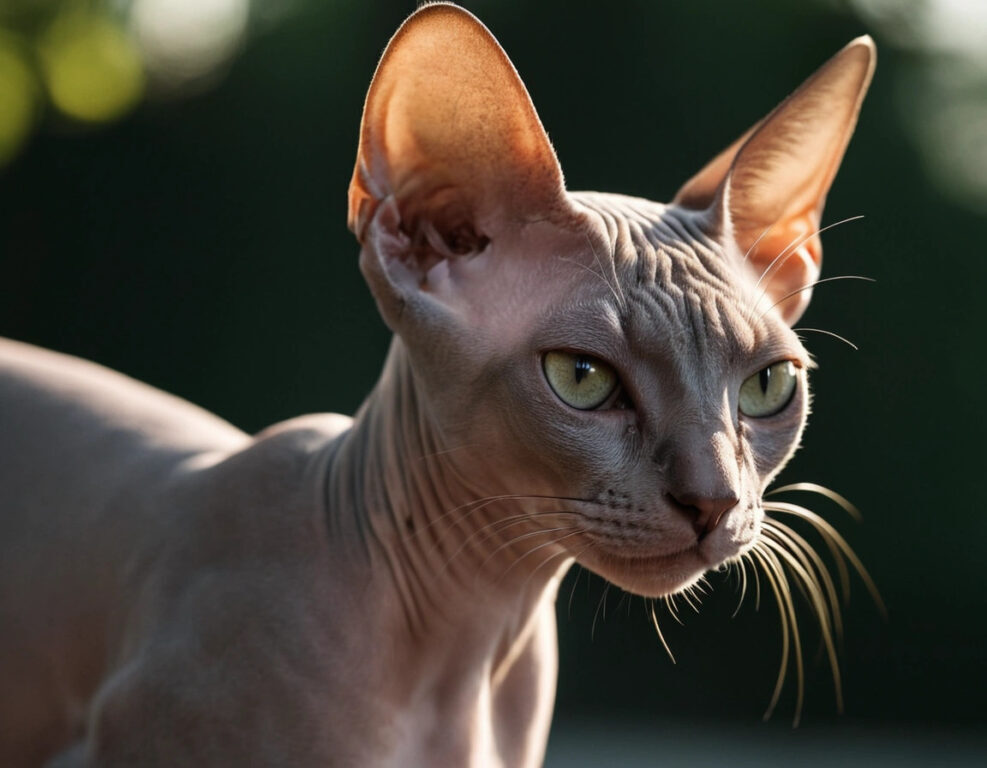
And no, the Egyptian cat is not the same as the Sphynx. The hairless Sphynx has nothing to do with ancient Egypt beyond a marketing name. The Mau is the real deal: spotted, muscular, silver or bronze, with a face that looks like it came straight off a tomb wall.
The Egyptian cat breed is also one of the fastest domestic cats alive. It can hit speeds of around 30 mph (48 km/h) in short bursts, thanks to a skin fold that lets its hind legs stretch further than other breeds. That is not a gimmick; it is anatomy.
The Physical Traits That Make the Egyptian Cat Unique
Look at an Egyptian Mau and you notice three things immediately: the spots, the eyes, and the attitude. The coat is short, glossy and tightly packed, with random spots that are not striped or blotched like a tabby. Each spot is distinct, which is rare in domestic cats.
The eyes are a pale gooseberry green, and there is always that famous «M» marking on the forehead plus mascara lines running from the eyes to the cheeks. Those markings are not aesthetic fluff; they are breed standards enforced by registries like CFA and TICA.
Another detail most websites ignore: Egyptian cats have a slightly loose flap of skin on the belly, inherited from their ancestors who lived near water and needed flexibility. It is a small thing, but it explains why they move differently.
Temperament: Loyal, Talkative, and Not for Everyone
If you want a lap cat that sleeps 18 hours a day, this is not your breed. The Egyptian cat is active, curious and vocal. It follows you around, learns tricks, opens doors, and will chirp at birds through the window for hours.
They bond hard with one or two people. With strangers, they can be reserved, sometimes skittish. That is not aggression; it is selective trust. If you have a chaotic household with constant visitors, an Egyptian Mau may spend the day hiding under the bed.
They also love water. Not in a swimming-pool way, but they will play with running taps and drink from them. This is another link to their Nile origins, where cats hunted near rivers.
Health and Care: What You Actually Need to Know
Egyptian cats are generally healthy, but they are not invincible. The breed has a higher-than-average risk of certain genetic conditions, including progressive retinal atrophy and some heart issues. A reputable breeder will test for these before selling a kitten.
Their short coat needs almost no grooming. A weekly rub with a rubber mitt is enough. What they do need is vertical space. Cat trees, shelves, window perches. If you lock an Egyptian Mau in a small flat with no stimulation, it will redecorate your curtains.
Feed them quality protein. They are lean, athletic cats and tend to get overweight fast if you free-feed dry kibble. Two measured meals a day plus play sessions is the right formula.
Why People Confuse the Egyptian Cat With Other Breeds
Search «Egyptian cat» and you will see Turkish Angoras, Bengals and even Abyssinians. This is because the term is used loosely online. The Abyssinian, for example, looks similar in body type but has a ticked coat, not spots. Bengals have rosettes, which are larger and more leopard-like.
The only cat that is officially an Egyptian cat is the Mau. If you see a breeder selling «Egyptian cats» without papers or breed verification, walk away. You are likely paying premium money for a spotted domestic shorthair.
Adopting an Egyptian Cat: Is It Worth It in 2026?
Prices for a registered Egyptian Mau kitten range from $800 to $2,500 depending on lineage and region. That is not cheap. But you are paying for a healthy, tested, documented animal with a temperament that is genuinely different from your average moggy.
If you want a cat that feels like a small wildcat but still curls up next to you at night, the Egyptian cat delivers. It is not a decoration. It is a companion with opinions.
And if you just want the look without the price, adopt a spotted tabby from a shelter. It will not have the pedigree, but it will have the attitude. That is the honest answer most breed articles will not give you.