

Post actualizado el día octubre 17, 2026 by DeiviSanzPlay
If you’re asking what product is used to clean solar panels, the short answer is boring but true: water. Not soap, not vinegar, not that multi-surface spray under your sink. Just water, ideally demineralized or reverse-osmosis water, plus a soft tool. That’s it.
I know it sounds too simple. But solar panels aren’t a kitchen counter. Their glass has an anti-reflective coating, and the frame seals and junction boxes don’t love chemicals. So the «best product to clean solar panels» is the one that leaves zero residue.
Why Soap and Household Cleaners Are a Bad Idea
Household cleaners — dish soap, ammonia-based glass sprays, abrasive powders — do three nasty things over time. First, they can scratch or slowly degrade the anti-reflective coating, which is exactly what lets light through. Scratch it, and you lose efficiency.
Second, any product that leaves residue creates a film. That film attracts more dust and blocks light, so you end up cleaning more often and generating less. Paradoxical, right?
Third, and this is the one people ignore: using unauthorized products can void your panel warranty. Manufacturers are strict about this. If you fry a panel with the wrong cleaner, you’re paying out of pocket.
The safest solar panel cleaning solution is pure water. Everything else is a risk you don’t need to take.
The Right Way to Clean Solar Panels With Water
Timing matters more than most people think. Clean at dawn, dusk, or on a cloudy day. If the panels are hot, water evaporates before you can wipe it, leaving streaks and mineral spots. Hot glass plus cold water is also a thermal shock you want to avoid.
Here’s the process that actually works:
- Rinse first. Blast off loose dust and grit with plain water before touching the surface. This prevents scratching.
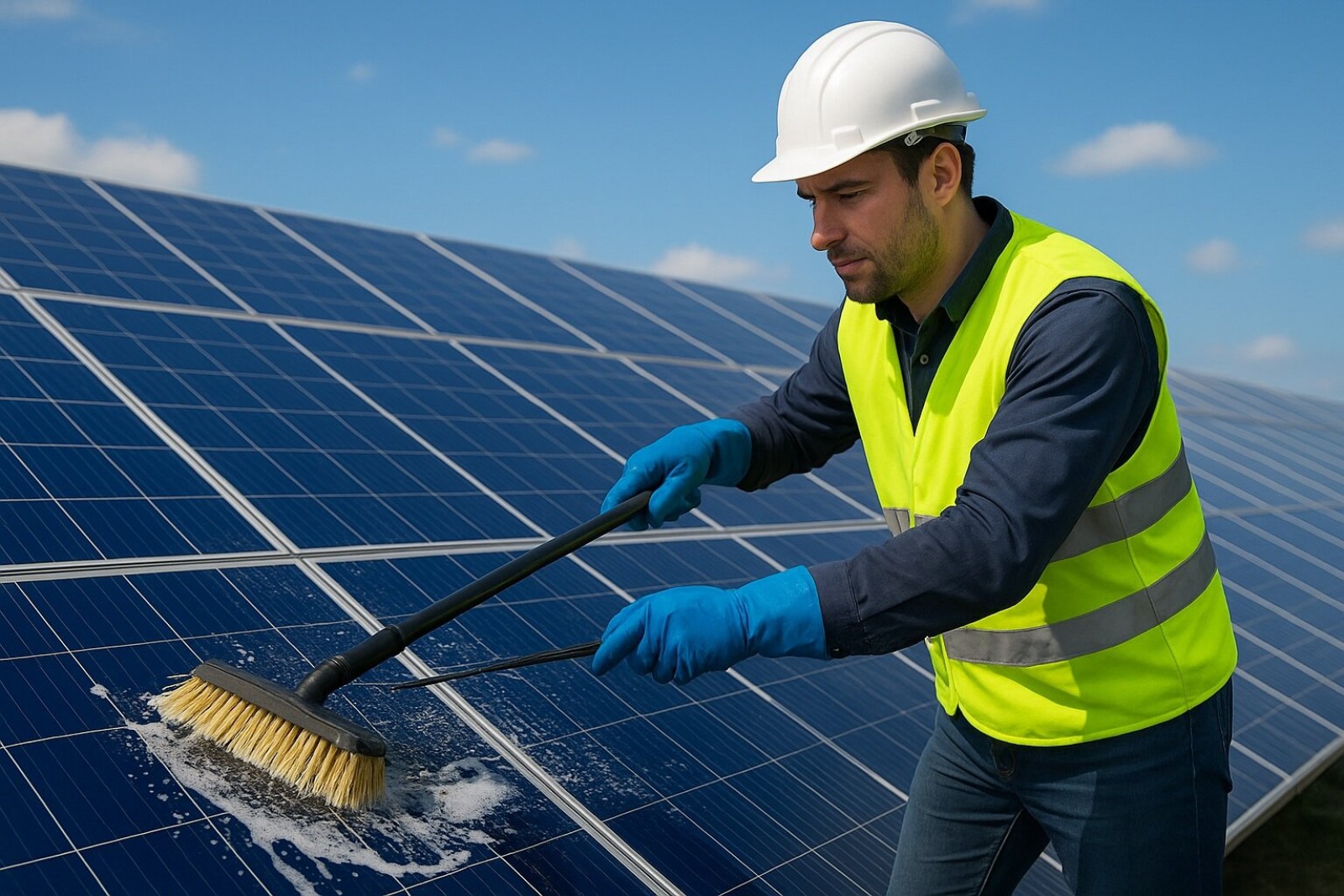
- Use the right tool. An extendable foam roller or a very soft sponge. No abrasive pads, no stiff brushes.
- Rub gently. No pressure. You’re lifting dirt, not scrubbing a grill.
- Final rinse. Plenty of clean water, ideally demineralized, to avoid spots.
If you live in a hard-water area, demineralized water isn’t a luxury — it’s the difference between clean panels and a chalky mess. Solar panel cleaning with demineralized water is the standard pro installers use for a reason.
Do You Even Need to Clean Them That Often?
Honestly? In many regions, rain does the job. If your panels are tilted at a decent angle and you get regular rainfall, you might only need a proper clean once or twice a year. The «best product to clean solar panels» is often just patience and weather.
But there are exceptions. Areas with heavy pollen, dust storms, bird droppings, or agricultural spraying need more attention. Bird droppings are the worst — they create hot spots that can permanently damage cells if left too long.
Check your output. If your system’s production drops noticeably and there’s visible grime, it’s time. Don’t clean on a schedule just because someone on a forum said so.
Professional Kits vs. DIY: What I’d Actually Do
There are specific solar panel cleaning kits on the market — purified water systems, soft-bristle brushes, extendable poles. These are the safest bet if plain water isn’t cutting it. They’re designed for the job, not repurposed from your garage.
But here’s my take: if your panels are on a hard-to-reach roof, or you have a large-scale system, hire a professional. Falling off a roof to save fifty bucks is a terrible trade. Professional maintenance services also know your specific panel model and warranty terms.
Before anything, check your installation manual or call the company that installed your system. Many offer maintenance as part of a service plan. That’s your first move, not a trip to the hardware store.
Common Mistakes That Kill Panel Efficiency
Using a pressure washer. I see this recommended online and it’s wrong. High pressure can force water past the seals and into the electronics. You’ll get moisture where it shouldn’t be, and that’s a costly repair.
Cleaning in full sun. Besides the streak issue, you’re working on a hot surface that can crack under thermal stress.
Using vinegar. It’s acidic. Over time, acid attacks the coating and the frame. Skip it.
Letting residue dry. Whatever you use, rinse it off completely. Dried soap or mineral film is worse than the dirt you started with.
The Bottom Line on Solar Panel Cleaning Products
Water. Demineralized if you can get it. Soft tools. Cool panels. Gentle motion. That’s the whole recipe, and it’s the only one I’d trust on my own roof.
Prevention beats cleaning. If your panels are angled well and rain does most of the work, leave them alone. When you do clean, do it right — because the wrong product doesn’t just fail to clean, it can quietly cost you efficiency, warranty coverage, and eventually the panels themselves.
