Post actualizado el día octubre 25, 2026 by DeiviSanzPlay
The discus fish didn’t come from a Bangkok aquarium shop or a Florida farm. It’s South American through and through, and more specifically from the Amazon basin. Anyone who tells you it’s «Asian» because most of the specimens you see in stores are bred there is only telling you half the story.
The discus fish is native to the calm, blackwater or clearwater tributaries of the Amazon basin, with populations spread across Brazil, Peru, and Colombia. We’re talking about areas like the Rio Negro, the Madeira River, the Putumayo, or the Nanay, where the water has very specific parameters that explain why this fish is so delicate in captivity.
The discus fish’s real habitat in the Amazon
When someone asks where the discus fish is originally from, the short answer is «the Amazon,» but the useful answer is more specific: it lives in slow-moving stretches with little current, lots of submerged roots, and warm water between 28 and 31 °C. None of those fast-flowing canyon rivers.
The water where Symphysodon lives is usually soft, acidic (pH between 5.5 and 6.8 in many areas), and with very low hardness. That combination is what makes the discus fish get sick in a standard community tank: it’s not «delicate» on a whim, it’s that it comes from a very specific ecosystem.
During the flood season, discus fish move among flooded trees and roots. During the dry season, they concentrate in pools and oxbow lakes. That seasonal movement explains why they tolerate enclosed spaces with hiding spots well, but not empty tanks with strong current.
The species that actually exist and where they come from
There’s a lot of myth here. For decades, three species were discussed: Symphysodon discus, Symphysodon aequifasciatus, and Symphysodon tarzoo. Today the most widely accepted taxonomy reduces the confusion to two main species and several geographic populations.
- Symphysodon discus: the «true» discus or Heckel discus. It is native to the Rio Negro and blackwater tributaries in Brazil. It is recognized by its very marked central vertical bar.
- Symphysodon aequifasciatus: includes the green, blue, and brown varieties. It inhabits clear and white waters of the central Amazon, with populations in Peru, Colombia, and Brazil.
- Local populations: the famous «royal blue,» «Tefé,» «Nhamundá,» or «Curipera» are not distinct species, but geographic varieties with their own coloration depending on the river they come from.
This detail matters a lot if you’re going to buy. A wild Heckel discus doesn’t have the same behavior or the same requirements as a discus bred on an Asian farm. The first is native to extreme blackwaters; the second has generations of adaptation to aquariums.
Why Brazil, Peru, and Colombia share the discus fish’s origin
The Amazon basin isn’t a river, it’s an enormous network. The discus fish appears in several countries because its distribution area crosses natural borders. In Brazil it is caught mainly in the state of Amazonas; in Peru, in the Iquitos area and the Nanay River; in Colombia, in the Amazon trapezoid and the Putumayo River.
For years, the largest volume of wild discus exports came from Brazil and Peru. That doesn’t mean those are the only origins, but they are the most documented. If someone tells you the discus fish is originally from Asia, they’re confusing origin with production: Asia is where most are bred today, not where the species was born.
A fact almost no one mentions: most of the discus sold in Europe and America are no longer wild. They are F1 or F2 bred in captivity, and many come from farms in Malaysia, Thailand, or Vietnam. But their DNA is still Amazonian.
How the discus fish reached aquariums around the world
The discus fish was scientifically described in the mid-19th century, but it didn’t become popular in the aquarium hobby until the 20th century. The first wild specimens arrived in dribs and drabs and died during transport. It wasn’t until captive breeding was mastered that the discus became a global product.
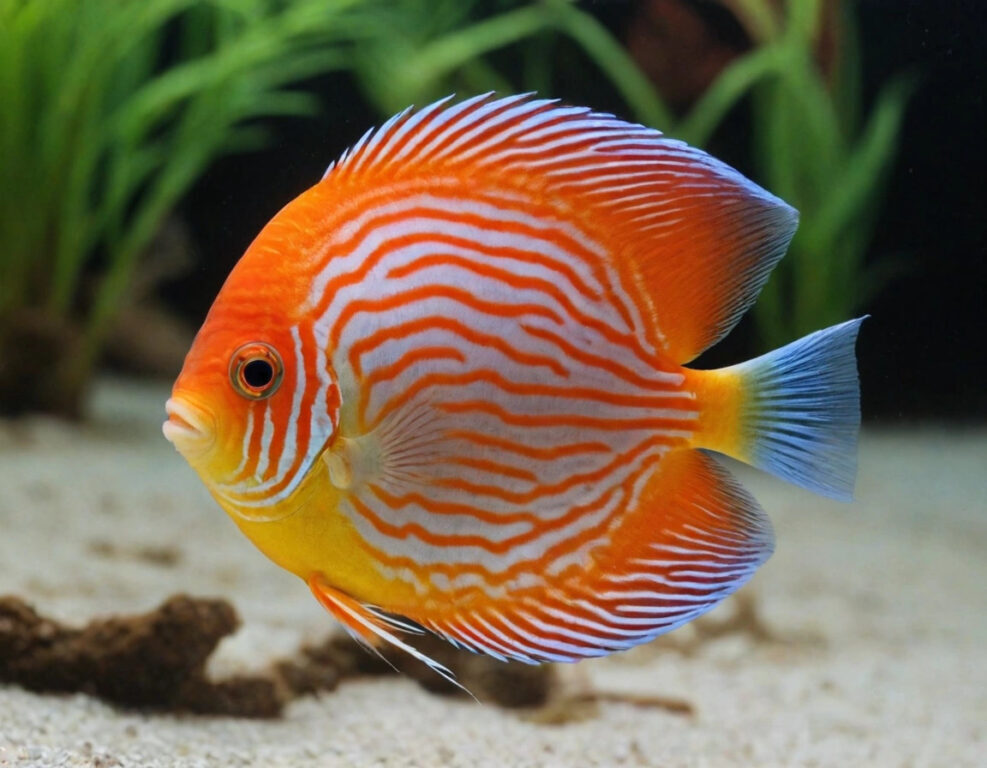
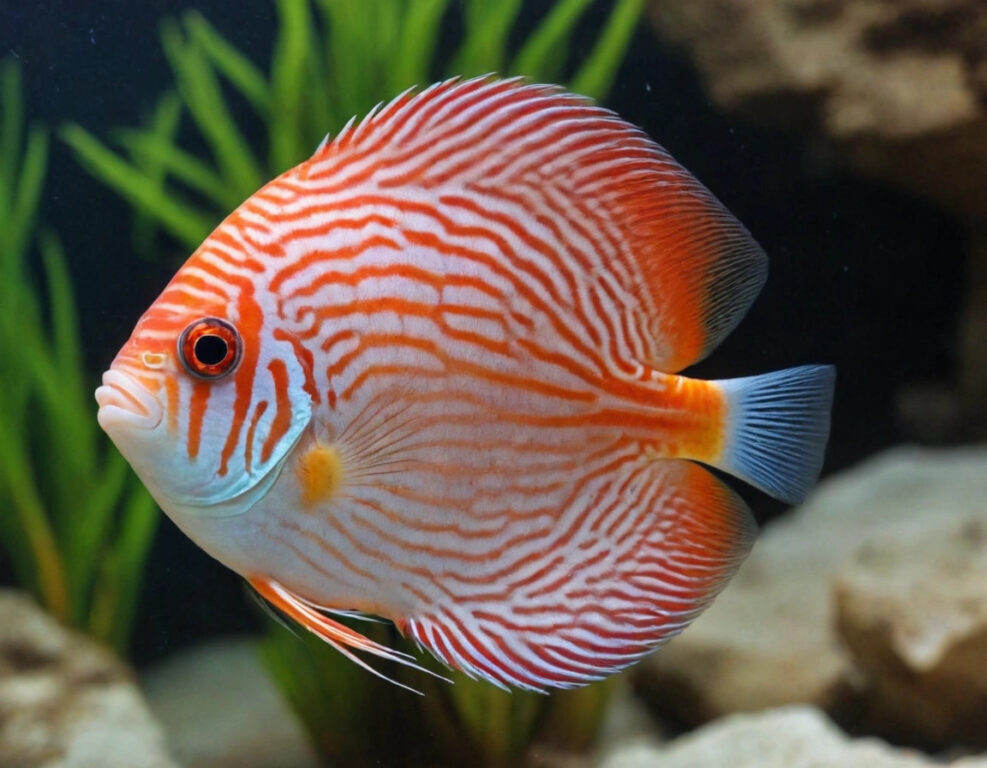
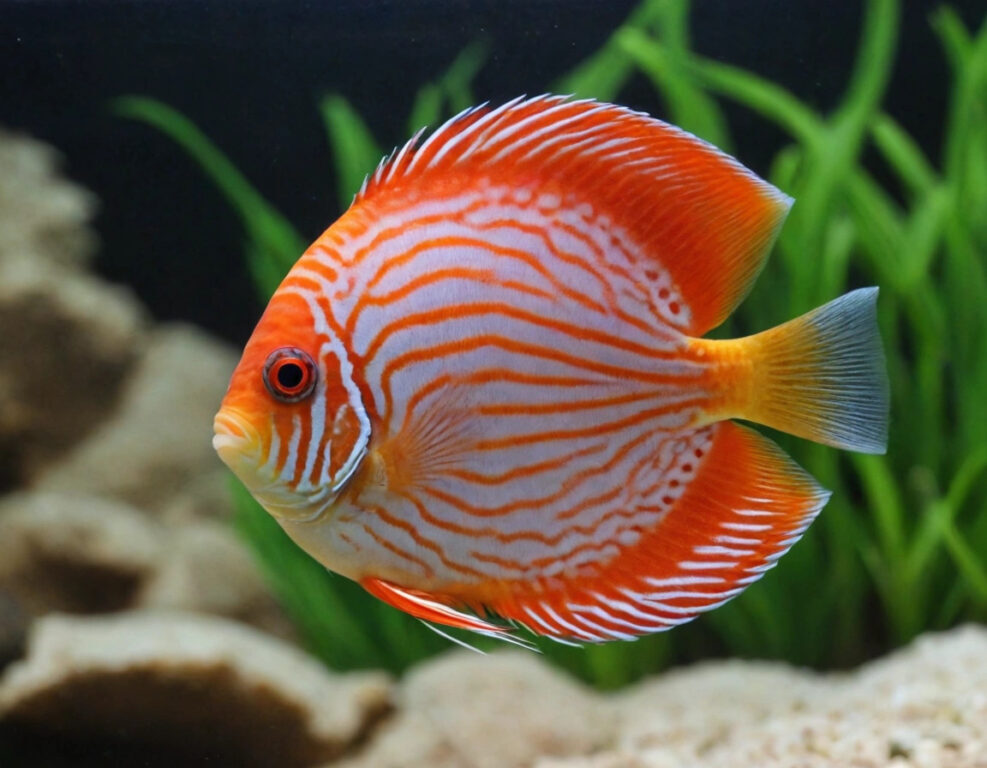
Today the market is dominated by man-made varieties: pigeon blood, red turquoise, blue diamond, snakeskin, etc. Those don’t exist in the Amazon. They are artificial selection from wild populations. That is, the biological origin is still South American, even if the color isn’t.
Something similar happens with many ornamental fish: the origin of the discus fish is what defines its physiology, not the store label. And that physiology is what forces you to maintain soft water, high temperature, and a varied diet.
What knowing where the discus fish is originally from means for caring for it
If you understand that it comes from the Amazon, you understand why it needs what it needs. It’s not a cold-water or hard-water aquarium fish. It’s not a fish for beginners who want to put it in a 60-liter tank with coral gravel.
Three direct consequences of its Amazonian origin:
- Constant high temperature: between 28 and 30 °C. Below 26 °C it becomes prone to disease.
- Soft and acidic water: pH between 6 and 7, low hardness. If your tap water is hard, you’ll need reverse osmosis or peat.
- Schooling and space: in the Amazon they live in groups. In an aquarium, better six or more specimens in 300 liters or more. Isolated, they get stressed.
The typical mistake is buying a discus because it’s beautiful and putting it in a standard community tank. There the fish holds on for a few weeks, darkens, stops eating, and dies. The cause is almost always the same: where it comes from wasn’t respected.
Wild or farm-raised: two realities of the same origin
A wild discus from the Rio Negro doesn’t behave the same as a farm-raised discus. The wild one is more territorial, more reactive to water changes, and more prone to parasitism. The farm-raised one is more tolerant, but usually has less genetic diversity.
If you’re going to start with discus, my blunt recommendation: buy captive-bred specimens, from a local breeder if you can, and forget about wild ones until you have experience. The Amazonian origin is still there, but the animal is already adapted to life in an aquarium.
And if someone sells you a «wild discus» without a certificate of origin or the name of the river, be suspicious. Most supposed wild ones are farm-raised with a pretty label and an inflated price.
In the end, the question «where is the discus fish originally from» has a clear answer: the Amazon basin, with populations in Brazil, Peru, and Colombia. Everything else—colors, varieties, Asian farms—is later history. Knowing this isn’t general knowledge: it’s the difference between keeping a discus alive and healthy for years or watching it languish in an aquarium that isn’t right for it.