Post actualizado el día octubre 26, 2026 by DeiviSanzPlay
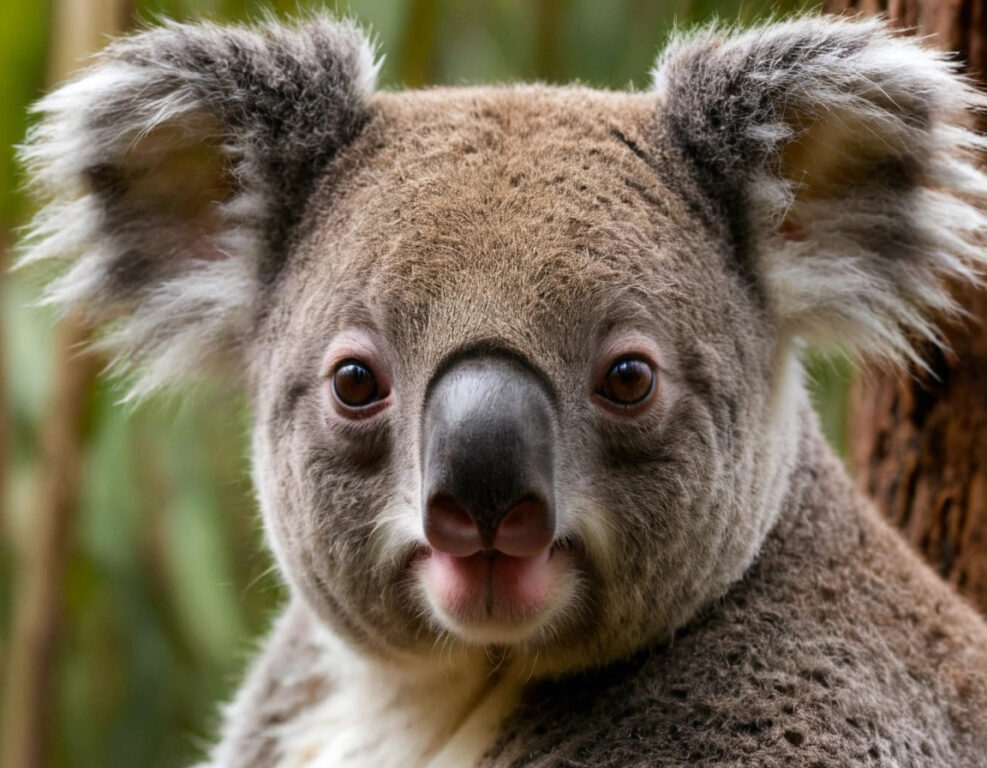
Everyone parrots the same line: the koala sleeps the most. It’s the cute, fuzzy, permanently stoned-looking marsupial that clocks 18 to 22 hours of shut-eye a day. Case closed, right? Wrong. The koala is the most famous sleeper, not the champion. If you want the actual record for which animal sleeps the most, you have to look at a tiny, ugly, bug-eyed primate most people have never heard of.
The Real Champion: The Little-Known Fat-Tailed Dwarf Lemur
Meet the fat-tailed dwarf lemur (Cheirogaleus medius), a Madagascar native that holds the verified record. During the dry season it enters a state called torpor — essentially a mini-hibernation — and can stay in that dormant state for up to seven months a year. When researchers tracked its actual sleep patterns, they found it sleeping close to 23 hours a day during those periods, with brief wake-ups to shift position or urinate.
That’s not «napping in a tree.» That’s a physiological shutdown. Its body temperature drops close to ambient levels, its heart rate slows to a crawl, and it burns almost no energy. The koala, by comparison, is practically a hyperactive athlete.
Koala Sleep: Why 18–22 Hours Is Still a Big Deal
Don’t dismiss the koala entirely. Its sleep habits are genuinely extreme for a mammal of its size, and the reason is brutal: eucalyptus leaves are terrible food. They’re low in calories, loaded with toxic compounds like tannins and phenols, and packed with fiber that’s hard to break down. A koala’s liver has to work overtime to detoxify every meal, and its gut ferments the leaves slowly to squeeze out whatever nutrients it can.
So the koala’s strategy is simple: eat, sleep, repeat. Sleeping between 18 and 22 hours a day lets it conserve energy it can’t afford to waste, and it also keeps it still during the hottest hours — a real advantage in the Australian bush. It’s not laziness. It’s a survival budget.
Why Koalas Don’t Drink Much Water
One underrated detail: koalas get most of their hydration from the leaves themselves. Eucalyptus foliage is roughly 50% water, so a koala that’s eating well barely needs to climb down to drink. That matters because moving on the ground is dangerous — dogs, cars, and habitat loss kill thousands every year. Staying up in the canopy, half-asleep, is the safer play.
Other Animals That Out-Sleep the Koala
If you’re building a list of the sleepiest animals in the world, the koala doesn’t even make the top spot on most rankings. Here’s how the field actually looks:
- Fat-tailed dwarf lemur: up to 23 hours daily during torpor — the true record holder.
- Little brown bat: around 19–20 hours a day, mostly to conserve energy between hunts.
- Three-toed sloth: wild sloths sleep about 9–10 hours, not the 20 hours you’ll read in old textbooks. Captive sloths sleep more, which is where that myth came from.
- Koala: 18–22 hours, depending on the study and the season.
- Giant armadillo: roughly 18 hours, another low-metabolism specialist.
- Opossum: about 18 hours, and it’s a marsupial cousin to the koala.
- Python: some species sleep up to 18 hours after a big meal, especially during digestion.
- Brown bat and lion: both hover around 13–20 hours depending on conditions.
Notice the pattern? The heaviest sleepers are either low-metabolism leaf-eaters, torpor specialists, or predators that gorge and then crash. Sleep length isn’t about laziness — it’s about how expensive your lifestyle is.
How Scientists Actually Measure Animal Sleep
This is where most viral lists get sloppy. You can’t just watch an animal and guess. Real numbers come from electroencephalograms (EEGs) that track brain waves, or from motion sensors and metabolic chambers that detect true sleep versus quiet rest. The old sloth figure of 20 hours? It came from captive animals in a lab. When researchers tracked wild sloths in Panama, the number dropped to under 10 hours.
So when you read «the koala sleeps 22 hours,» ask whether that’s a wild koala, a zoo koala, or a number someone copied from a 1970s textbook. Wild koalas in Queensland and Victoria tend to sleep less in winter and more in summer, because heat drives them into stillness.
The Torpor Trick: Why Some Animals Sleep for Months
The fat-tailed dwarf lemur’s seven-month torpor isn’t sleep in the normal sense. It’s closer to hibernation: the animal essentially pauses its life until food returns. Its body temperature can drop from around 37°C to as low as 10°C, and its heart rate falls from roughly 200 beats per minute to under 10. Waking up takes hours and costs a huge amount of energy — which is why it doesn’t do it casually.
This matters for the record. If you count torpor as sleep, the lemur wins by a landslide. If you only count true REM and non-REM sleep, the little brown bat or the koala move up the ranking. That’s why you see different «winners» depending on who’s writing the list.
What About Humans and Sleep Debt?
For contrast: a healthy adult human needs 7–9 hours. Sleep more than 9–10 hours regularly and you’re not «catching up» — you may be signaling an underlying issue like sleep apnea, depression, or hypothyroidism. The koala isn’t a role model. It’s a specialist with a digestive system that forces it to rest, and a metabolism tuned for a diet almost nothing else can eat.
Frequently Asked Questions About the Sleepiest Animals
Does the koala really sleep 22 hours a day?
In some studies, yes — especially in summer or in captivity. But the average across wild populations is closer to 18–20 hours. The «22» figure gets repeated because it’s dramatic, not because it’s universal.
Is the sloth the sleepiest animal?
No. That’s one of the most persistent myths in animal facts. Wild three-toed sloths sleep around 9–10 hours; two-toed sloths sleep a bit more. The 20-hour number came from captive animals and got baked into pop science.
Why do koalas sleep so much and not die of starvation?
Because their metabolism is roughly half that of a similarly sized mammal. They extract very little energy from eucalyptus, so they need very little to survive. Sleep is how they stretch that tiny energy budget across the day.
Do koalas dream?
They do enter REM sleep, but the proportion is lower than in humans. Most of their sleep is slow-wave, which is consistent with energy conservation rather than memory processing.
The Bottom Line on the Sleepiest Animal
If you want the honest answer to which animal sleeps the most, it’s the fat-tailed dwarf lemur once you count torpor. If you restrict it to normal daily sleep, the koala and the little brown bat are locked in a near-tie around 20 hours. The sloth — the animal everyone names — isn’t even close in the wild.
What actually matters here isn’t the ranking. It’s the logic behind it: sleep duration tracks diet quality, body size, predation risk, and temperature. The koala sleeps a lot because eucalyptus is a lousy meal. The lemur sleeps for months because Madagascar’s dry season is a famine. Every one of these animals is doing exactly what its environment demands — and none of them are lazy.