Post actualizado el día octubre 25, 2026 by DeiviSanzPlay
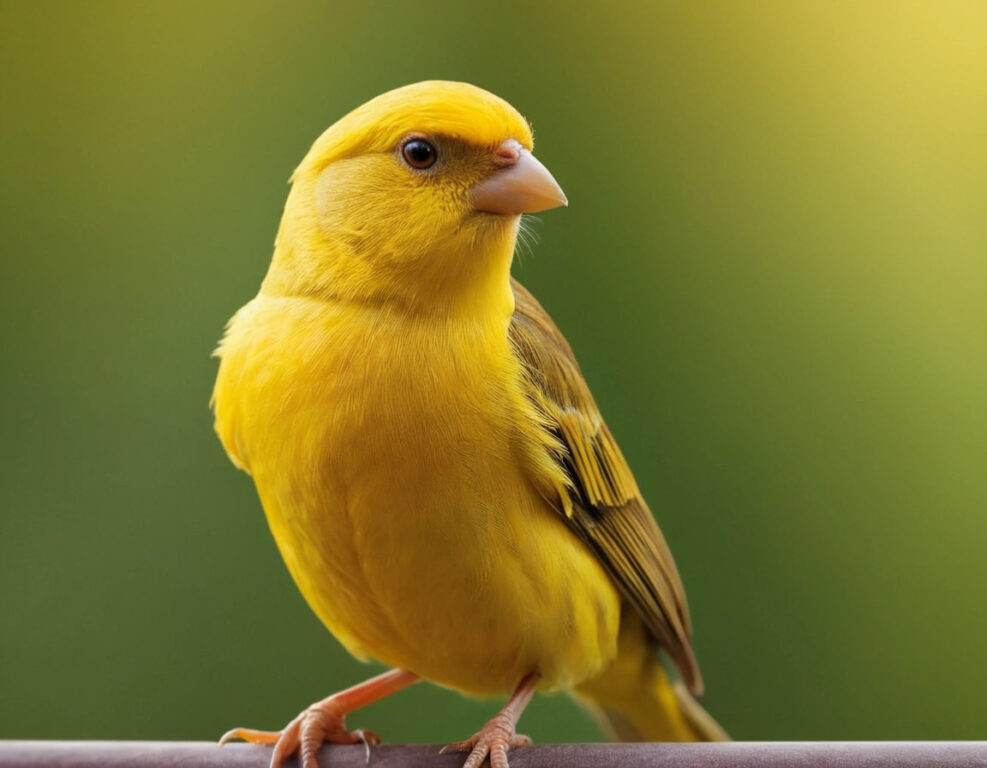
If you have a canary at home and it spends the day trilling, you’ve surely wondered more than once why it does it. It’s no coincidence or simple whim: the singing of caged canaries is one of the most complex and fascinating behaviors you can observe in a captive bird. And no, it doesn’t sing just because it’s happy, although sometimes it does too.
I’ve read quite a bit about avian ethology and I’ve kept canaries for years. I’m going to tell you what’s really behind that behavior, without beating around the bush and with verifiable facts.
Instinct doesn’t switch off even behind bars
The domestic canary (Serinus canaria domestica) descends from the wild canary of the Canary Islands, Azores, and Madeira. In the wild, the male sings for two basic reasons: to attract females and to mark his territory against other males. That genetic program remains intact in the cage.
That’s why, when a caged canary sings, it’s performing a repertoire that its brain has had engraved since birth. The difference is that at home there are no rivals or real mates, but its singing instinct in captivity is triggered just the same. And mind you, females can sing too, although they usually do so much less and with simpler melodies.
The hormonal factor: testosterone and light
Here’s a fact many people don’t know. Canary song is directly linked to testosterone levels. When the days lengthen (spring), the pineal gland detects more hours of light and the bird enters breeding season. That’s when it sings like a madman.
If you have a canary in a room with artificial light until eleven at night, you may be altering its reproductive cycle and causing it to sing out of season. It’s a detail few caretakers take into account and which explains why some canaries sing in the middle of December as if it were April.
Singing to keep from going crazy: isolation and well-being
A canary alone in a small cage, without stimuli, doesn’t sing more: it sings less. This contradicts the popular idea that «it sings because it’s sad.» The reality is the opposite. The singing of caged canaries increases when the environment is rich, safe, and predictable.
Singing is also a way of communicating with its surroundings. If the canary sees you, hears you, and knows you’re nearby, it may use its trill to get your attention or simply to «converse.» It’s not cheap anthropomorphism: there are bioacoustics studies that show canaries adapt their song according to the response of their environment.
A canary that sings is, almost always, a canary that feels safe. Prolonged silence is the alarm signal.
Do those that are alone sing more, or those that have company?
It depends. A lone male, if well cared for and stimulated, usually sings more because it has no competition. But if you put it with another male, one of the two may dominate the singing and the other may fall silent in submission. With a female present, the male sings intensely during courtship, but afterward it may reduce its repertoire.
The key lies in the social hierarchy. Canaries are not solitary birds in nature; they live in flocks. In captivity, that social structure is distorted and singing becomes a tool for negotiating space.
Environmental influence: music, noise, and routines
I’ve verified with my own canaries that soft music or the sound of other recorded birds stimulates singing. It’s not magic: it’s imitation and social response. Canaries learn their repertoire from other canaries during the first months of life, and in captivity that learning is limited to what they hear.
If you leave the radio on all day with human voices, the canary probably won’t sing more, but if you play recordings of canary song, many males respond. Of course, watch the volume: acoustic stress can have the opposite effect and silence them.
Singing as a health thermometer
A canary that suddenly stops singing may be sick. Mites, respiratory problems, fungi, or poor nutrition are frequent causes of mutism. If your canary used to sing every day and has been silent for a week, check its plumage, its droppings, and its breathing before thinking it has become shy.
Diet also plays a role. A diet rich in varied seeds, fresh fruit, and animal protein during breeding season keeps the song strong. Alpiste alone is not enough for a singing canary.
Differences between song canaries and color canaries
Not all canaries sing alike. Song canaries (such as the Spanish Timbrado, the Roller, or the Malinois) have been selected over generations precisely for their vocal repertoire. Color or posture canaries can sing, but their song is simpler and less valued.
If your goal is to have a canary that sings a lot, choose a song breed. If you don’t care, any healthy canary will give you melodies, but don’t expect a three-minute concert with variations.
What you can do to make your canary sing more
- Place the cage in an area with natural light, but without drafts.
- Maintain a sleep routine: 10-12 hours of total darkness at night.
- Offer regular bathing (canaries sing more after bathing).
- Vary the diet: seeds, vegetables, fruit, and an occasional insect.
- Play recordings of canary song for a few hours a day, especially for young birds.
- Avoid overcrowding and loud noises.
And if it still doesn’t sing, don’t obsess. There are canaries that are silent by nature, especially females or very submissive males. Singing is not an obligation, it’s an expression.
What science says about singing in captivity
Research from the University of St. Andrews and other bioacoustics centers has shown that canary song has a clear genetic basis, but also great plasticity. This means that the environment modulates how much and how a canary sings. It’s not just pure instinct: there is learning.
That’s why canaries raised in total isolation develop poorer songs than those that grow up hearing other males. The motivation to sing in caged canaries is a mix of hormones, social learning, and emotional well-being. There is no single cause.
In short: your canary sings because it’s programmed to, because it seeks connection, because it feels safe, and because its body asks for it. If you give it a decent environment, it will repay you with music. If not, it will fall silent. It’s that simple.