

Post actualizado el día octubre 17, 2026 by DeiviSanzPlay
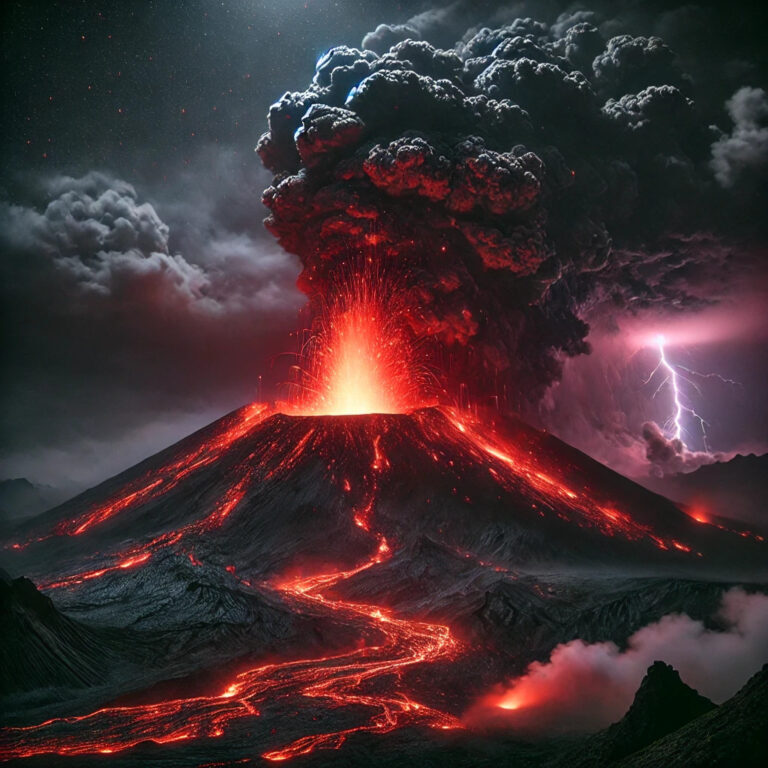
Nobody expects a mountain to explode. Yet every year, dozens of volcanoes that had been quiet for decades—sometimes centuries—suddenly blow their top. So what actually flips the switch inside a volcano that seemed dead? Let me break it down without the usual fluff.
Magma pressure is the real engine behind volcanic awakening
When people ask why volcanoes wake up, the honest answer starts with magma. That molten mix of rock, dissolved gases, and crystals sits beneath the surface in a magma chamber, and it never really stops moving. It’s less like a static pool and more like a pressurized tank that keeps getting refilled.
Fresh magma rising from deeper in the mantle adds volume. As that volume grows, the pressure inside the chamber climbs. When the change in magma pressure is big enough to crack the surrounding rock, the whole system destabilizes and the volcano goes from dormant to active fast.
Here’s the nuance most articles skip: it’s not just about how much magma there is, but how gassy it is. A magma chamber full of dissolved water vapor and CO₂ behaves completely differently from a dry, degassed one. Gas is the fuel that turns a slow ooze into a violent blast.
Earthquakes and tectonic plates: the trigger nobody can ignore
Volcanoes rarely wake up in isolation. The link between earthquakes and volcanic eruptions is well documented, and it’s the reason monitoring stations go on high alert when seismic swarms start rumbling under a volcano.
Tectonic plates are constantly grinding against each other, and that motion stresses the crust. When a big earthquake hits near a magma chamber, it can shake loose the plumbing, open new fractures, and let gas escape in ways that trigger an eruption days, weeks, or even years later.
The relationship between tectonic plates and volcanoes explains why the Ring of Fire—stretching from Chile up through Alaska, Japan, and down to New Zealand—holds roughly 75% of the world’s active volcanoes. That’s not a coincidence. It’s plate tectonics doing the heavy lifting.
If you live near a subduction zone, you live near a volcano that can wake up. That’s the deal with living on a planet that still moves.
What are the warning signs before a volcanic eruption?
One of the best questions to ask is what are the warning signs before a volcanic eruption, because modern volcanology has gotten surprisingly good at reading them. Volcanoes almost never erupt without giving some kind of heads-up.
- Seismic activity: swarms of small earthquakes, called volcanic tremor, signal magma moving underground.
- Ground deformation: the surface of the volcano literally bulges and swells as magma pushes up, measurable with GPS and satellite radar.
- Gas emissions: spikes in SO₂, CO₂, and hydrogen sulfide often precede eruptions by days or weeks.
- Temperature changes: thermal anomalies around the crater or fumaroles show up on infrared satellites.
Teams of volcanologists from institutions like the US Geological Survey and the Global Volcanism Program watch these signals around the clock. In places like Iceland, Italy, or Indonesia, this monitoring has saved thousands of lives through timely evacuations.
Why some volcanoes wake up violently and others just fizz
Not every awakening ends in a catastrophic blast. The style of eruption depends heavily on how easily gas can escape from the magma. Thin, runny basalt like you see in Hawaii lets gas bubble out gently—lava fountains, tourist-friendly, relatively safe.
Thick, sticky magma full of silica traps gas until the pressure becomes unbearable. When it finally fails, you get the kind of eruption that flattened Pompeii or blew the top off Mount St. Helens in 1980. Same basic physics, wildly different outcomes.
Water also plays a role. If magma meets groundwater or seawater, the resulting phreatomagmatic explosion can be even nastier—superheated steam expands thousands of times faster than liquid water, and that’s what produces the fine, deadly ash clouds that choke entire regions.
Is climate change waking up volcanoes?
This is where it gets genuinely interesting and a bit unsettling. There’s growing evidence that melting ice caps are reducing the weight pressing down on magma chambers beneath Iceland, Alaska, and Antarctica. Less pressure means more decompression melting—and more magma.
Researchers have linked the end of the last ice age to a spike in volcanic activity in Iceland. The same mechanism could be playing out now as glaciers retreat. NASA and various universities are actively studying this, and while the effect is regional rather than global, it’s real.
So yes, climate change can indirectly influence volcanic activity in ice-covered regions. Not because of temperature itself, but because of the missing weight of ice. It’s a slow, geological feedback loop that operates on decades, not days.
How active volcanoes are formed and why they keep waking up
Understanding how active volcanoes are formed helps explain why they keep coming back to life. Most start at subduction zones, mid-ocean ridges, or hotspot plumes like the one under Yellowstone. Magma rises, pools, cools, and gets pushed aside by newer magma—over and over, for millions of years.
That cycle never truly ends as long as the heat source below exists. A volcano isn’t a single event. It’s a long-running plumbing system that occasionally clears its throat. Dormancy is just a pause, not a death sentence.
Even volcanoes classified as extinct sometimes surprise scientists. The line between dormant and extinct is blurrier than most people think, and the geological record is full of «extinct» volcanoes that turned out to be very much alive.
The bottom line on volcanic awakenings
Volcanoes wake up because magma keeps moving, gas keeps building, and the crust keeps cracking. Earthquakes, tectonic plate motion, groundwater interactions, and even melting glaciers can all tip the balance. There’s no single trigger—it’s a stack of pressures that eventually fails somewhere.
What matters for anyone living near one is monitoring. Science can’t stop an eruption, but it can usually tell you it’s coming. And that warning window is the difference between a news story and a catastrophe.

