

Post actualizado el día octubre 27, 2026 by DeiviSanzPlay
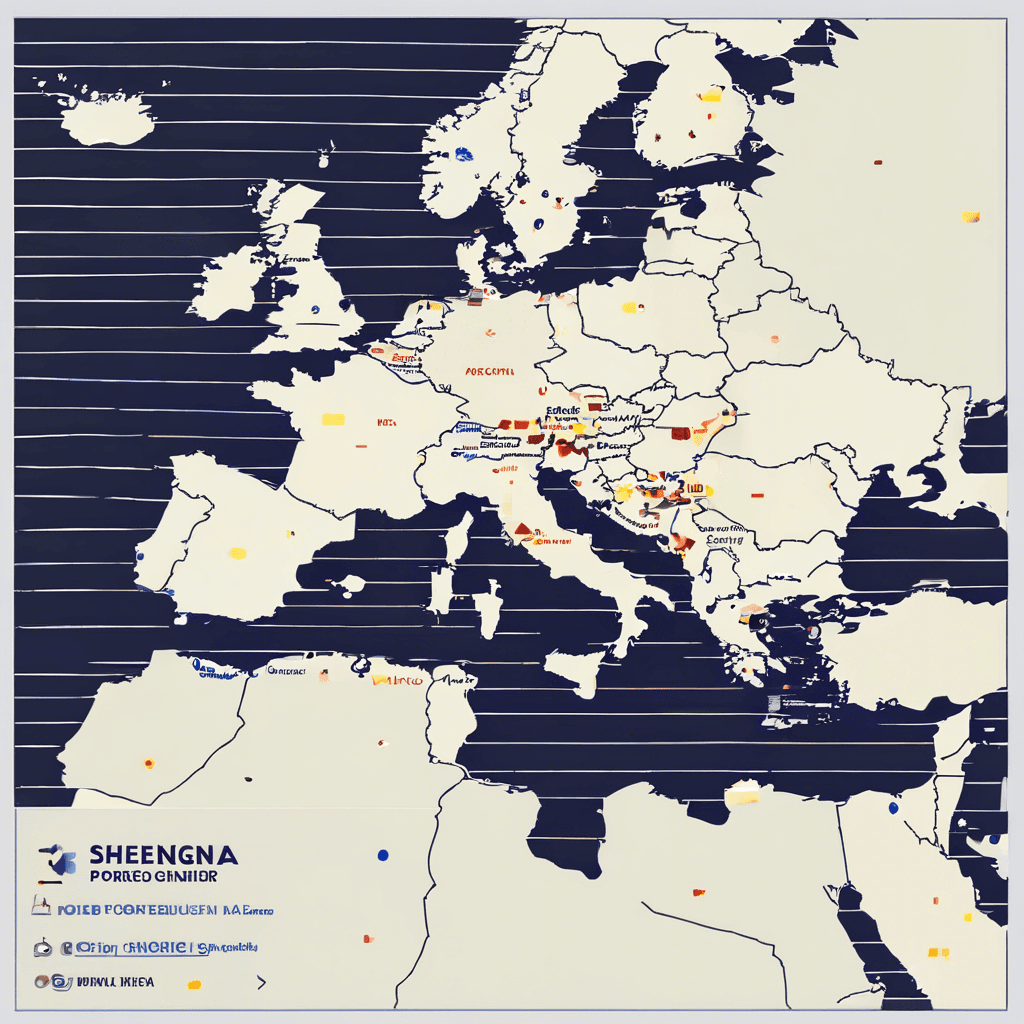
Getting a Schengen visa in 2026 is not a walk in the park, and anyone who tells you otherwise is either lying or selling something. I’ve been through this process, I’ve watched friends get rejected for stupid mistakes, and I’ve read enough consulate forums to know the patterns. So let me cut the fluff: a Schengen visa is a short-stay permit that lets you move freely across 29 European countries (yes, 29 since Bulgaria and Romania fully joined the air and sea border-free zone in March 2024, and land borders in January 2025). One visa, one application, and you’re in.
Why bother with a Schengen visa at all
Here’s the thing nobody explains properly: the Schengen visa isn’t just a piece of paper. It’s the difference between spending three weeks hopping from Lisbon to Tallinn without showing your passport once, or wasting entire days queueing at every single border. That’s the real value.
If your nationality requires a Schengen visa (and plenty do, from India to Nigeria to the Philippines), you can’t just show up at Charles de Gaulle and hope for the best. You need to apply in advance, at the consulate of the country where you’ll spend the most nights. That last part trips up a lot of people.
Who actually needs one in 2026
Citizens from over 60 countries need a Schengen visa to enter the area. That includes most of Africa, Asia, and parts of Latin America. If you hold a US, UK, Canadian, Japanese, or Brazilian passport, you’re visa-exempt for short stays, but that doesn’t mean you’re off the hook entirely.
Starting sometime around late 2026, things are shifting. The EU is rolling out ETIAS, a pre-travel authorization for visa-exempt travelers. It’s not a visa, but if you skip it, you’re not boarding. So even the «easy» nationalities will need to register online before flying. The Schengen visa framework itself isn’t changing, but the surrounding rules are getting tighter.
One more thing people get wrong: a Schengen visa doesn’t guarantee entry. It gets you to the border. The border officer still decides whether you walk in or get sent home.
The documents that actually matter
Consulates publish long lists, but in practice, four documents do the heavy lifting:
- Passport with at least three months of validity beyond your planned exit date, and two blank pages.
- Proof of funds, usually bank statements from the last three to six months. Spain asks for about €113 per day in 2025-2026 numbers; France and Germany have their own thresholds.
- Travel medical insurance with minimum €30,000 coverage across the whole Schengen area. No exceptions, no cheap plans that only cover your home country.
- Proof of accommodation and itinerary, meaning hotel bookings or an invitation letter plus flight reservations.
Missing any of these is the number one reason applications get bounced. Not criminal records, not hidden agendas. Just missing paperwork.
How to actually apply without losing your mind
You apply at the consulate or visa center of your main destination. If you’re splitting time equally between two countries, you apply at the one you enter first. Book your appointment early, because in places like Delhi, Manila, or Quito, slots vanish weeks in advance.
Fingerprints are collected at the visa center (they’re valid for 59 months after that). The application fee in 2026 sits at €90 for adults, €45 for kids aged 6 to 12, and free for under-6s. If you use a visa center like VFS Global or BLS International, expect an extra service fee on top.
Processing takes 15 calendar days in normal cases, but during summer it can stretch to 45. Apply at least six weeks before your trip. Not four. Six.
Country-specific quirks you should know
Germany is notoriously strict about proof of funds and travel purpose. If you’re visiting family, expect them to ask for a formal Verpflichtungserklärung (formal obligation letter) from the local foreigners’ office. France loves invitation letters (attestation d’accueil) validated by the town hall. Spain is more flexible but scrutinizes bank statements hard.
Italy and Greece tend to be slower with appointments but more forgiving on minor documentation gaps. The Netherlands and Switzerland? Efficient, but they will reject you for a blurry bank statement. I’ve seen it happen.
Rule of thumb: the smaller the consulate, the more human the review. The bigger the consulate, the more your file is a checklist.
The rejection reasons nobody warns you about
Rejections don’t usually come from obvious stuff. They come from subtle signals. A bank account that suddenly got a large deposit three days before applying looks suspicious. A job letter that doesn’t state your salary, your position, or your approved vacation dates looks fake. An itinerary that doesn’t match your hotel bookings looks fabricated.
Consulates also look at your travel history. A blank passport with no prior stamps is a yellow flag for first-time applicants. It doesn’t mean automatic rejection, but it means your other documents need to be bulletproof.
If you do get rejected, you get a formal refusal letter with the reason. You can appeal within a set window (usually 15 to 30 days, depending on the country) or reapply from scratch. Reapplying with the same weak file is a waste of money.
Is it worth it? Yes, but be honest with yourself
The Schengen visa is a bureaucratic headache, no question. But it’s also the cheapest way to see half of Europe on a single permit. If you plan properly, submit clean documents, and respect the deadlines, your odds are solid.
What kills most applications isn’t the system. It’s sloppy preparation. So treat it like a job application: precise, complete, and consistent. Do that, and you’ll be drinking an Aperol in Bologna before you know it.
