Post actualizado el día octubre 25, 2026 by DeiviSanzPlay
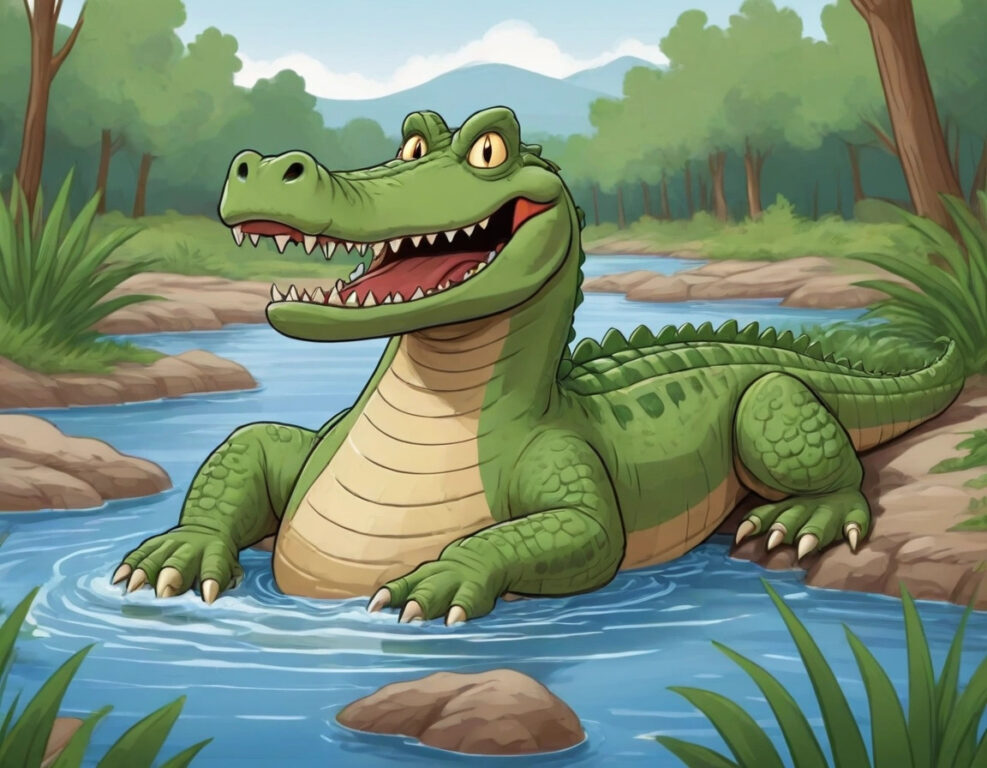
The crocodile has been on Earth for more than 200 million years, survived the asteroid impact that wiped out the dinosaurs, and adapted to swamps, rivers, and mangroves across half the world. But today, in 2026, there are species that are on the ropes. This is not cheap environmental alarmism: habitat loss, poaching, climate change, and conflicts with humans are pushing several crocodile populations to the brink of extinction. And the worst part is that most people don’t even realize it.
The crocodile loses its home: wetlands that are drying up
The crocodile doesn’t live just anywhere. It needs calm waters, with vegetation along the banks, places to lay its eggs, and abundant food. Rivers, marshes, coastal lagoons, mangroves. That is its home. And that home is falling apart.
Agricultural expansion, hydroelectric dams, pesticide pollution, and urban growth are draining and poisoning the aquatic ecosystems the crocodile needs to survive. In Southeast Asia, for example, the saltwater crocodile has lost mangroves at a brutal rate due to shrimp farming. In Africa, the Nile crocodile watches as rivers are fragmented by dams and irrigation channels.
When habitat shrinks, populations become isolated, are left without new genes, and any disease or drought wipes them off the map. It’s that simple and that cruel.
Poaching: skins, bones, and meat worth their weight in gold
Illegal crocodile hunting is another nail in the coffin. Crocodile skin is a luxury: handbags, shoes, belts that sell for thousands of euros in Asian and European markets. Although there is a legal trade in farmed skins, poaching still runs rampant in areas where the law doesn’t reach or where corruption allows it.
Not just the skin. In some regions of Africa and Asia, bones, teeth, and even crocodile blood are trafficked for supposed medicinal properties. And in poor areas, crocodile meat is a cheap source of protein. It all adds up.
The result: populations already weakened by habitat loss take an extra hit. The endangered crocodile is no exaggeration when we talk about species like the Philippine crocodile or the Cuban crocodile, with fewer than 5,000 individuals each.
«An adult crocodile can live 70 years, but if it doesn’t even get to be born, not even the best adaptation in the world is any use.»
Climate change: the sex of the hatchlings is at stake
Here comes the most twisted factor. In crocodiles, the sex of the hatchlings is not determined by chromosomes, but by the temperature of the nest. If the nest is hotter, more males are born; if it is cooler, more females. It is an ancient mechanism that worked with a stable climate, but climate change is throwing it off balance.
With rising global temperatures, heat waves, and unpredictable rainfall, many nests overheat. What happens? Almost all males are born. Without enough females, the population cannot reproduce and collapses. This has already been documented in sea turtles and in some freshwater crocodile populations in Australia and Africa.
Furthermore, rising sea levels are swallowing beaches and mangroves where many crocodile species lay their eggs. Fewer nests, fewer hatchlings, less future. The endangered crocodile due to climate causes is not science fiction: it is pure biology.
Conflicts with humans: when the crocodile knocks on your door
If you take away the habitat of a 500-kilo predator, sooner or later it shows up where it shouldn’t. Crocodiles approach towns and villages looking for food or a place to rest. And that’s where the drama begins.
Attacks on people, on livestock, on dogs. Local communities, who already live day to day, see the crocodile as a direct threat. The response is usually to kill it, whether with poison, traps, or outright gunshots. It’s not malice: it’s fear and survival.
In countries like Tanzania, Mozambique, or Indonesia, crocodile attacks cause dozens of deaths a year. And every attack fuels the persecution. It’s a vicious circle: we lose habitat, the crocodile comes closer, we kill it, the species sinks further.
Which species are really endangered?
Not all crocodiles are equally screwed. We have to be precise, because generalizing is for the lazy. The International Union for Conservation of Nature (IUCN) has a red list worth looking at:
- Philippine crocodile (Crocodylus mindorensis): critically endangered. Fewer than 200 adults remain in the wild. It is the most threatened in the world.
- Cuban crocodile (Crocodylus rhombifer): critically endangered. Its habitat is reduced to two areas of Cuba.
- Orinoco crocodile (Crocodylus intermedius): critically endangered. It lives in Colombia and Venezuela, with fragmented populations.
- Saltwater crocodile (Crocodylus porosus): least concern overall, but with local populations plummeting due to mangrove loss.
- Nile crocodile (Crocodylus niloticus): least concern globally, but with seriously threatened subpopulations in West Africa.
So the endangered crocodile is not a label slapped on the whole family. But there are species that are fading right now, before our very eyes.
What really works to save them (and what doesn’t)
Many people think that breeding crocodiles on farms already solves the problem. Wrong. Farms can relieve pressure on wild populations if they sell legal, high-quality skins, but they do not replace the ecological role of the crocodile in its ecosystem. A farmed crocodile doesn’t dig burrows that other species use, doesn’t control fish populations, and doesn’t keep water channels open.
What does work:
- Protect wetlands. No habitat, no species. Period. Creating reserves and paying local communities to care for them is cheaper than any captive breeding program.
- Fight poaching intelligently. Fines aren’t enough: you have to offer economic alternatives to people who hunt to eat or sell.
- Monitor nest temperatures. In Australia, nests are already being moved to shaded areas to balance the sexes. It sounds like a patch, but it works.
- Education and conflict management. Fences, lights, safe routes to prevent attacks, and compensation programs for ranchers. Fewer attacks, fewer reprisals.
And there is a factor almost no one mentions: international cooperation. A crocodile doesn’t understand borders. If one country protects its population and its neighbor kills it, the effort goes down the drain. The Convention on International Trade in Endangered Species (CITES) regulates trade, but actual enforcement depends on the political will of each government.
The crocodile’s future is not written
The crocodile has survived ice ages, the extinction of the dinosaurs, and brutal climate changes. But it had never faced a predator like us: one that destroys its home, hunts it for its skin, and changes its climate.
Can it adapt? Some species can, especially the more generalist ones like the American crocodile, which has even increased in Florida. Others, the specialists, the ones that only live in a particular river or island, have it rough. The endangered crocodile will stay in the headlines as long as we don’t attack the root causes.
The good news is that there are examples of recovery. The Nile crocodile was saved in southern Africa thanks to protection programs and legal farms. The American crocodile went from being on the brink in the 1970s to being abundant today. It can be done. But it requires money, science, and, above all, to stop looking the other way.
If you’re interested in the topic, don’t stop at the headline. Look up information from the IUCN, from organizations like the Crocodile Specialist Group, and support local projects working on the ground. Because the crocodile doesn’t need pity: it needs us to leave it a place to live.