
Post actualizado el día September 29, 2026 by DeiviSanzPlay
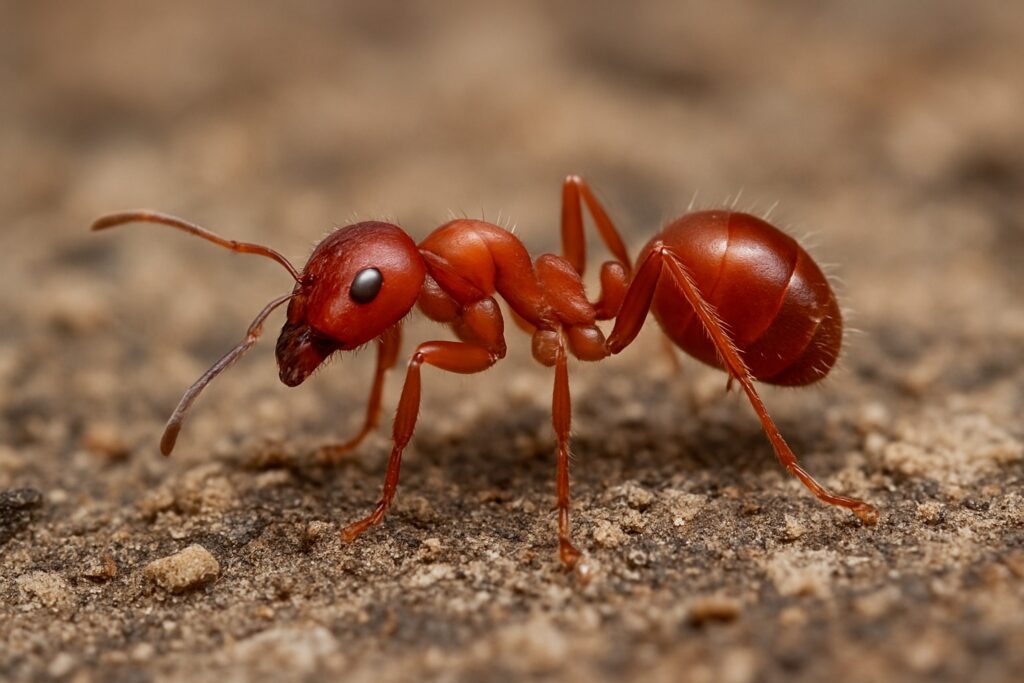
<a href="<a href="https://www.chusmeando.com/seccion/https/”>https://www.chusmeando.com/descubre-reino-animal/guia-completa-para-el-control-de-ants-en-espana-identificacion-y-soluciones-efectivas/” title=”Complete Guide to Ant Control in Spain: Identification and Effective Solutions”>Red fire ant. I swear to you that the first time I heard that name I thought it was from some B-movie, you know? Like those mutant creatures that come from space. But no, this one really exists… and it doesn’t need special effects to burn you. It’s a tiny thing, almost insignificant, but with the power to ruin an afternoon in the garden —or the entire week if it gets nasty.
I recommend you check out this interesting article: How to patent a brand in Central America? The ARCA System!.
And we’re not talking about just any insect here: these invasive ants are experts at sneaking in uninvited. Do you remember when you could walk barefoot on the grass without worrying about anything more than a loose stone? Well, forget that. Once one of these colonies settles in, you start to understand why they’re called that. They sting you, and boy does it hurt! A painful sting that doesn’t leave you indifferent… neither physically nor mentally. It’s as if something inside you activates, a kind of ancestral alarm that screams: “That burns!”.
I don’t know about you, but I sometimes wonder how something so small can generate so much chaos. And there’s the trick: their rapid reproduction. What starts as a couple of scouts, in a matter of weeks becomes thousands. Literally thousands. That’s why biological control is no walk in the park. You can read it yourself on the USDA website (https://www.aphis.usda.gov), which has tons of technical information, but between you and me… there are also tons of unanswered questions.
Because there’s something almost poetic —or tragic— in how nature designed them. These creatures have aggressive colonies that function as a single organism: if one is disturbed, the others jump in without thinking. Sometimes it reminds me of certain human groups, doesn’t it? But anyway, I digress…
What’s more unsettling is the ecological impact. They don’t just wipe out other species through direct competition, they change the environment so subtly that you barely notice until it’s already irreversible. Plants that don’t grow the same. Birds that no longer appear. The garden looks the same, but it isn’t anymore. And by the time you react, you already have an infestation. Can you imagine? <a href="https://www.chusmeando.com/descubre-reino-animal/sabias-que-el-rinoceronte-blanco-es-una-de-las-especies-mas-impresionantes-que-habita-la-earth/” title=”Did you know that the white rhinoceros is one of the most impressive species that inhabits the Earth?”>exotic species have that: they come in through the back door and by the time you notice, they’ve already eaten dinner.
You can also check the EFSA portal (https://www.efsa.europa.eu), or take a look at Mexico’s INE (https://www.ine.gob.mx) to see how things are over there. But if you’re looking for something more practical, the Spanish Ministry of Agriculture has clear guides (https://www.mapa.gob.es). Of course, that doesn’t stop them from stinging you. Because when they do, you know it.
And this is where it gets personal: what do you do when you feel that burning? I, I confess, go into zen panic mode. Calm on the outside, chaos on the inside. The best thing is to have something on hand for sting treatment: ice, creams, and a good deep breath. Because it’s not just the physical burning, it’s the fear that another one is coming.
And yes, they’re everywhere. They adapt, as if they were part of the urban furniture. That adaptation to the environment they have is scary: under a flowerpot, between bricks, inside bags of soil that you buy without suspecting a thing. They camouflage themselves. They hide. And then, surprise! Welcome to the jungle. Or rather, to your infested garden.
Some people ignore them at first, but they don’t know that these household pests can go beyond the garden. They get into the house, they go after the dog’s food, they make nests in electrical outlets. There’s something between paranoid and wise about checking every corner, every crack. Because if you see them, you’re already too late. The ideal is to apply effective prevention before they show up. Like someone who cleans before receiving visitors, even if you don’t know who’s coming.
And you know what surprises me? How quickly we forget. Winter comes, they disappear a bit… and that’s it, we think they’re gone. But no, my friend. They’re just waiting. Like those toxic relationships that seem over and suddenly reappear with a “hello, do you remember me?”. That’s why biological control shouldn’t be occasional, but part of the landscape, like watering the plants or turning off the lights when you leave.
And yes, sometimes I think: are they really the enemy? Or are they simply occupying the space that we left available? Maybe their presence is a reminder that we neglected the land, that in our eagerness to plant grass and put up umbrellas, we broke the balance. Exotic species, yes, but who brought them? They didn’t arrive by parachute.
Anyway. I’ve gone on longer than I should have. But if you ever see a line of tiny ants advancing with a steady pace, don’t take it lightly. It might not just be an innocent stroll, you might be seeing the beginning of another silent war. Next time we talk, I’ll tell you how I kept them from coming back… although I don’t know if it worked completely.
Zombie ants: when nature turns sinister
Have you heard about zombie ants? Yes, it sounds like a Halloween joke… but it’s not. I swear to you, this isn’t my invention. These creatures exist and are even more disturbing than fire ants. And it’s not that they’re dead, no, that would be simpler. They’re possessed. Literally.
Look, it turns out there’s a fungus —Ophiocordyceps unilateralis— that infects ants and turns them into a kind of living puppets. The crazy thing is how it does it: it enters their body, takes over the nervous system, and starts controlling them. It’s as if someone took the wheel of your mind and you’re no longer you. It makes you walk, climb, grab onto a leaf… and there, right there, the fungus kills you. Then, from your dead head, its fungal spore sprouts. Tell me that’s not worthy of a horror script.
And the strangest thing: the colony knows it. The other ants detect when a companion is “acting strange,” and they expel her, carry her far away, isolate her. Sound familiar? Like when someone starts behaving strangely and the group… pulls away. It happens in the jungle and in the city. Look at the parallels.
The curious thing is that these parasitic infections don’t only exist in fiction. In reality, we often ignore everything that happens beneath our feet. While you’re having a coffee or looking at your phone, maybe at that moment an ant is being turned into a zombie a few meters from you. And you without even knowing!
Can you imagine if that kind of control happened in humans? I mean, there are already days when you go to work on autopilot, right? But here we’re talking about total, absolute, irreversible control. There’s no cure. No treatment. Only the relentless cycle of a parasite that lives to repeat the process.
I recommend you look at the studies from BBC Earth or even the work of David Hughes, one of the experts who has documented this phenomenon the most. If you search for it, you’ll find images so chilling they seem straight out of a Lovecraft comic.
And it’s that when you think you’ve seen it all in the world of ants, these stories come along and change your perspective. It’s no longer just about an invasive species that ruins your garden. It’s about a hidden, silent plot, where biology turns sinister. Where the small has the power to horrify.
Sometimes I think: how many more of these stories don’t we know about yet? Because if a fungus can turn ants into suicidal automatons, what else is happening without us knowing? How many secrets does nature still keep under the bark of a tree or deep inside a rotten leaf?
It’s that kind of mystery that sometimes has me talking to myself, staring at the ground, hoping to see an antenna twitching strangely, a clumsy step, an ant that doesn’t seem to know what it’s doing. And if I see one… well, I step aside. Because even if it sounds exaggerated, you never know when we go from observers to protagonists.
Collective intelligence: when ants think as one
There’s something that never stops fascinating me: there is no visible “leader” in an ant colony. No one gives orders, no one commands with a firm voice. But everything works. Each one knows what it has to do. Or seems to know, at least. Don’t you find it strange? It’s as if they had a shared mind. And that, my friend, is not science fiction… it’s pure biology.
This idea of collective intelligence has been studied for decades. And not only by biologists, mind you. Also computer scientists, urban planners, military strategists. Because ants —those tiny creatures that many would step on without a second thought— have solved problems that take us centuries to solve. Like efficient transport, resource distribution, territorial defense. And without needing Wi-Fi.
Think about it: if an ant colony needs food, it doesn’t hold an assembly. It doesn’t elect a delegate. They simply detect it, move, organize, leave pheromones, trace routes… and they get it. Then, if something changes —a threat, an obstacle, an unexpected turn— they adapt everything in seconds. Now that’s logistics.
And when one colony clashes with another… well, that’s where it gets interesting. Because they’re not just workers. They’re also warriors. The thing about wars between ants is more real than it seems. They fight for territory, for food, for power. They fight to the last individual if necessary. And if they win, they enslave. Literally: they take the larvae of the other colony and raise them as their own. Who needs TV series when nature has already done it all?
Don’t you find it chilling? Sometimes I think the underground world is more sophisticated than ours. The decisions they make are not the result of great reflection, but neither are they the result of chance. It’s a kind of distributed wisdom. Each one with little information… but together, unbeatable.
And then, when you hear talk of decentralized systems in technology, or swarm-based artificial intelligence, you realize where the inspiration comes from. Ants have been doing it for millions of years. Without screens. Without algorithms. Just instinct, chemistry, and a collective will that’s a little frightening.
Can you imagine if we lived like that? Without egos. Without hierarchies. Just pure efficiency. The idea is tempting… until you remember the wars. The fanaticism. The blind obedience. Because of course, what makes them so impressive also makes them dangerous. Without questioning. Without brakes. Without emotions.
And this is where I fall silent again, watching that endless line crossing the edge of the yard. They walk as if nothing. But if you knew everything that happens behind that apparent order… you wouldn’t see them the same way.
Cyborg ants: what science learned from the swarm
It’s going to sound like a dystopia, but it’s absolutely real: there are laboratories where ants are studied not only to understand them… but to copy them. Yes, you heard right. They’re called swarm algorithms, and they’re behind many things we use without knowing it. GPS routes, communication networks, autonomous drones. All based on how an ant finds the shortest path to a crumb.
They call it swarm intelligence. And although it sounds like a movie, it’s serious business. The fascinating thing is not only that it works, but why it works. Because ants don’t send each other messages or have a boss. They do everything with simple chemical signals. And even so, they achieve complex results. Imagine: a thousand tiny robots doing coordinated tasks without anyone directing them. The future? No. It’s already happening.
In some experiments they’re even placing sensors on real insects. Can you imagine a cyborg ant? Me neither… until I saw it. Mini cameras. Chips that record environmental data. Insects turned into living sensors. They use them to explore dangerous areas, ruins, collapsed mines. It seems like something out of Black Mirror, right?
And it doesn’t stop there. In biomedicine there’s also interest. Some species secrete natural antimicrobial substances, capable of cleaning wounds without the need for antibiotics. A couple of researchers have already proposed using certain enzymes from ants as a basis for new medical treatments. We’re not that far from a bite curing us instead of hurting. Although, of course, there’s still a way to go.
What blows my mind is this: for centuries we ignored them. We swept them away, stepped on them, fumigated them. And now we want to learn from them. Copy their routes, their resilience, their way of working. Because, even though they don’t have a brain like ours, there’s something deeply efficient in their way of living. They don’t make noise, they don’t get distracted, they don’t complain. They execute. And they do it well.
Sometimes I think that what bothers us most about ants is not that they’re everywhere, but that they remind us how much we could improve. With less drama. With more focus. Maybe, without realizing it, we’re trying to become them. But with Wi-Fi.
Slave-making ants: the secret war beneath your feet
I swear, I’m not making any of this up. Slave-making ants exist. No, it’s not a nickname, nor a poetic metaphor. It’s literal. Some species —like those of the genus Polyergus, sometimes called “Amazon ants”— have perfected the kidnapping of other ants to make them work for them. How about that?
First, they locate a nearby colony. Then, they organize a lightning attack. A squadron of warrior ants enters with such precise coordination that it seems military. They destroy the defenders, steal their larvae and take them away. Not to eat them. No. To raise them. When those larvae grow up… they don’t know they’re prisoners. They start working as if it were their home. They clean, feed, defend… their captors!
Things get even crazier: Amazon ants have already forgotten how to do basic tasks. They don’t know how to care for larvae. They don’t know how to feed themselves. They depended so much on their slaves that they can no longer live without them. Doesn’t that sound like something? Technology, maybe? Human dependence? Well… to each their own conclusions.
And this is not an isolated thing. It’s part of a larger pattern in the world of ants. Some species even raise aphids like livestock, protecting them in exchange for the honeydew they produce. Others cultivate fungi, as if they were farmers. Where is the line between the wild and the civilized?
Sometimes, reading about these things, I get chills. Because all of that is happening right now, maybe under your garden, beneath a tile, in the park you visit. Silent wars, brood theft, extremely complex social structures… without a single sound.
And of course, no one tells you about it. Because it’s easier to see them as “annoying bugs.” But what happens in those miniature worlds is more strategic, more hierarchical, more relentless than many human organizations. That’s why there are scientists who have spent their entire lives studying them. Some have said, and I quote: “the more you know about ants, the more you begin to suspect that we’re not so different.”
I’m not going to lie to you: the next time you see a line of ants, you’re going to want to follow it. See where they’re going. What they’re moving. Whether they’re building… or conquering.
No one told you this about ants
Did you know that there are ants that basically dedicate themselves to agriculture? Yes, as if they were little farmers growing fungi to eat. It’s impressive how they tend those underground “gardens,” with all their own rules. One would think they only go around carrying leaves, but no, they have an entire organized world down there!
And speaking of strength… those tiny creatures can lift up to 50 times their weight. Imagine you carrying a sofa without breaking a sweat. It’s as if strength were in their DNA, but of course, don’t expect them to help you move furniture, right?
What seems even crazier to me is that they form bridges with their own bodies. They literally connect to each other to overcome obstacles, as if they were living pieces of a giant LEGO set. Sometimes I wonder if they don’t have a much more advanced sense of teamwork than we do.
Now, if you thought ants only “talk” to each other with sounds or something like that, no. They use a super sophisticated chemical language that allows them to send very specific messages. And it’s not just any signal: they can say everything from “Danger!” to “Food here!” with a precision that would leave you speechless.
By the way, the queen of the colony is not just any ant. While the workers come and go, with a short life, she can live up to 30 years, ruling her kingdom with patience and strategy. Now that’s long-term leadership.
Oh, and a fact that sounds like science fiction: some ants have survived tests in space, enduring conditions that would make most living beings simply disappear. Who would have thought?
And not everything is peaceful in the ant world. Some colonies are relentless warriors, wiping out others, stealing eggs, and forcing other ants to work for them. A true battle for power in miniature!
The red fire ant? 😳🔥 Dangerous is an understatement!
Ok, people… I need to share this because I had no idea what I was getting into when I saw that tiny little red ant and thought “aww, how cute.” HA! Rookie mistake 😅
I was in the yard with my dog (she was happy, of course, because she loves rolling around in the grass), and suddenly I see a weird mound, like a mini volcano of loose dirt. Curious me, I stick my finger in. Big mistake! Literally within seconds it felt like my hand had been set on fire. Burning, itching, and then… swelling like I’d been stung by a mutant wasp! 😩
I started googling like crazy (you know, the typical thing where you think you’re going to die and you search “a red ant bit me what do I do”) and it turns out it’s a red fire ant, also known as Solenopsis invicta. The name alone is scary, right? Invicta. As in, neither defeated nor remorseful.
The worst part isn’t just the bite (which hurts more than I can tell you), but that these little bugs attack in groups. Like, if you see one, there are 100 more watching from behind. They’re super aggressive, especially if you disturb their nest. And it’s no joke: their bites can cause severe allergic reactions. There are even people who end up in the hospital because of it 😟
And watch out, because they’re not just a problem in the countryside or anything like that. They’re expanding a lot, even in urban areas. I’m right in the middle of the city and here they are. Someone told me they came from South America but that they’re already everywhere, and you don’t even notice until… well, until you experience them firsthand, literally.
Fun fact (yes, because you always find something to talk about in the middle of chaos): these ants were accidentally introduced to the United States in the 1930s. Since then, they’ve been one of the most problematic invasive species. And it’s not just a human thing, you know? They also affect crops, animals, and even electrical systems (don’t ask me how, but they get into junction boxes and cause short circuits 😳).
Anyway… moral of the story: if you see a weird little mound of dirt, don’t go near it. Not out of curiosity, not to be brave. Especially not if you’re wearing sandals.
Has anyone else had an experience with these little devils? I’m reading your comments… and scratching myself in the meantime 😂🔥🐜