

Post actualizado el día September 27, 2026 by DeiviSanzPlay
What is the Stock Market and how does it move?
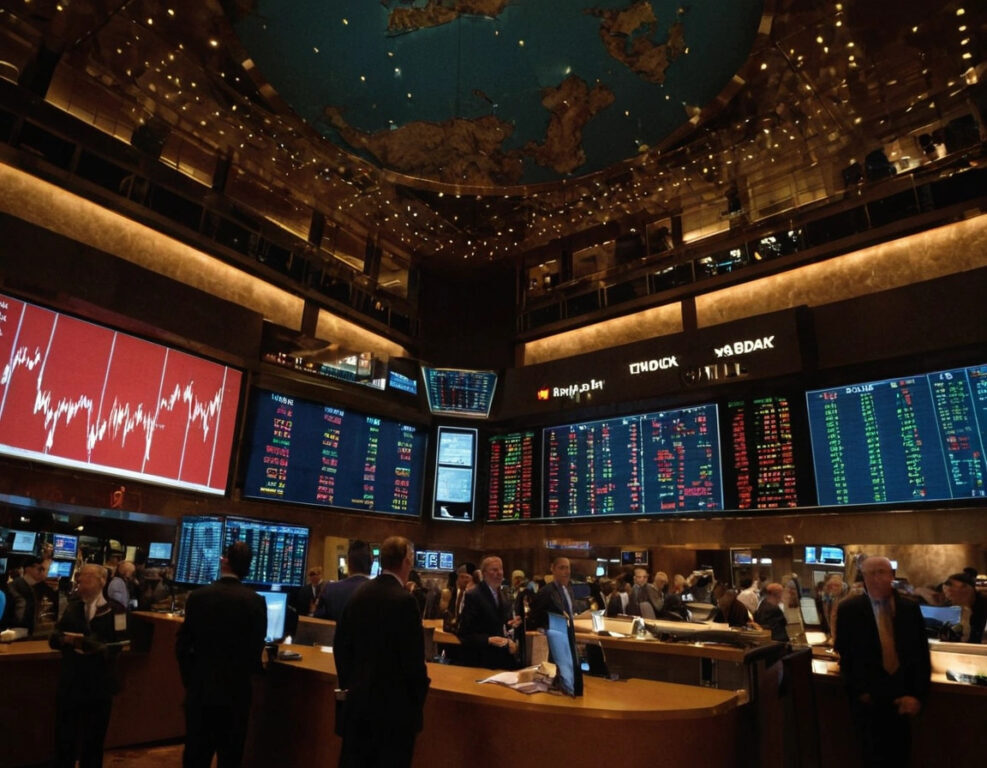
The stock market is like a big market, but instead of buying and selling oranges or fish, what is traded here are securities such as stocks, bonds, and other financial instruments.
I recommend you check out this interesting article: How to improve my resume with ChatGPT.
It is a meeting point between companies that need capital and people who want to invest their money hoping to obtain profits.
To understand how the stock market works, think of an auction. Companies make their shares available, which are small parts of themselves, and investors bid for them. The price of these shares varies according to the law of supply and demand: if many people want to buy a share and there are few available, its price goes up; if few people want them and there are many on the market, the price goes down.
The influence of the Economy and the News
The stock market is extremely sensitive to the economic situation and to the news. A company that reports good results may see its shares skyrocket, while a scandal can make them plummet. The economy in general also plays an important role; if the economy is doing well, companies thrive and, therefore, their shares usually go up.
The Role of Brokers and <a href="https://www.chusmeando.com/informatica-y-tecnologia/tiktok/que-futuro-le-depara-a-tiktok-y-a-las-platforms-de-video-corto/” title=”¿Qué futuro le depara a TikTok y a las plataformas de video corto?”>Electronic Platforms
In the past, the buying and selling of shares was done in a physical place with much more gesturing and noise. Nowadays, most transactions are carried out electronically, through platforms that connect millions of investors from all over the world.
Stock Indices: The Thermometer of the Stock Market
Stock market indices, such as the Dow Jones or the S&P 500, are like thermometers that give us the temperature of the market. They are nothing more than the weighted sum of the value of several important stocks, and they serve to give a quick idea of how the market is doing in general.
How to Invest and the Associated Risks
Investing in the stock market is not a game; it is putting your money to work. But like any investment, it has its risks. There is no such thing as a safe investment and the key is to educate yourself, understand the risks, and diversify, which is like not putting all your eggs in one basket.
Understanding the stock market is crucial for anyone who wants to dive into the world of investments. And remember, patience and financial education are your best allies on this journey through the exciting stock market.
Key Elements in the Dynamics of the Stock Market
For a stock market to function properly, there are several elements that must work together like gears in a Swiss watch.
Listed Companies: The Heart of the Stock Market
Listed companies are those that have decided to sell a part of themselves in the form of shares. By doing so, they obtain money to finance their projects, research, expansion, etc. But, at the same time, they must be accountable to their shareholders and maintain transparency in their financial management.
Investors: The Protagonists of the Market
Investors can range from a person who buys a few shares to save for the long term, to large investment funds that manage millions. Each one has their strategies, and all seek the best possible return for their investment.
Stockbrokers: The Indispensable Intermediaries
Stockbrokers are the intermediaries authorized to buy and sell shares. They are like agents who know the market, advise investors, and execute buy and sell orders. Without them, an individual investor would have difficulties operating in the market.
Regulators: The Guardians of Transparency
Market regulators, such as the Securities and Exchange Commission in the United States (SEC), ensure that everything is done according to the rules. Their function is to protect investors and maintain confidence in the market, preventing fraud and manipulation.
Primary and Secondary Markets: The Scenarios of Investment
The primary market is where companies issue new shares and sell them for the first time. It is the beginning of everything, where fresh capital is raised. On the other hand, the secondary market is where investors buy and sell those shares among themselves, after the initial issuance.
Fundamental and Technical Analysis: The Investor’s Tools
Investors use fundamental analysis to evaluate the financial health of a company, looking at its income, debts, and growth prospects. Technical analysis, on the other hand, studies the price and volume patterns of stocks to predict their future movements.
Getting involved in the stock market can be intimidating at first, but with the right knowledge and a measured approach, it can become a powerful tool for building your wealth. Let’s remember, investing requires strategy and a long-term vision. Don’t let daily fluctuations steer you away from your financial goals.