
Post actualizado el día September 27, 2026 by DeiviSanzPlay
From Oviedo I expected a capital city, but I found a storybook. Cobblestone streets, squares with bronze characters like Woody Allen and Mafalda, and the cathedral that smells of old history. But I don’t stop just there. The plan is to go up to El Naranco. And I don’t understand how four kilometers from the center there’s a 9th-century church, Santa María del Naranco, that seems from another planet. The climb is itself a blast of fresh air, and when you take a look around and see all of Oviedo down there, with the Picos de Europa in the background on a clear day… you stop to breathe deeply. Up there the sunset is something else, a golden light that bathes the stones and makes you feel a strange peace.
The next day, hurry goes out the window. The Picos de Europa demand it loudly. The destination: the Lakes of Covadonga. The drive itself is a spectacle, but when you get to the top, things change. They’re two glacial lakes, Enol and Ercina, with water of an intense green that doesn’t seem real. Boxed in between mountains, with cows grazing at their leisure. If you’re lucky and there’s thaw, a third lake appears, Bricial, which is like a ghost guest. That beauty is the kind that leaves you speechless.
Coming down from the lakes, it’s almost mandatory to stop in Covadonga. You don’t have to be a believer to feel small in the Holy Cave, with its virgin, “la Santina,” in a hollow in the rock. And seeing the pink stone basilica wedged into the mountain is an image you don’t forget. The history of this country began here, or at least that’s what they say. The atmosphere is special, the kind that weighs on you.
The coast is the third act. Forget Mediterranean beaches from a postcard. Here it’s more beastly, more wild. Cudillero is the perfect example. A fishing village straight out of a postcard, with houses of colors huddled in an amphitheater facing the sea. The best thing is to get lost on the steep slopes, reach some improvised viewpoint and watch how the boats come and go. In the port it smells of salt and fresh fish, and in the cider houses you hear the “glugluglú” of the pouring. The total essence.
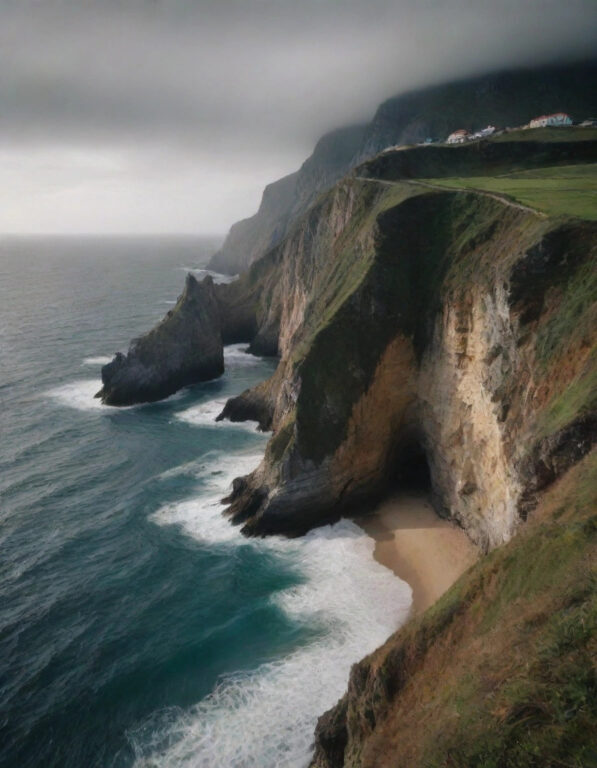
If you’re looking for a more hidden corner, Playa del Silencio is for the brave. You have to walk a good stretch and go down quite a few steps. But when you arrive you realize why it’s called that: a tongue of sand surrounded by very tall cliffs, with the only sound of the waves. There are no beach bars, just you and the Cantabrian Sea. Of course, you have to go fully prepared, because there’s nothing there. It’s pure.
If you have time, take a stroll through Taramundi, almost in Galicia. It’s another world. Here everything revolves around the water that drives mills, the slate of the houses and the knives that artisans forge. Tranquility is in the air, the rhythm is set by the rivers. Strolling through As Veigas, a hidden valley you reach by a winding road, truly makes you disconnect. It’s the most rural and deep Asturias.
And for dessert, cider. Don’t drink it, live it. In a llagar, watching how they press the apple, how the barrel smells and, above all, trying to pour without soaking half of it is another essential experience. If you go from September to December, the atmosphere is even more authentic, in the middle of the harvest.
That’s how it is: mountains that make you feel small, beaches that isolate you, villages with a life of their own and people who enjoy the simple things. You come for three days and you’re left wanting to return as soon as you start going down the mountain passes back home.