

Post actualizado el día September 27, 2026 by DeiviSanzPlay
You’ve surely heard of the Burial of the Sardine at some point, but do you really know what it means? It’s not just an excuse to keep partying after Carnival, but rather it hides an ancestral symbolism and a touch of satire that makes it unique. Today I’m going to tell you everything you need to know about this tradition that is still alive in many cities in Spain.
I recommend you check out this interesting article: Everything You Need to Know to Clean Your Nespresso Coffee Maker Effectively.
The origin of this emotional celebration✨” href=”https://www.chusmeando.com/festividades-del-calendario-y-celebraciones/el-dia-del-padre-en-paraguay-se-celebrates-el-tercer-domingo-de-junio-15-06-2025-conoce-su-historia-tradicion-y-homenaje-a-las-figuras-paternas/”>origin and meaning of the Burial of the Sardine date back centuries, when rituals were performed to bid farewell to excess and welcome Lent. This festivity, which marks the end of Carnival and Lent, is a spectacle of fire, humor, and farewell that symbolizes the transition between debauchery and reflection.
In different parts of the country, popular celebrations in Spain take various forms, but they all share one element in common: the burial or burning of a sardine, a fish that represents the end of Carnival. This event is one of the most anticipated traditions, especially in cities like Murcia, Madrid, and Tenerife.
The burial ritual and its symbolism are full of meaning. Some theories suggest that the origin of the name comes from an 18th-century anecdote, when people were ordered to bury fish in poor condition to prevent people from consuming it. Other versions speak of a metaphor for the end of wastefulness and the beginning of abstinence. What is certain is that this festival is a vibrant farewell to the debauchery of Carnival.
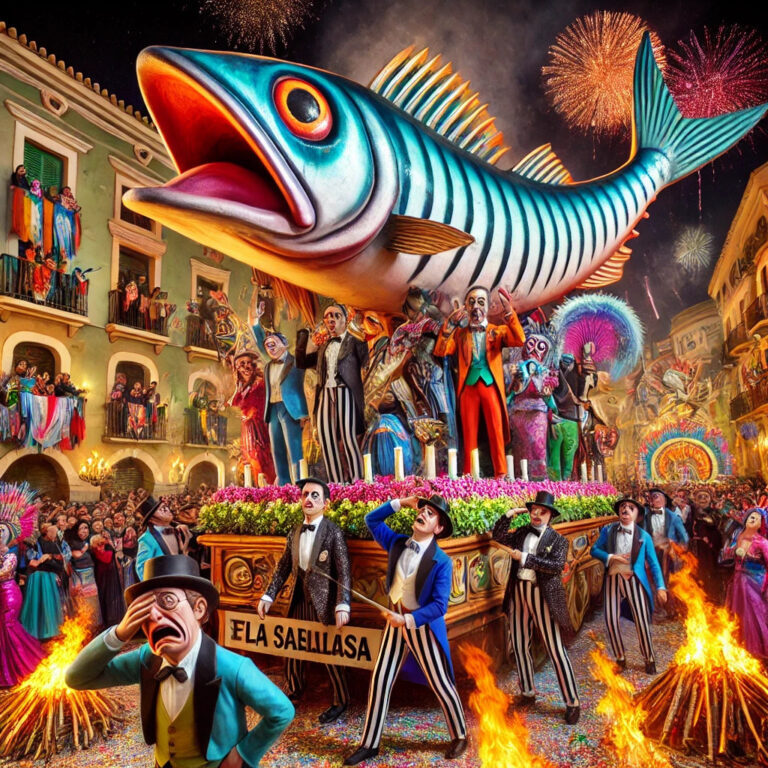
But what exactly happens on this day? In many localities, the Carnival farewell festival takes place, with parades, troupes, and a funeral procession where participants, dressed in mourning and with irreverent humor, accompany the sardine to its symbolic burial. All of this, of course, seasoned with laughter, costumes, and an air of satire.
The history and evolution of the Burial of the Sardine has caused this celebration to transform over time. What began as a simple act has become a cultural manifestation with a strong symbolic weight and great power to draw crowds. In Murcia, for example, this festivity has reached such relevance that it has been declared of International Tourist Interest. You can find more information on the official websites of the Murcia City Council (www.murcia.es), the Tenerife Carnival (www.carnavaltenerife.com), or the Tourism of Spain page (www.spain.info).
One of the most interesting aspects of this festivity is the symbolism of the sardine in popular culture. The sardine, a humble and accessible fish, represents the end of abundance and the arrival of the period of reflection. Burning or burying it is a way of bidding farewell to the worldly to make way for spirituality.
In many places, the event culminates with the sardine burning ceremony, a spectacular moment where a large figure representing the fish is set on fire. This act not only marks the close of Carnival but is also a symbolic release from the excesses committed.
The troupes and parades at the festivity are an essential part of this celebration. Thousands of people take to the streets in extravagant costumes, funeral marches are organized with touches of irony, and attendees don’t miss the opportunity to burst into laughter amid feigned weeping. It is a true collective theater piece where exaggeration and mockery are the protagonists.
Each city adds its special touch to the event and celebration in different cities. In Madrid, a grand procession is held that culminates at the Casa de Campo, where the sardine is burned in a festive ceremony. In Tenerife, the party blends with the last days of carnival, while in Murcia, it becomes a major festival with floats, music, and plenty of tradition. If you want to learn more details about these events, you can visit the official website of the Madrid City Council (www.madrid.es).
But beyond the party, this tradition also has a strong component of satire and social criticism in the celebration. For centuries, it has been used to ridicule authorities, mock political events, or simply as an excuse to challenge the established order with humor. That’s why it remains such a beloved festivity: because it combines culture, history, and fun in a single event.
FAQ: Frequently Asked Questions about the Burial of the Sardine
What is the origin of the Burial of the Sardine?
It is believed to come from ancient customs to bid farewell to Carnival and make way for Lent. Some theories speak of the prohibition of consuming meat and fish in poor condition as inspiration for the festivity.
In which cities is it celebrated with the most intensity?
Murcia, Madrid, and Tenerife are some of the cities where the Burial of the Sardine has the most relevance, but there are many other localities in Spain that celebrate it with different variations.
Why is the sardine burned or buried?
It is a symbolic act that represents the end of Carnival and the arrival of Lent. It also has a strong component of satire and social criticism.
When is the Burial of the Sardine celebrated?
Generally, on Ash Wednesday, although in some cities the date varies according to local festivities.
Did you know all this about the Burial of the Sardine? Now that you know about it, perhaps next time you’ll be encouraged to take part in this peculiar celebration.