Post actualizado el día octubre 25, 2026 by DeiviSanzPlay
The glass is that object you use daily without thinking about it, but when you stop to look at it, it turns out it has been accompanying humanity for thousands of years. And no, drinking from a fine glass one is not the same as drinking from a recycled plastic one. I’ll tell you straight, with verified facts and with my opinion thrown in.
An invention that comes from prehistory (and that’s no exaggeration)
The first glasses weren’t made of crystal or design. They were containers made of clay, stone, or wood used to store water, wine, and other basic liquids. We’re talking about more than 10,000 years ago, in the Neolithic, when humans stopped being nomadic and began to need containers. Ceramics was the first star material: cheap, moldable, and fire-resistant.
In Egypt and Rome, the glass stopped being purely functional. The Egyptians already made colored glass glasses, although they were a luxury reserved for pharaohs and nobles. The Romans, more practical, spread the use of blown glass throughout the empire. That’s where the true revolution of the glass as we know it began.
The history of the glass shows that the need to drink has always been one step behind the available technology. When there was no glass, clay was used; when glass became cheaper, it became popular. It’s that simple.
From blown glass to mass production
The Greeks and Romans perfected blown glass, which made it possible to make thinner, more transparent, and more decorative glasses. But it wasn’t until the Industrial Revolution that the glass glass became an object of common use. The glass factories in Bohemia and Venice marked the way, and in the 19th century the first pressed glass glasses appeared, much more economical.
Today, glass remains the undisputed king in most homes and bars. It doesn’t alter the flavor, it can be washed a thousand times, and it withstands extreme temperatures if it’s borosilicate. Of course, not all glass is the same: tempered glass is more resistant to knocks, but it can shatter if it goes from the freezer to boiling water.
A fact few people know: glass is 100% recyclable infinitely many times without losing quality. That makes it the most sustainable material for glasses, far above plastic.
Types of glasses: not all serve the same purpose
This is where things get interesting. A shot glass is not the same as a balloon glass. Each type of glass is designed to enhance the drink it contains. And that’s not marketing: the shape affects the aroma, the temperature, and even the speed at which you drink.
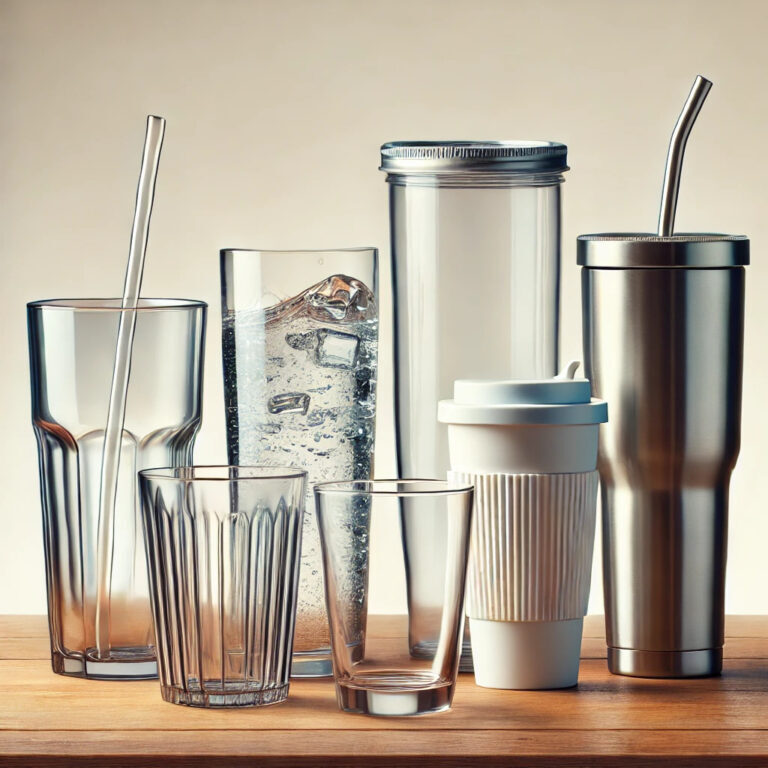
- Highball glasses: ideal for soft drinks, mixed drinks, and water with ice. Their height allows for more ice and long mixes.
- Old fashioned glasses: for whiskey, rum, or concentrated cocktails. Less ice, more flavor.
- Shot glasses: small, with a thick base, for strong liquors.
- Beer glasses: tube or mug shaped, they aim to maintain the foam and freshness.
- Wine glasses: although they are usually stemmed glasses, there are glass-type ones for young wines and informal reds.
In my experience, having a set of highball glasses and another of low ones covers 90% of needs. The rest is collecting or showing off.
Materials: glass, plastic, ceramic, and metal
The material of the glass is not a minor detail. It affects the flavor, the temperature, and sustainability. These are the big four, with their advantages and their drawbacks.
Glass: the classic that never fails
Glass is the most used material in domestic and hospitality glasses. It doesn’t react with the drink, it allows you to see the color, and it cleans easily. Of course, it breaks. And if it’s very thin, better not put it in the dishwasher. For me, it’s the most balanced option.
Plastic: practical, but with fine print
Plastic is light, cheap, and resistant to drops. Perfect for terraces, pools, and children’s parties. The problem is the environment: a single-use plastic glass can take centuries to degrade. If you choose plastic, make it reusable and BPA-free. And don’t use it for hot drinks, because it can release microplastics.
Ceramic: for hot drinks and a rustic touch
Ceramic retains heat like few materials. It’s ideal for coffee, tea, or infusions. It also has an artisanal charm that glass doesn’t have. The drawback: it weighs more and can chip easily. For daily use at home, it’s a great choice.
Metal (stainless steel): cold that lasts
Stainless steel glasses have been trendy for a few years now. They keep drinks cold for hours, they’re unbreakable, and perfect for smoothies or cocktails. Of course, don’t put them in the microwave and be careful with very acidic drinks if the steel isn’t of quality. To take to the gym or camping, they’re unbeatable.
Which one to choose? My recommendation without hesitation
If you can only have one type of glass at home, choose tempered glass. It’s versatile, clean, and doesn’t leave strange flavors. For hot drinks, get a couple of ceramic ones. And for outdoors or children, reusable plastic or steel. There’s no single correct answer, but there are combinations that work better than others.
The key is to think about the real use you’re going to give it. Don’t buy a set of 12 Bohemian crystal glasses if you live alone and never receive visitors. It sounds obvious, but it’s the most common mistake.
Sustainability: the glass counts too
Glass and ceramic are recyclable and last for decades if you take care of them. Plastic, even if recycled, loses quality with each cycle. Metal is 100% recyclable and very durable. If you care about the environment, go for glass or stainless steel. And avoid single-use plastic glasses except in an emergency.
A simple gesture like bringing your own reusable glass to work or to the cafeteria makes more of a difference than it seems. Multiply it by millions of people and the impact is brutal.
In the end, the glass is much more than a container. It’s history, technology, and design in an object that fits in the palm of your hand. The next time you drink water, look at it with different eyes.