Post actualizado el día octubre 25, 2026 by DeiviSanzPlay
Let’s get straight to the point: differentiating male and female discus fish is not an exact science, but there are signs that, with practice, will clear up your doubts. I’ll tell you straight, as if you were in front of the aquarium with a magnifying glass.
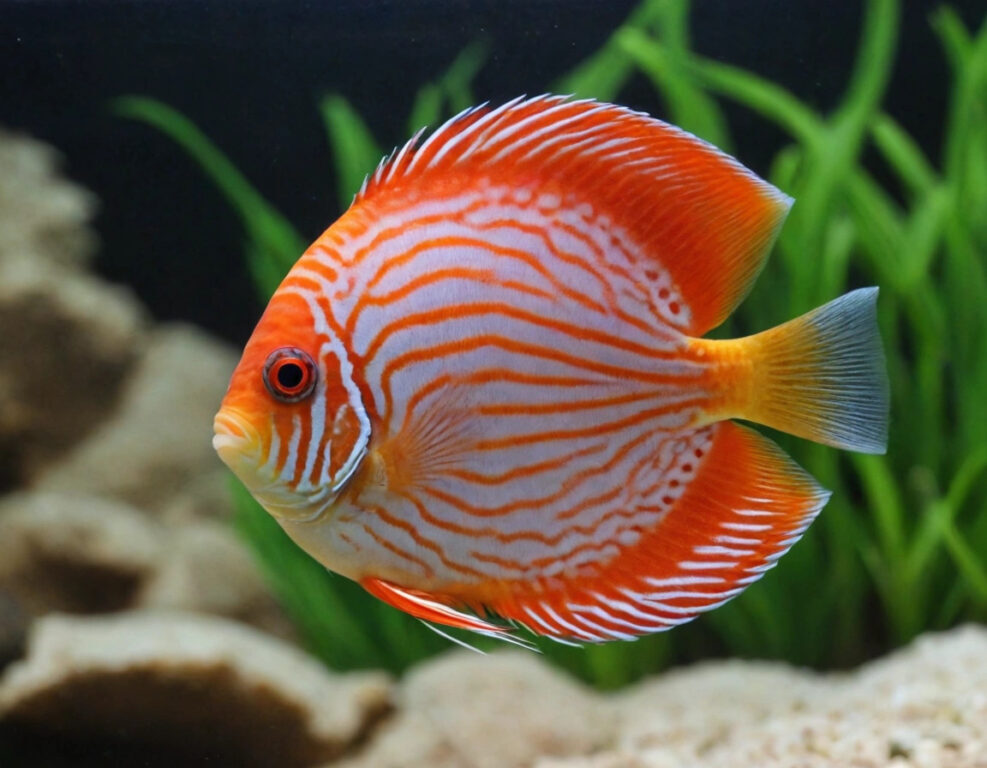
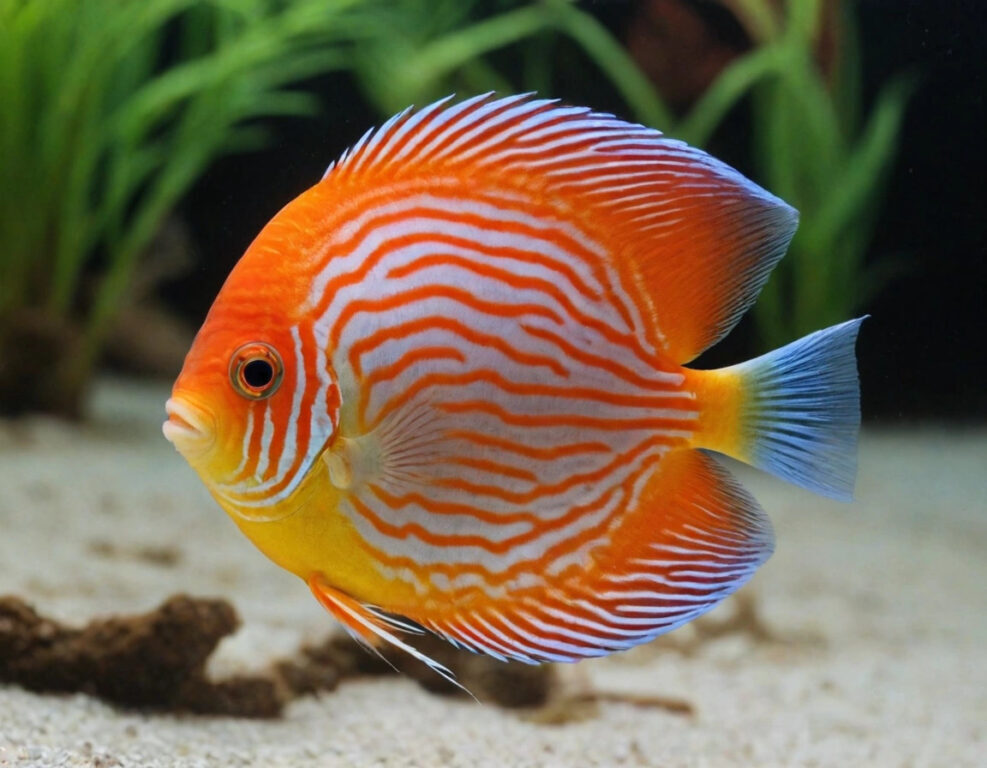
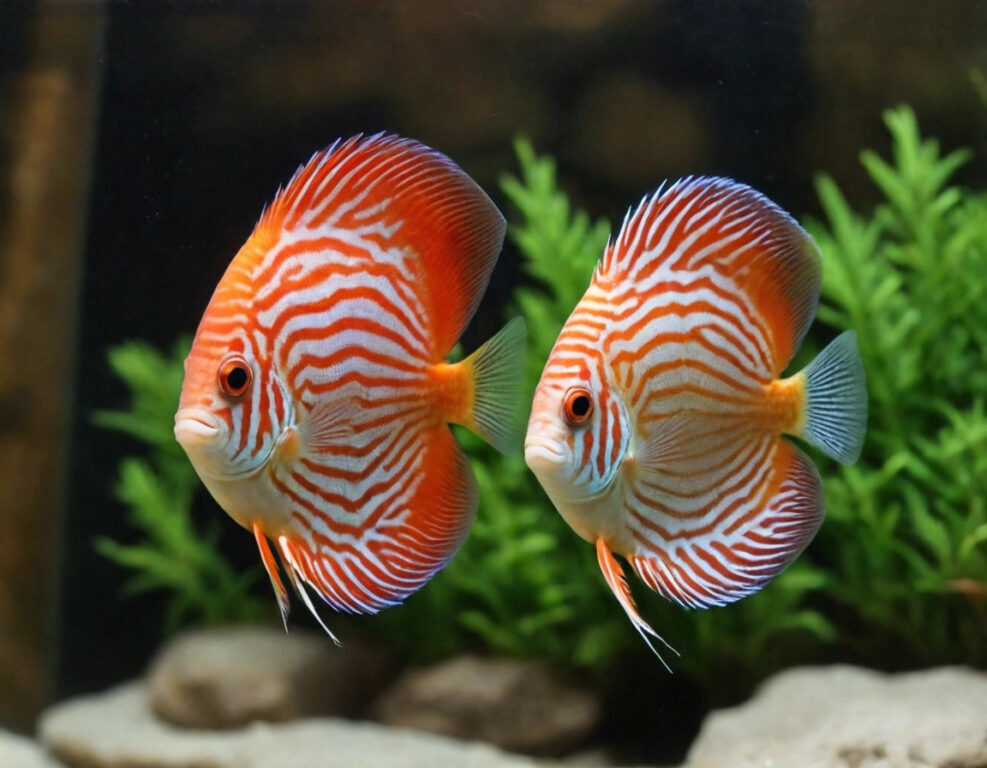
Body shape: the first visual clue
Males tend to have a taller body that is laterally compressed, with a forehead that bulges slightly as they grow. Females, on the other hand, tend to be rounder, especially in the ventral area, because that is where they develop the eggs. When a female is gravid, her abdomen swells noticeably, as if she had eaten too much.
Keep in mind, this is not a universal rule. There are chubby males and slender females. But generally speaking, if you see a discus with a prominent forehead and a more angular body, it points to male. If it is more oval and plump, it is probably female.
Color and shine: sexual dimorphism in discus fish
During the breeding season, males intensify their colors. The blues become more electric, the reds more fiery. Females keep more muted tones, although not always. In varieties such as the red discus or the pigeon blood, the difference is subtle, but it is there.
Don’t rely on color alone. There are very colorful females and males that look washed out. Use it as a complementary clue, not as a verdict.
Behavior: the dance that reveals the sex
Males are the ones that court. They swim around the female, tilt their bodies, tremble, and even clean a surface for her to lay the eggs. They become territorial and aggressive toward other males. Females, on the other hand, choose. They watch, withdraw, and only approach when the male convinces them.
If you see a discus chasing another and giving it little nudges, it is almost certainly a male. If you see one that stays still and then slowly approaches, it may be a female. But be careful: two males can also fight, and two females can simulate courtship.
The genital papilla: the most reliable method if you dare
The genital papilla, or vent, is right in front of the anal fin. In males it is narrower, pointed, and elongated. In females it is wider, rounded, and short, like a small protuberance. The difference is more noticeable when they are in the breeding season.
To see it, you need the fish to be calm and near the glass. With good light and patience, you can distinguish it. There is no need to take it out of the water or stress it. If you don’t see it clearly, wait a few days and try again.
Size and age: factors that mislead
Males tend to be a little larger and grow faster. But this depends on genetics and feeding. A poorly fed discus can look like a female even if it is male. Age also matters: juveniles are almost impossible to sex. From 8-10 months, the differences begin to show.
Homemade methods that don’t work (and why)
Some say that if the fish has a longer dorsal fin, it is male. False. Others claim that the female has a darker spot on the belly. Sometimes, but not always. And there are those who resort to watching the spawning tubes: if you see one laying eggs, it is female. Obvious, but it only works once they have already bred.
The reality is that there is no single infallible trait. Combining shape, color, behavior, and vent gives you a high probability, but not 100%.
The definitive trick: long-term observation
If you have a group of discus, the key is living together. Over time, you will see who chases whom, who hides, who lays the eggs. The female is the one who deposits them, the male fertilizes them. If you see one staying next to the spawn and fanning them, it could be either of the two, but the one that lays them is female.
In my experience, the genital papilla is the most reliable method if you manage to see it well. The rest are clues that bring you closer. Don’t obsess: even expert breeders sometimes get it wrong.
Practical tips for sexing your discus
- Observe at the same time every day, with soft light.
- Pay attention to the forehead and body shape, but don’t rely on that alone.
- During courtship, males tremble and clean surfaces.
- The male’s vent is pointed; the female’s is rounded.
- Don’t disturb them or take them out of the water to look.
- If in doubt, wait until they breed: the female lays the eggs.
In the end, sexing a discus fish is like reading a friend: you need time, attention, and not jumping to conclusions. With patience, you will see it clearly.