

Post actualizado el día octubre 26, 2026 by DeiviSanzPlay
Most people picture a pharaoh as a guy with a golden mask sitting on a throne, half god, half king, bossing around slaves to build pyramids. That image isn’t wrong, but it’s brutally incomplete. The Egyptian pharaohs were, above all, a political technology: a system designed to keep a massive, unpredictable country glued together using religion, fear, and bureaucracy. If you understand that, you understand why Egypt lasted over 3,000 years while other empires collapsed in a few centuries.
The word «pharaoh» itself is a bit of a trap. It comes from per-aa, which literally meant «great house» — that is, the royal palace. Egyptians didn’t start using it to refer to the person until the New Kingdom, around the 18th dynasty. Before that, they called him nswt bity (king of Upper and Lower Egypt) or hm ntr (servant of the god). So the pharaoh wasn’t just a ruler; he was the palace, the state, and the bridge to the divine, all packaged into one body.
Who Were the Egyptian Pharaohs, Really?
The Egyptian pharaohs were absolute monarchs who concentrated political, military, judicial, and religious power. But here’s the nuance most articles skip: their power wasn’t unlimited. A pharaoh who ignored the priests of Amun, the powerful viziers, or the regional nomarchs didn’t last long. Think of them as CEOs of a theocratic corporation, where the board of directors was the priesthood and the shareholders were the gods.
From Narmer — the guy credited with unifying Upper and Lower Egypt around 3100 BCE — to Cleopatra VII, who watched Rome eat her kingdom alive in 30 BCE, there were roughly 170 pharaohs across 30 dynasties. Not all of them were men. Hatshepsut ruled as a full pharaoh, beard and all, and her reign was one of the most stable and prosperous in Egyptian history. Sobekneferu, Tausret, and Cleopatra also held the title. So the «pharaoh = male god-king» cliché needs some serious correction.
What made the Egyptian pharaohs unique wasn’t just their power, but the ma’at they were supposed to uphold. Ma’at meant cosmic order, truth, justice, balance. If the pharaoh failed, the Nile flooded wrong, crops died, and the universe itself was believed to be in danger. That’s why their role wasn’t just political — it was existential.
The Role of the Pharaoh in Daily Egyptian Life
Here’s where things get interesting. The Egyptian pharaohs weren’t distant figures locked in palaces. Their image was everywhere: on temple walls, on amulets, on the seals of tax collectors. Every Egyptian, from a farmer in Thebes to a scribe in Memphis, lived under the pharaoh’s symbolic authority. He owned all the land, theoretically. He controlled the Nile’s irrigation, the grain stores, and the army.
The pharaoh’s role in daily life was practical too. He set the tax rates, appointed governors, and decided when to open the granaries. During the annual flood of the Nile, the pharaoh performed rituals to guarantee the river’s rise. If the flood was low, people starved. So the Egyptian pharaohs weren’t just spiritual figureheads — they were the country’s risk managers.
Pharaoh as Warrior and Diplomat
Ramesses II is the poster boy here. He fought the Hittites at Kadesh around 1274 BCE, and although the battle was a draw, he turned it into a propaganda masterpiece. He carved the «victory» onto temple walls across Egypt. That tells you something: for a pharaoh, perception mattered more than reality. Egyptian pharaohs understood branding centuries before anyone invented the word.
Thutmose III was the real military machine, though. He led 17 campaigns into Nubia and the Levant, expanding Egypt’s empire to its maximum extent. His reign proves that the pharaoh’s role as military commander wasn’t ceremonial — it was hands-on and brutal.
Famous Egyptian Pharaohs You Should Actually Know
- Narmer (c. 3100 BCE): Unified Egypt. The Narmer Palette is basically the world’s first political poster.
- Djoser (c. 2670 BCE): Built the Step Pyramid at Saqqara with his architect Imhotep. First monumental stone building in history.
- Khufu (c. 2580 BCE): The Great Pyramid of Giza. Enough said.
- Hatshepsut (c. 1479–1458 BCE): Female pharaoh, trade expeditions to Punt, massive building projects. Erased from records by her successor — but archaeology brought her back.
- Akhenaten (c. 1353–1336 BCE): The heretic who tried to switch Egypt to monotheism with Aten. It didn’t stick.
- Tutankhamun (c. 1332–1323 BCE): A minor king made famous by Howard Carter’s 1922 discovery of his nearly intact tomb.
- Ramesses II (c. 1279–1213 BCE): The longest-reigning pharaoh, the builder, the self-promoter. His mummy still has a passport.
- Cleopatra VII (51–30 BCE): The last active pharaoh. A brilliant politician who lost the game to Octavian.
What Egyptian Pharaohs Wore and Why It Mattered
Clothing was pure propaganda. The Egyptian pharaohs wore linen tunics, elaborate crowns, and jewelry loaded with symbolism. The pschent, the double crown, combined the white crown of Upper Egypt and the red crown of Lower Egypt — a visual reminder that one man ruled two lands. The nemes headdress, the striped one you see on Tutankhamun’s mask, was reserved for the pharaoh.
The false beard was another key accessory, even for female pharaohs like Hatshepsut. It wasn’t about gender — it was about kingship. The beard linked the ruler to Osiris, the god of the afterlife and rebirth.
Death, Mummification, and the Afterlife of the Pharaoh
For the Egyptian pharaohs, death wasn’t the end. It was a transition. The mummification process took around 70 days: organs removed, body dried with natron salt, then wrapped in linen with resins and amulets. The goal was to preserve the body so the ka (life force) and ba (soul) could reunite in the afterlife.
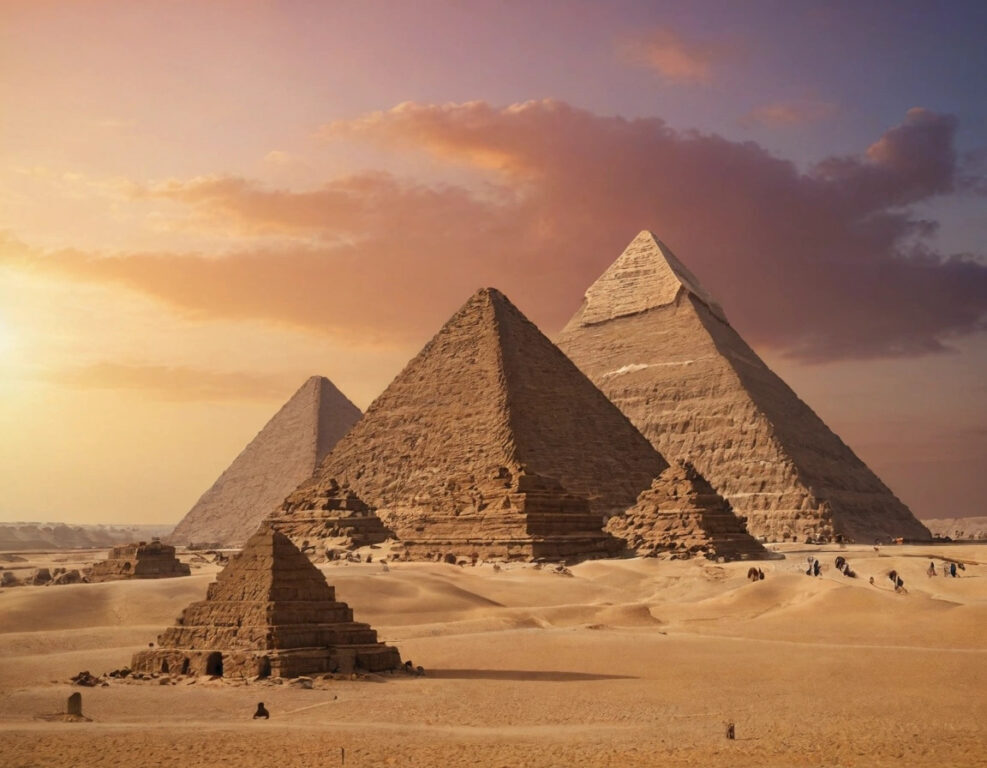
The pyramids and the Valley of the Kings weren’t just tombs. They were machines for immortality. The pharaoh’s tomb contained everything he’d need: food, furniture, gold, servants (originally real, later ushabti figurines). If the pharaoh didn’t make it to the afterlife, the whole of Egypt was believed to be doomed. That’s how seriously they took it.
How Succession Worked (and Often Broke)
Succession was usually hereditary — the eldest son took over. But Egyptian pharaohs often married their sisters or half-sisters to keep the bloodline «pure.» That worked out about as well as you’d expect: Tutankhamun was likely the product of incest and suffered from multiple genetic disorders.
When there was no clear heir, things got messy. Hatshepsut ruled as regent for her stepson Thutmose III, then declared herself pharaoh. When she died, Thutmose III spent years erasing her name from monuments. The Egyptian pharaohs weren’t above rewriting history to fit their narrative.
What the Egyptian Pharaohs Ate and How They Lived
Wealthy Egyptians, including the pharaoh, ate bread, beer, beef, goose, figs, dates, and vegetables. Beer was the national drink — even workers on the pyramids got a daily ration. The pharaoh’s palace had its own bakeries, breweries, and kitchens. But life expectancy was short. Many pharaohs died in their 30s or 40s, and some were murdered. Ramesses III, for example, was killed in a palace conspiracy known as the Harem Conspiracy.
Skin color? Most Egyptian pharaohs were depicted with reddish-brown or dark skin. Egypt is in Africa, and its population was a mix of African, Mediterranean, and Middle Eastern ancestry. Anyone who tries to claim the Egyptian pharaohs were one single ethnicity is ignoring thousands of years of migration and intermarriage.
Why the Legacy of the Egyptian Pharaohs Still Matters in 2026
The Egyptian pharaohs built a system so effective that it outlasted most empires. They turned a river valley into a superpower, invented bureaucracy, monumental architecture, and political theology. Their symbols — the ankh, the Eye of Horus, the scarab — are still used today in everything from jewelry to tattoos.
And here’s the uncomfortable truth: we still don’t know everything. The tombs have been looted, the records manipulated, the mummies scattered across museums. Every few years, a new discovery — like the 2025 findings near Luxor — forces us to rewrite the timeline. The Egyptian pharaohs left us a puzzle with missing pieces, and that’s exactly why we can’t stop digging.
