

Post actualizado el día octubre 26, 2026 by DeiviSanzPlay
Forget the golden masks and Hollywood drama for a second. The Egyptian pharaohs were not just kings with fancy hats. They were the glue holding together one of the most complex civilizations ever built. And if you think their only job was to sit on a throne and look divine, you are missing the whole point.
The word pharaoh itself comes from the Egyptian per-aa, meaning «great house.» Originally it referred to the royal palace, not the person. Only later did it become the title for the ruler. That shift tells you a lot: the office mattered more than the man. The pharaoh was an institution, a living god on earth, and the ultimate bureaucrat all rolled into one.
What Did an Egyptian Pharaoh Actually Do All Day?
Short answer: everything. The pharaoh was the head of state, the high priest, the commander-in-chief, and the chief judge. But the job was not about micromanaging. It was about maintaining ma’at — the cosmic order, truth, and balance. If the Nile flooded on time and the crops grew, the pharaoh was doing his job. If famine or chaos hit, he was failing the gods.
That is why the role of the Egyptian pharaoh was religious and political at the same time. He was the only human allowed to communicate directly with the gods. Every temple ritual, every festival, every sacrifice was performed in his name. Even when priests did the actual work, it was technically on behalf of the pharaoh.
And no, they did not just hang out in palaces. Ramesses II, for example, led troops into battle at Kadesh around 1274 BC. He almost got killed. He also built more monuments than any other pharaoh, including Abu Simbel and the Ramesseum. The man understood branding.
The Dynasties: A 3,000-Year Family Business
Egyptian history is divided into dynasties — 31 of them, plus a few Persian and Greek interludes. A dynasty was basically a family that managed to keep the throne for a while. Some lasted centuries. Others lasted a few years and ended with a messy assassination.
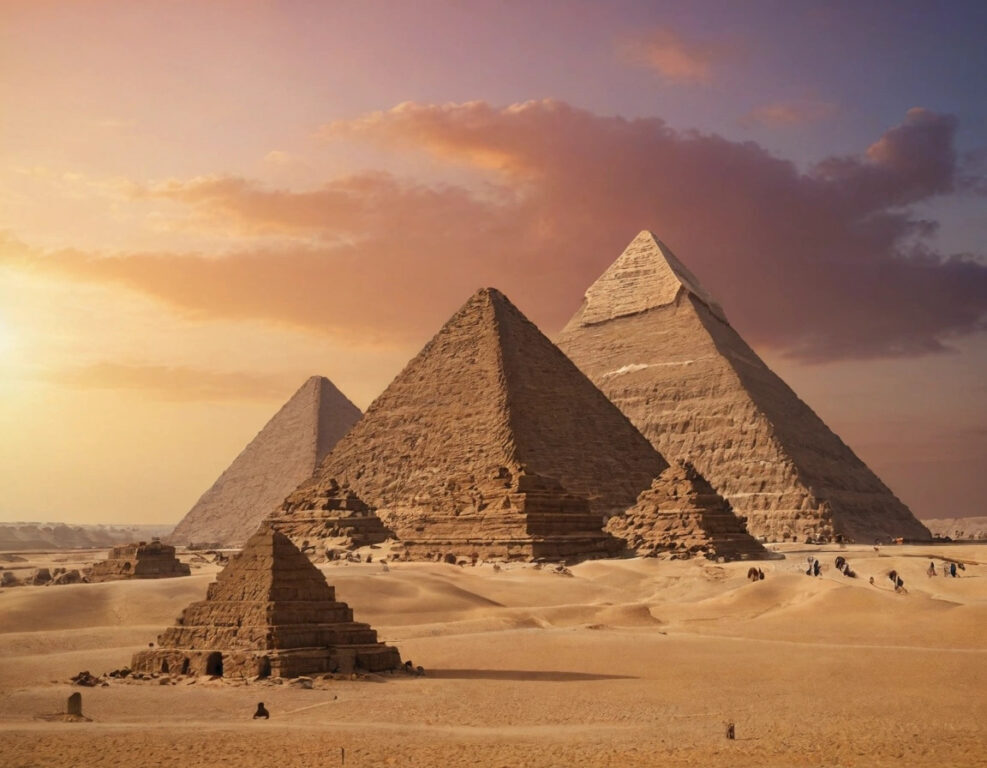
The most famous Egyptian pharaohs come from a handful of these dynasties. Narmer (or Menes) unified Upper and Lower Egypt around 3100 BC and kicked off the whole thing. Khufu, of the 4th Dynasty, built the Great Pyramid of Giza — still the only surviving wonder of the ancient world. Hatshepsut, a female pharaoh of the 18th Dynasty, sent trading expeditions to the land of Punt and built a stunning mortuary temple at Deir el-Bahri.
Then you have Akhenaten, who tried to flip Egyptian religion on its head by worshipping a single sun disk, the Aten. His son, Tutankhamun, is famous mostly because his tomb was found nearly intact in 1922. He was a minor king who became a global celebrity by accident.
Divine Kings, Very Human Problems
Here is where the romantic image cracks. The Egyptian pharaohs were considered gods, but they got sick, died young, and made terrible decisions just like anyone else. Tutankhamun died around age 19. His body shows signs of malaria and a broken leg. Not exactly a glorious end.
Succession was usually hereditary — father to son. But it was rarely clean. Brothers fought sisters. Uncles grabbed power. Wives sometimes ruled as regents when the heir was too young. Hatshepsut took it further and declared herself pharaoh outright, even wearing the false beard and male regalia.
And let’s talk about the marriages. Royal incest was common. Pharaohs married their sisters or half-sisters to keep the bloodline «pure.» It did not work out well genetically. The 18th Dynasty is a case study in what happens when you keep it in the family.
Why the Pyramids and Tombs Still Matter
The pyramids were not just giant graves. They were resurrection machines. The pharaoh was believed to ascend to the heavens after death and join the gods. The pyramid shape itself may have represented the primeval mound or a ramp to the sky.
Later pharaohs switched to hidden tombs in the Valley of the Kings to avoid robbers. It did not stop the looting. Almost every royal tomb was emptied in antiquity. Tutankhamun’s was the rare exception, and that is why he is famous today.
Mummification was part of this same obsession with the afterlife. The body had to be preserved so the ka (spirit) could recognize it and the pharaoh could continue ruling in the next world. The process took 70 days. Organs were removed, the body was dried with natron salt, and then wrapped in hundreds of meters of linen.
The Last Pharaohs and the End of an Era
Cleopatra VII is often called the last pharaoh of Egypt. She was actually Greek, a descendant of Ptolemy I, one of Alexander the Great’s generals. She tried to keep Egypt independent by allying with Julius Caesar and then Mark Antony. It failed. After her defeat at Actium in 31 BC and her suicide in 30 BC, Egypt became a Roman province.
But the idea of the pharaoh did not die. Roman emperors kept calling themselves pharaohs in Egypt for propaganda purposes. The temples still ran. The priests still performed the rituals. It just was not the same.
What the Pharaohs Really Left Behind
Their legacy is not just pyramids and mummies. It is the concept of a ruler who is accountable to something higher than himself. The pharaoh was judged by ma’at. If he failed, the gods would withdraw their favor. That is a radical idea even today.
We still study them because they built things that lasted millennia. They created a bureaucracy that could organize tens of thousands of workers. They developed writing, medicine, and astronomy. And they left us with questions we still cannot answer — like how the Great Pyramid was built with such precision using only copper tools and muscle.
So next time you see a pharaoh’s golden mask in a museum, remember: that was a working king. A politician, a priest, a general, and a symbol all at once. The Egyptian pharaohs were not just rulers of a country. They were the axis around which an entire civilization turned.
