Post actualizado el día octubre 25, 2026 by DeiviSanzPlay
Birds are the most diverse group of vertebrates on the planet after fish. It is estimated that there are around 11,000 species, and each one has a common name that people use every day. But not all birds are the same or serve the same function in the ecosystem. Knowing the types of birds and their names is the best way to understand why some species migrate thousands of kilometers and others stay in the same garden their whole lives.
How many types of birds actually exist?
Current scientific classification divides birds into more than 40 orders. The best known are the passerines (songbirds), which represent more than half of all species. The types of birds and their names vary by region, but there are categories that are repeated throughout the world: birds of prey, waterfowl, migratory birds, tropical birds, and garden birds.
Don’t trust lists that say «there are only 20 types.» That is oversimplifying things too much. The reality is that there are entire families, such as hummingbirds (Trochilidae), with more than 300 different species in the Americas alone. Each one has its name and its ecological niche.
Exotic birds: macaws, toucans, and parrots
When we talk about exotic birds, the bird names that first come to mind are the macaw and the toucan. It is no coincidence. The red-and-green macaw (Ara chloropterus) is one of the largest birds in the Amazon rainforest, measuring up to a meter in length from beak to tail. Toucans, on the other hand, stand out for their enormous, colorful beak, which they use to regulate their body temperature, not just to eat fruit.
Parrots and parakeets also fall into this category. They are highly intelligent birds, some with the cognitive ability of a 4-year-old child. That intelligence is what makes them so popular as pets, but it is also what causes many of them to end up abandoned when the owner cannot stand their screeching.
Birds of prey: the hunters of the sky
The golden eagle and the peregrine falcon are the two best-known names of birds of prey. The peregrine falcon is the fastest animal in the world: in a dive it reaches 389 km/h. No other living being comes close. Its vision is equally impressive: it can detect a pigeon from more than a kilometer away.
The golden eagle, for its part, is a symbol of power in dozens of cultures. In Spain, for example, it is a protected species and its population has been recovering since the 1980s. Birds of prey serve a key function: they control rodent pests and maintain balance in ecosystems.
Migratory birds: swallows, albatrosses, and storks
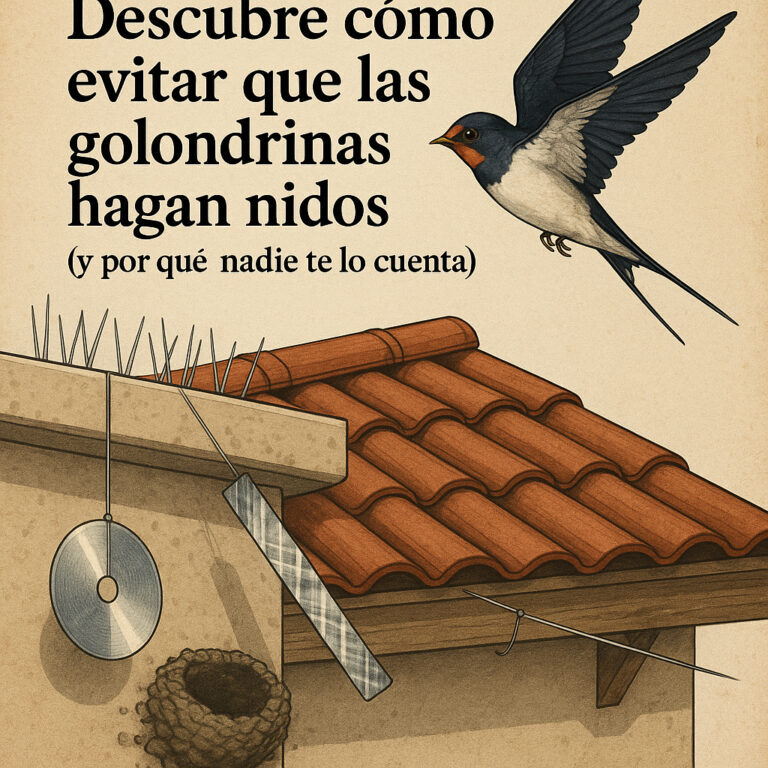
The barn swallow (Hirundo rustica) is the perfect example of a migratory bird. Every year it travels up to 10,000 kilometers from Europe to sub-Saharan Africa. And it does so without GPS, navigating by the Earth’s magnetic field and the stars. Scientists still do not fully understand how they manage it with such precision.
The wandering albatross is another extreme case. Its wingspan reaches 3.5 meters, the largest of all birds. It can fly for hours without flapping its wings, taking advantage of ocean air currents. Migratory bird names like these are synonymous with endurance and adaptation.
White storks also migrate, although less and less. Climate change and the availability of food at landfills have led many to stay in Spain all year round. It is a behavioral change that ornithologists have been documenting for years.
Songbirds: the blackbird, the nightingale, and the goldfinch
Passerines are the most numerous order. The common blackbird and the nightingale are two of the most appreciated songbirds for their voices. The nightingale, in fact, produces one of the most complex songs in the animal kingdom: it can emit up to 200 different notes in a single minute.
The European goldfinch is another highly sought-after songbird name. Its red, black, and yellow plumage makes it unmistakable. In Spain it is a protected species, and its capture for cages has been prohibited since 2018. Even so, poaching remains a problem in some areas.
Waterfowl: ducks, swans, and herons
Waterfowl are adapted to life in the water. The mallard, the mute swan, and the grey heron are three bird names that anyone recognizes. They have webbed feet, waterproof plumage, and beaks designed to filter food from the water or to fish.
The grey heron is a curious case: it is a solitary bird that stands still for minutes waiting for a fish to come close. It does not chase its prey; it waits for it. That behavior makes it one of the easiest birds to observe in rivers and lagoons.
Swans, on the other hand, are monogamous and territorial. A mute swan can attack any animal that comes near its nest, including humans. They are not as peaceful as the romantic image that has been sold of them.
Tropical birds: hummingbirds and birds of paradise
The hummingbird is the only bird capable of flying backward. Its wings move in a figure-eight pattern, up to 80 times per second. That allows it to hover in the air while it sips nectar from flowers. Tropical bird names like the emerald hummingbird or the ruby hummingbird are an example of the biodiversity of the American rainforests.
Birds of paradise, from New Guinea, are another fascinating group. The males perform highly elaborate dances to attract females. Some species have feathers that reflect light so intensely that they appear metallic.
Garden birds: robins, finches, and sparrows
You don’t have to go to the jungle to see interesting birds. The European robin, the common chaffinch, and the house sparrow are common in gardens and parks. The robin is territorial even in winter: it will not tolerate another male approaching its area.
The house sparrow, although it may seem abundant, has suffered a 20% decline in Europe over the last two decades. The causes are the lack of insects (due to pesticides) and the loss of places to nest. Putting up feeders and nest boxes at home helps, but it does not solve the underlying problem.
Endangered birds you should know about
The California condor and the scarlet ibis are two names of critically endangered birds. The condor once had only 22 individuals in the wild in the 1980s. Thanks to captive breeding programs, today there are more than 500. But it still depends on human intervention to survive.
The scarlet ibis, with its intense red plumage, is a symbol of the wetlands of South America. Its color comes from the crustaceans it eats. If the wetlands disappear, the ibis disappears. There is no plan B.
Knowing the types of birds and their names is not a simple hobby. It is the basis for understanding which species need protection and which are in decline. The next time you see a bird at your window, think that it could be a migrant that has crossed an entire continent to get there. That, in itself, already deserves a little respect.