Post actualizado el día octubre 25, 2026 by DeiviSanzPlay
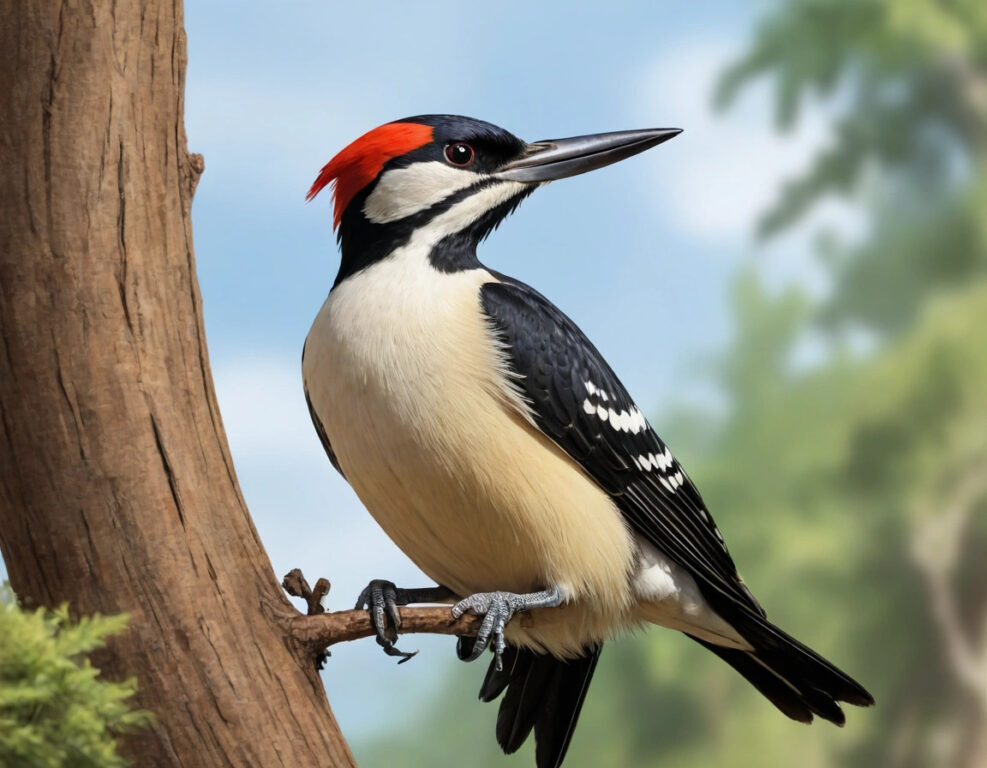
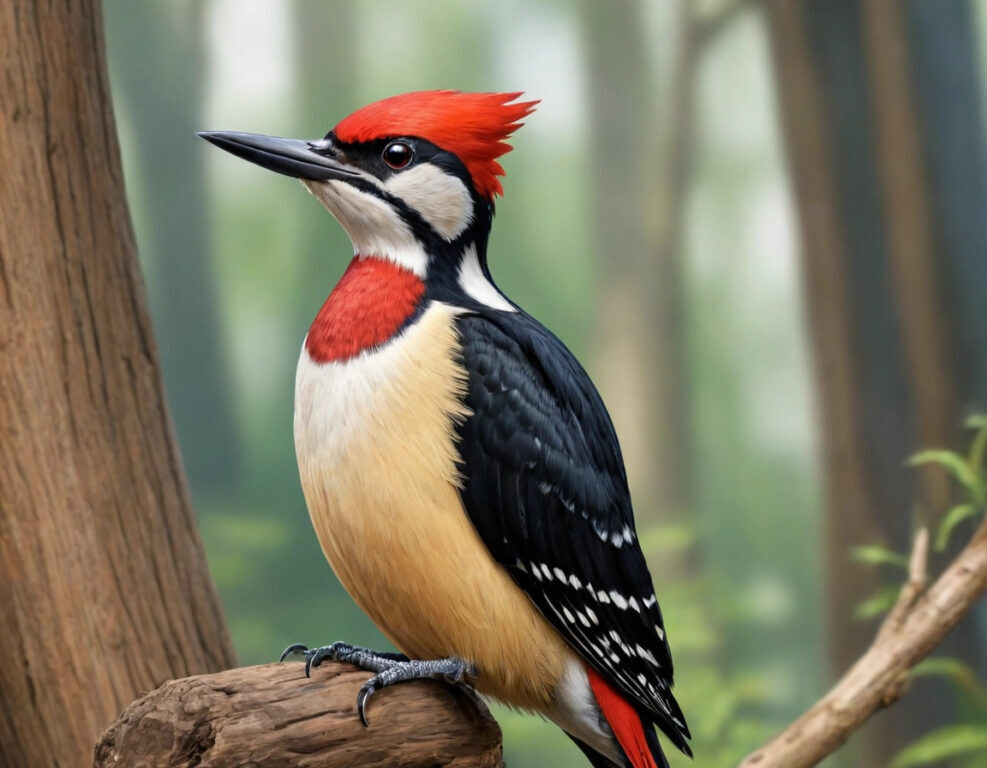
The woodpecker owes its name to a direct association with a human trade: the sound of its beak striking wood is reminiscent of a carpenter’s hammering. But there is much more behind that label. It is not just the noise, it is the technique, the precision and the purpose with which it drills into tree trunks. In this article I’ll tell you why it is called a woodpecker and why that name fits it like a glove, even more than it seems.
The origin of the name: a carpenter with feathers
The most widespread explanation is that the name comes from the similarity between the sound the bird makes when pecking and that of a carpenter hammering. That onomatopoeia tap, tap, tap echoing through the forest is unmistakable. But reducing the name to a simple sonic coincidence would be an understatement. The woodpecker doesn’t just sound like a carpenter, it also works wood like one.
The first naturalists and rural observers saw in this bird a reflection of an everyday trade: someone who strikes wood to build, repair or seek resources. Hence it was called a woodpecker, a name that has endured for centuries in popular speech. It is not a scientific term, but a functional description that struck a deep chord.
In English it is called woodpecker, which literally means «wood pecker,» an even more direct designation if possible. In Spanish, the analogy with the trade was chosen, which says a lot about how country people interpreted nature: by comparing it with what they knew.
The beak: a precision tool, not just any hammer
If you have seen a woodpecker in action, you will know that its beak is not a simple hammer. It is a finely tuned instrument that combines brute force and delicacy. With it, the bird drills through bark, excavates galleries and extracts larvae and insects that other birds cannot reach. The precision with which it works wood is comparable to that of a cabinetmaker, not a bricklayer.
That is why, when we say it is called a woodpecker, it is not just because of the noise: it is because its beak functions as a specialized tool. Each blow is calculated so as not to damage its brain or its beak, and to maximize efficiency. Evolution has equipped it with a reinforced skull, a hyoid bone that absorbs the impact and a tongue that can extend beyond the beak to capture prey.
That combination of skills makes the name more than deserved. A human carpenter needs to measure, cut and assemble; the woodpecker does all of that with its body, without external tools. It is a carpenter integrated into its own anatomy.
Beyond the sound: the purpose of so much pecking
The woodpecker’s drumming is not just a way of feeding. It also serves to communicate. The rhythmic blows it emits on hollow trunks or metal surfaces are messages for others of its species: they mark territory, attract a mate or warn of dangers. It is as if a carpenter used his hammer to send signals in Morse code.
In addition, the woodpecker excavates cavities in trees to nest. Those cavities do not only serve it: other animals, such as owls, squirrels or bats, reuse them afterwards. In some way, the woodpecker builds homes for the ecosystem, just as a carpenter builds houses for people.
It must be acknowledged that the name can lead to confusion: not all birds that peck wood are woodpeckers. There are other birds, such as nuthatches or treecreepers, that also cling to trunks, but they do not have the beak or the technique of the woodpecker. The difference lies in the extreme specialization of the latter.
Are there exceptions? The case of the woodpecker that doesn’t seem like a woodpecker
Within the picidae family, which groups the woodpeckers, there are species that feed on the ground, such as the ground woodpecker. This one does not drill into trees with the same assiduity, but it keeps the name because it shares anatomical and evolutionary traits with its arboreal relatives. It is an exception that confirms the rule: the name is based on typical behavior, not on each particular case.
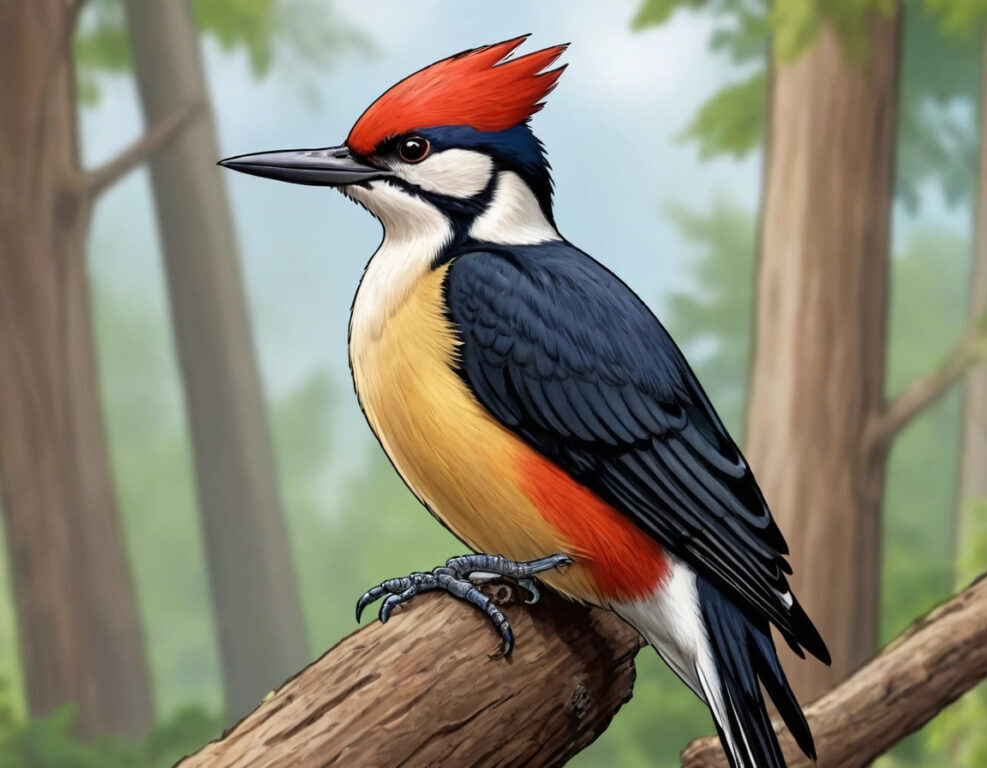
There is also the case of the great spotted woodpecker, which can measure up to 50 centimeters and whose beak is a true work of engineering. Its name leaves no room for doubt: it is the king of woodpeckers, the one that best embodies that mixture of strength and precision.
If you ever wonder why it is called a woodpecker, the answer lies in direct observation. You don’t need a treatise on ornithology: it is enough to listen to that insistent drumming and see how it works the wood. The analogy with the human trade is inevitable, and that is why the name has been maintained for generations.
Conclusion: a name that is pure popular observation
The woodpecker is called that because its behavior is reminiscent of a carpenter: it strikes wood with precision, builds cavities and even communicates by hammering. It is not a scientific name, but a label born from the people who saw it work and found in it a reflection of a familiar trade. And although it doesn’t use a hammer or nails, its beak does such fine work that the name fits it perfectly.
So the next time you hear that tap, tap, tap in the forest, now you know: it is not a human carpenter, but it well could be. Nature, once again, imitates the trades of men, or perhaps it is the other way around. In any case, the woodpecker has earned its name through accurate blows.