
Post actualizado el día September 27, 2026 by DeiviSanzPlay
Thousands of photographs, stories, and videos about these places circulate on the internet. You don’t need to be an expert to realize that each wonder holds a different message. Some were born as religious offerings, others as monuments to power, but all share a common essence: the quest for eternity through stone, art, and engineering.
I recommend you check out this interesting article: How to fix error 1064 in MySQL.
When we talk about the history of the wonders of the world, we also talk about the cultures that built them. Egypt, China, India, or Latin America remind us that humanity has always wanted to leave a testament to its passage through Earth. Exploring these works is, in a way, traveling to the very heart of history itself.
The wonders of the ancient world and their cultural legacy
The so-called “wonders of the ancient world” were a list created by the Greeks more than two thousand years ago. Of them, only one still stands: the Great Pyramid of Giza, in Egypt. However, its legacy transcends its physical existence. Each one represented the pinnacle of the technical and artistic knowledge of its time.
The Pyramid of Giza is the oldest of the seven and the only survivor. It is estimated to have been built more than 4,500 years ago, and even today it continues to spark theories about how such perfection was achieved without modern machinery. Many travelers who share their experience on social media say that standing before it produces a feeling that is hard to describe: it’s like looking into the past through an immortal window.
Other ancient wonders, such as the Hanging Gardens of Babylon or the Colossus of Rhodes, have disappeared, but they remain alive in the collective memory. Their memory teaches us that human culture is not only preserved in stone, but also in history, art, and admiration. The legacy of the wonders of the ancient world continues to inspire architects, artists, and dreamers across the entire planet.
The wonders of the modern world you must know
In the year 2007, a global vote was organized to choose the “wonders of the modern world.” More than 100 million people participated to decide which contemporary monuments deserved to enter that list. From there emerged architectural gems that today attract millions of tourists every year.
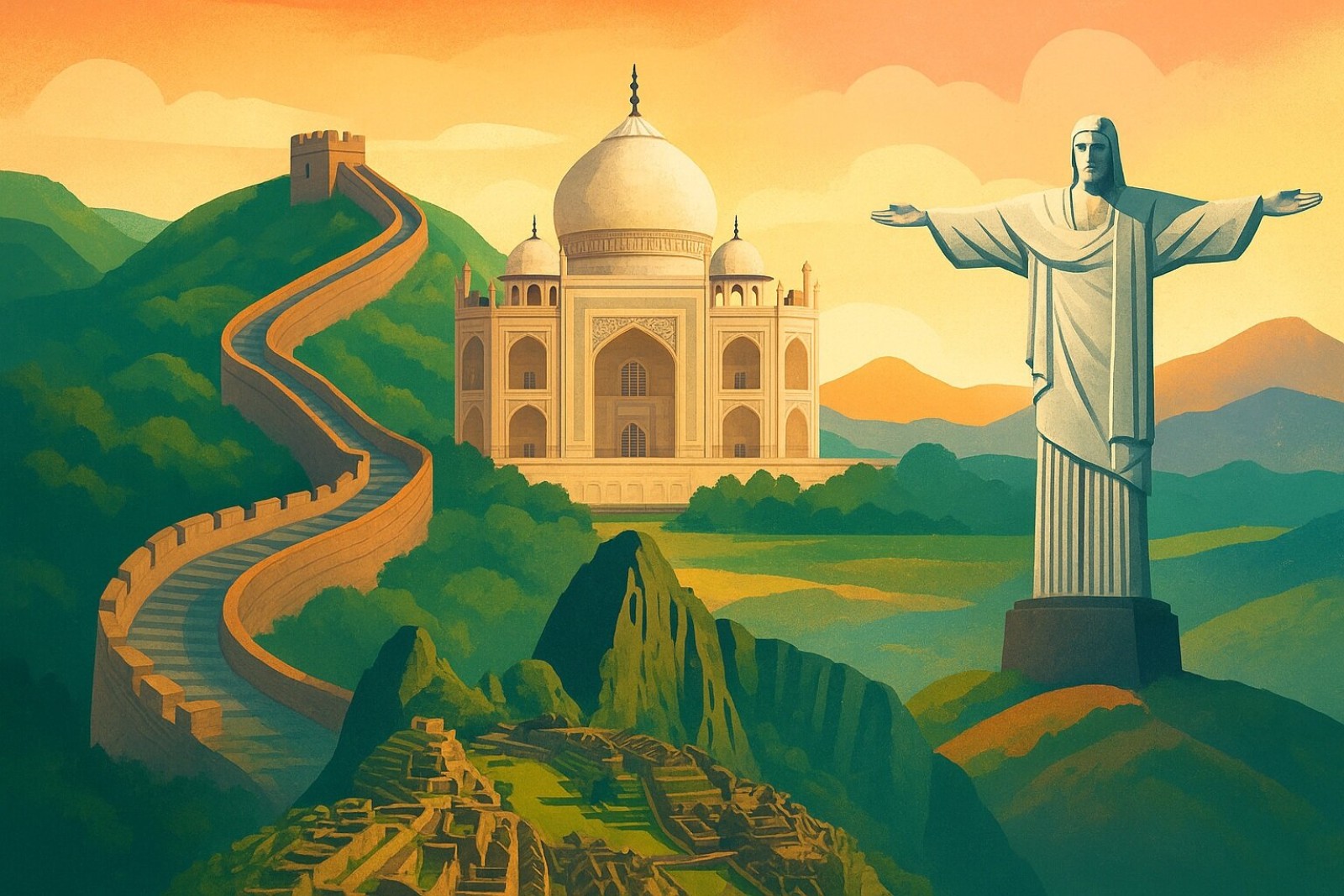
Among the most notable are the Great Wall of China, the Taj Mahal in India, Christ the Redeemer in Brazil, and the city of Machu Picchu in Peru. These four wonders of the modern world represent different eras and styles, but they all share the same ability to amaze anyone who beholds them.
Each one has a fascinating story. The Great Wall of China, for example, was built to protect the empire from invasions. Today it is a symbol of resistance and national pride. The Taj Mahal, on the other hand, is a tribute to eternal love. Machu Picchu astonishes with its mystery and its connection to nature, while Christ the Redeemer stands as a symbol of faith and hope over Rio de Janeiro.
Tourism at the wonders of the world: a transformative experience
Tourism at the wonders of the world has changed the way people travel. It is no longer just about visiting a place, but about living a cultural and emotional experience. Each of these wonders offers something different: history, architecture, spirituality, and, above all, direct contact with humanity’s past.
Many travelers share their experiences of visiting these destinations on blogs and forums. Some talk about how overwhelming it is to watch the sunrise from Machu Picchu, others about the emotion of walking along the Great Wall or beholding the white brilliance of the Taj Mahal at sunset. In all cases, the same feeling repeats itself: awe.
Furthermore, responsible tourism plays a key role. Taking care of these places is essential so that future generations can also admire them. Governments and local organizations work to balance tourist influx with the preservation of heritage. Traveling to the wonders of the world is not only an adventure; it is also a way to learn about and value the history we share.
Traveling to the wonders of the world: tips and reflections
Traveling to the wonders of the world is much more than checking destinations off a list. It is an experience that changes the way you see the world. Planning each trip well allows you to make the most of every visit and enjoy it without setbacks.
The first tip is to research the best time of year to go. Some destinations, such as the Taj Mahal, are more pleasant during the cooler months, while Machu Picchu requires booking in advance due to visitor controls. It is also important to respect local and cultural rules, since many of these sites are considered sacred.
On the other hand, keeping an open mind makes the trip more meaningful. It’s not just about taking photos, but about understanding the history behind each stone. Many travelers report online that, after visiting one of these wonders, they change their perception of time and human effort. It is a reminder of what we are capable of building when we combine creativity, faith, and perseverance.
The future of the wonders of the world and their preservation
The wonders of the world face new challenges today. Climate change, mass tourism, and armed conflicts put some of these unique places at risk. That is why UNESCO and other international organizations actively work on their preservation.
The role of education is also fundamental. Teaching new generations about the importance of these monuments helps foster respect and the conservation of cultural heritage. Many countries already implement programs to involve local communities in the protection and maintenance of their wonders.
The future of the wonders of the world will depend on our ability to balance development with conservation. If we manage to do so, we will not only preserve ancient stones, but also the stories, values, and emotions they represent.
<a title="🏞️ ¡Todo sobre el Santuario Histórico de Machu Picchu! 🌄 Lo que nadie te cuenta 😮" href="https://www.chusmeando.com/viajes-y-excursiones/descubre-el-santuario-historico-de-machu–picchu-en-cusco-cuzco-peru-tips-tours-y-como-llegar-a-la-maravilla-inca-reserva-ya-machupicchu/”>Frequently asked questions (FAQ) about the wonders of the world
Frequently asked questions (FAQ) about the wonders of the world
What are the 4 most visited wonders of the world today?
The 4 most visited wonders of the world are the Great Wall of China, the Taj Mahal, Christ the Redeemer, and Machu Picchu. These places receive millions of tourists every year and are considered icons of world heritage.
Why are the wonders of the modern world considered important?
The wonders of the modern world are important because they represent human ingenuity, culture, and effort across different eras. They also promote tourism and help preserve the history of humanity.
What is the difference between the wonders of the ancient and modern world?
The wonders of the ancient world were created in antiquity and almost all of them disappeared, while the modern ones are structures that still exist and can be visited. Both lists reflect human greatness in different historical contexts.
Is it advisable to travel to the wonders of the world on your own?
Traveling to the wonders of the world on your own is an enriching experience, as long as it is planned in advance. It is advisable to find out about the weather, local customs, and conservation rules before visiting each site.
How does tourism at the wonders of the world contribute to the local economy?
Tourism at the wonders of the world generates employment, boosts trade, and promotes cultural conservation. However, it is important that this growth be sustainable so as not to damage ecosystems or heritage.